Fourth article in the series “Returning to the West”
The paradox where everything begins
The three previous articles looked outward: at how Russian culture entered Europe and conquered it. This article inverts the optics and looks inward — at the very idea of Russian specialness. And it finds a paradox which, on closer inspection, turns out to be the key to the whole series:
Russian anti-Westernism is a Western product. Every major doctrine of the “special path,” from the Slavophiles to today’s “state-civilization,” is built of European materials, by European methods, and not seldom physically written in Europe.
This is not a rhetorical jab but a verifiable claim, and we will verify it on four levels: language, philosophy, law, everyday life. If it holds, a conclusion of strategic importance for our whole series follows from it: the dispute “Russia or the West” is a false fork, because both disputing sides stand on the same, Western ground. Which means that a turn to the West is not a change of identity but merely the end of the country’s quarrel with its own make-up.
Language: the tongue in which specialness speaks
Let us begin with the instrument without which no doctrine is possible — language — and recall the conclusion of the first article in order to develop it in a new direction.
The modern Russian literary language was built in the eighteenth and nineteenth centuries as a European project: Karamzin’s syntax modeled on French prose, hundreds of calques and borrowings for concepts that did not exist in the pre-Petrine language. But here is what matters for this article: the vocabulary of anti-Westernism itself is also translated. “Nation”; narodnost (a calque of the French nationalité, manufactured for the official doctrine of the Uvarov era); “civilization”; “culture”; samobytnost, “specialness” (an answer to the German Eigentümlichkeit); “traditional values” (a concept of the Anglo-American culture wars of the twentieth century); “geopolitics” (the German Geopolitik) — the Russian guardian of any era, opening his mouth, speaks a language assembled from European parts. Even the word dukhovnost, “spirituality,” in its present ideological sense is the product of a long dialogue with the German Geistigkeit and the French spiritualité.
There is no way around this: no “primordial” conceptual language exists in which separateness from Europe could be formulated. Any attempt to describe Russian specialness immediately turns into an exercise in European philosophical vocabulary — which brings us to the second, principal level.
Philosophy: the German genealogy of the Russian idea
Here the material is so rich that we must proceed chronologically.
The Slavophiles. Khomyakov, the Kireyevsky brothers, the Aksakovs — the founding fathers of the doctrine of Russian originality — were men of exemplary European education: German idealism, Schelling and Hegel; Ivan Kireyevsky attended lectures in Germany and met the luminaries of German philosophy in person. The very intellectual operation of Slavophilism — the search for a unique national spirit, for an organic community opposed to mechanical civilization — is a direct application of German Romanticism (Herder with his Volksgeist, the Jena Romantics) to Russian material. The Germans were the first to pine for the organic community in defiance of French rationalism; their Russian pupils moved the scheme one country eastward, substituting the Russian commune for the German community and the whole West for France. The famous irony of history: the proof that Russia is not Europe was executed with European impeccability, by the methods of German university training. The Slavophile circles, the journals, the polemic with the Westernizers — this very form of intellectual life, from the philosophical salon to the thick journal, was European to the last cufflink.
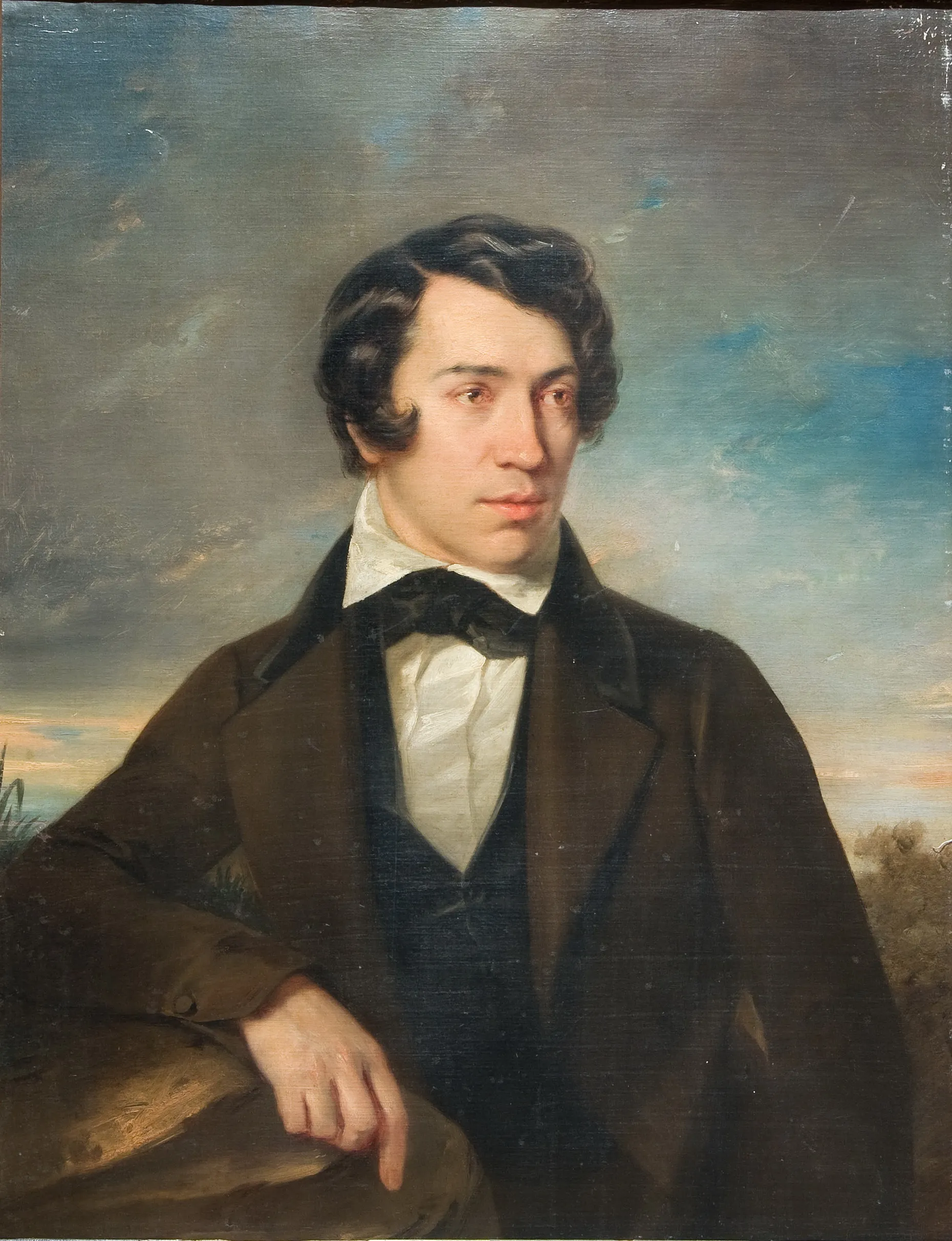
Danilevsky. Russia and Europe (1869–1871) is the bible of the civilizational approach, the book from which all the later “Russia is a separate civilization” grew. Nikolai Danilevsky was a natural scientist, and his theory of cultural-historical types is a deliberate transfer of the methods of European biological taxonomy onto history: civilizations as species that do not interbreed. The device, typologically anticipating Spengler and Toynbee, was in its instruments pure European positivism. Russia’s civilizational separateness was proved by the European scientific method — the same irony a second time.
The Eurasianists. The movement that declared Russia “not Europe and not Asia but Eurasia” was physically born in Europe: the collection Exodus to the East came out in 1921 in Sofia; the movement’s centers were in Prague, Vienna, Berlin and Paris; its leaders Trubetzkoy and Savitsky, and Jakobson who joined the movement, were university intellectuals of the emigration embedded in European scholarship (Trubetzkoy and Jakobson are classics of structural linguistics, one of the century’s principal European intellectual enterprises). Eurasianism argued with Europe from European chairs, was printed in European printing houses, and fed on Europe’s own postwar moods of the decline of the West.
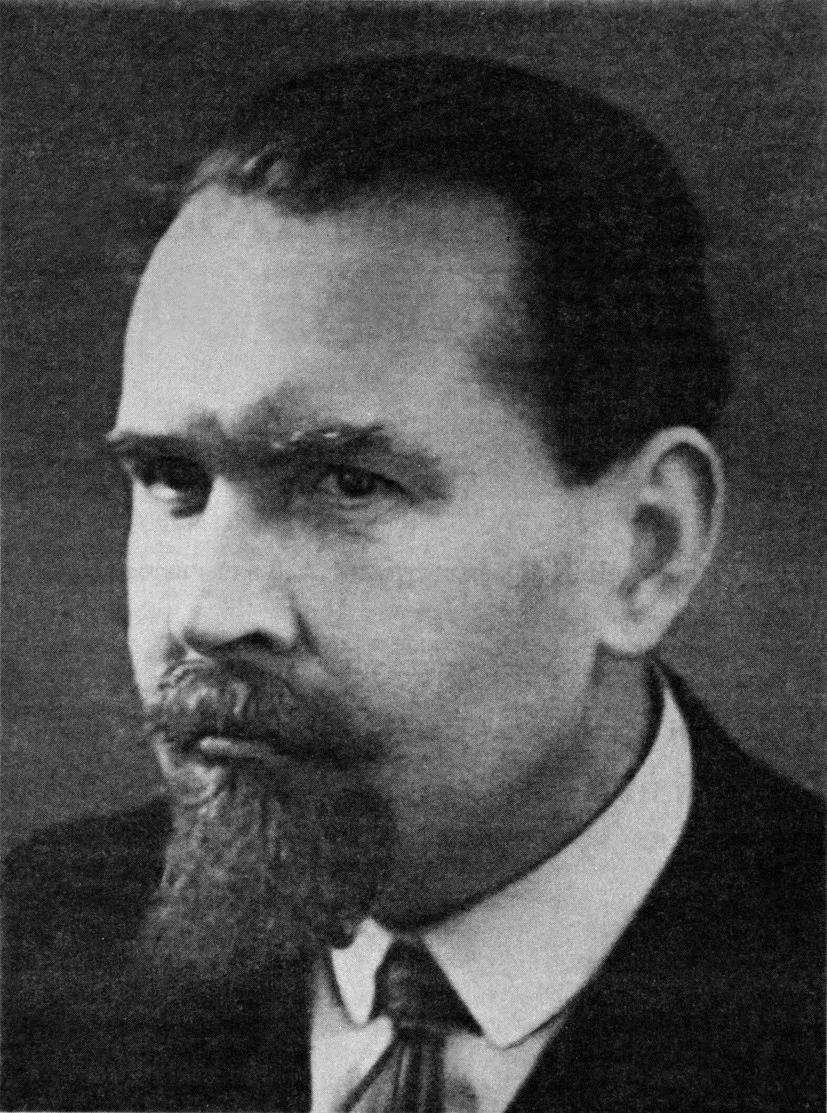
Ivan Ilyin — the philosopher eagerly quoted by today’s Russian authorities — was a Hegelian by profession (his main academic work is on Hegel’s philosophy), expelled from Russia in 1922, who lived out his life in Berlin and Zurich. His political doctrine took shape in dialogue — and in bad company — with the European right-wing thought of the interwar era.
The current doctrine. Today’s official language of the “state-civilization,” “multipolarity” and “traditional values” is assembled from the same European construction kit, only a more motley one: the civilizational typology of the line Danilevsky–Spengler–Toynbee–Huntington (half the names in it Anglo-Saxon), the geopolitics of Mackinder and the German school, European integral traditionalism (Guénon and Evola — a Frenchman and an Italian), Carl Schmitt with his “great spaces.” The ideologues who framed this synthesis never concealed their sources — one need only open their bibliographies. The doctrine that declares the West an existential alien is compiled from Western books — a third time, and by now not irony but a regularity.
The regularity is this: the “special path” is a European genre. Longing for organic originality in defiance of universal civilization is a through-line of European thought itself, from the German Romantics to the French New Right; nearly every European nation has been through this genre in its hour (the German Sonderweg is literally the same “special path,” and the word is older than the Russian usage). Russia did not invent the genre — it imported it, as it imported the novel and the symphony, and, as with the novel and the symphony, carried it to dimensions unknown to the original. Russian anti-Westernism is a form of participation in European culture — the most paradoxical form, but participation nonetheless.
Law and state: a borrowed skeleton
The third level is the load-bearing structure of statehood itself; a brief inventory will do, since the foundation was laid in the first article.
The dynasty that ruled Russia from the eighteenth century was, after generations of German marriages, almost entirely German by blood — which did not in the least prevent it from being impeccably Russian in self-conception (that fact alone is the best illustration that Russianness is a cultural category, not one of soil). The Table of Ranks — Swedish-Danish-Prussian models. The ministries — the Napoleonic model. The universities — the German statute. The judicial reform of 1864 — French and English models. Civil law — the German pandectist tradition; the current Civil Code of the Russian Federation continues the same continental family. The constitution, the parliament, the presidency — no comment needed. Even the sacral vocabulary of statehood is translated: “empire,” “senate,” “gubernia,” “federation,” “sovereignty.” The state that proclaims civilizational separateness does so in forms among which there is not a single separate one — from the rules of procedure to the cut of the uniforms.
The throne as chief westernizer
Let us continue the line openly stated in the two previous articles — on the role of supreme power — and carry it down to its historical foundation.
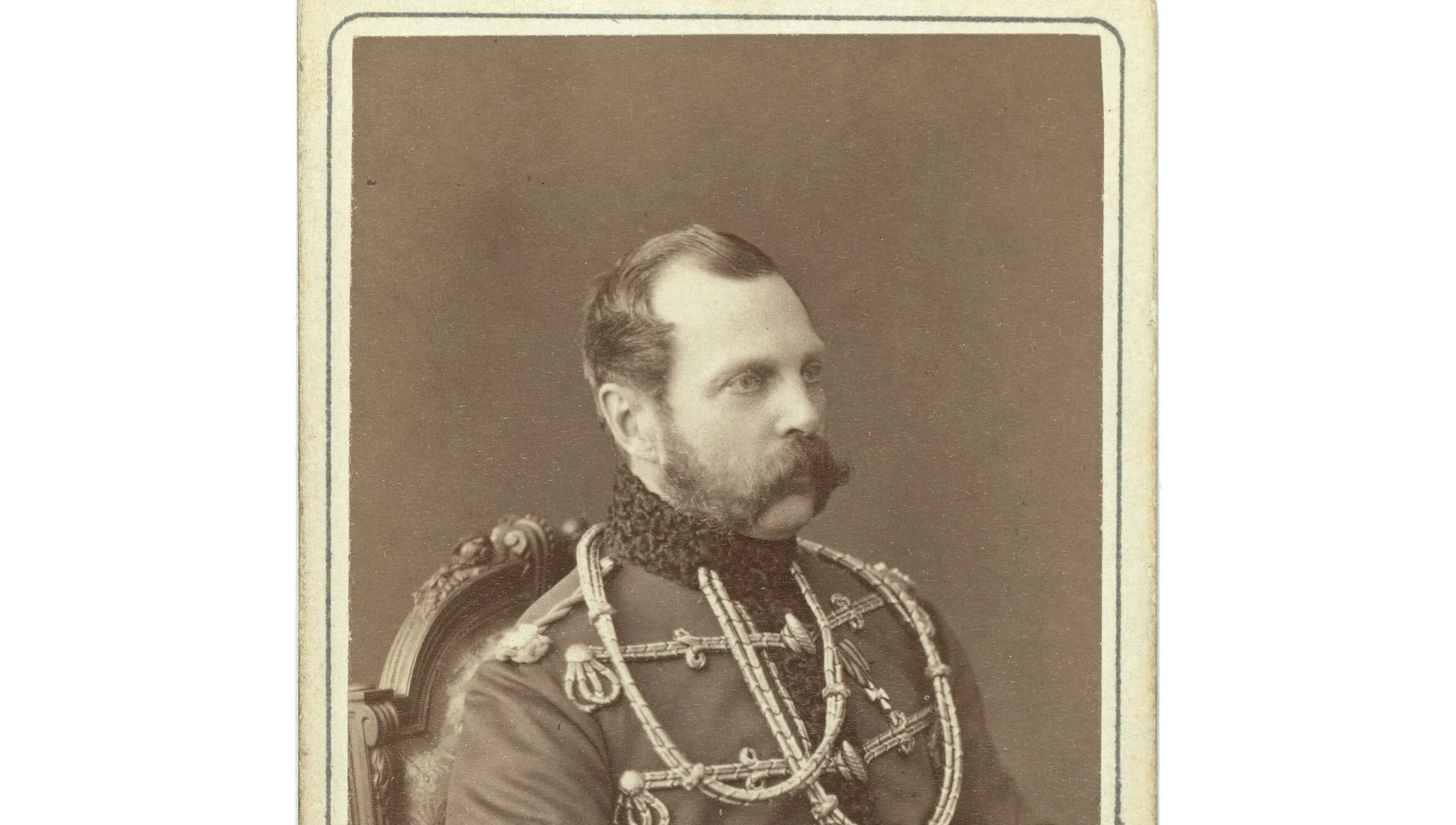
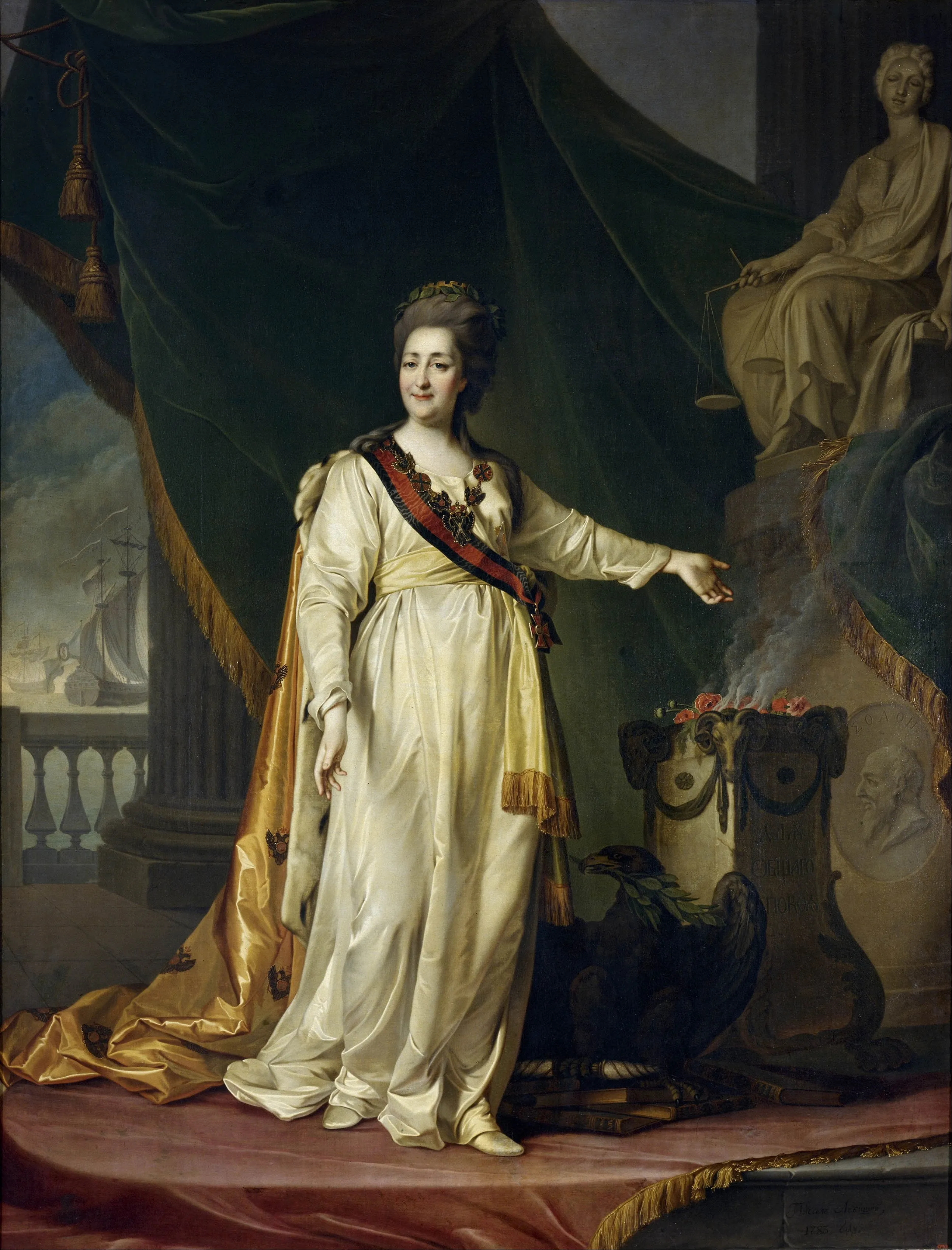
If one asks who in Russian history was the most consistent, the most radical conductor of the European element, the answer is inconvenient for every participant in the old dispute: not the intelligentsia, not the bourgeoisie, not the mythical “fifth column” — the throne. Peter did not merely borrow technology — with his own hands, with a fury Europe itself found excessive, he rebuilt the country on the European pattern, from the alphabet to the clothing. Catherine II corresponded with Voltaire for decades, received Diderot in Petersburg, and openly compiled her Nakaz for the Legislative Commission from Montesquieu and Beccaria — the European Enlightenment spoke to Russia directly from the height of the throne. Alexander I commissioned constitutional projects; Alexander II carried out the most European-spirited reform in Russian history. For two centuries the supreme power in Russia was not an obstacle to westernization but its principal motor — and this is the direct continuation of the third article’s conclusion: strong central power and a Western course are not merely compatible — historically the latter was most often carried out precisely by the former. The guardian counter-turns also came from above — but, as the second article showed, they rested each time on a filtered picture of the world and lost each time within a generation. The reader who holds dear the idea of a strong Russian state may find in these facts an unexpected ally: the most revered builders of that state were at the same time its most resolute Europeanizers, and in their work the one is inseparable from the other.
Everyday life: a dispute in which both sides drink coffee
The last level is the most down-to-earth and therefore the most convincing. Let us descend from the philosophical heights into the daily life of the bearers of the “special path” of any era — and we will see one and the same picture.
The Slavophiles, who preached a return to pre-Petrine Rus, lived on estates of European arrangement, read European journals, took cures at European spas; Konstantin Aksakov, who demonstratively donned “primordial” Russian dress, was — by the famous joke of his contemporaries — taken on a Moscow street for a Persian: so foreign had the ancient costume become after a century and a half of Europeanization. The Soviet fighters against “servility before the West” held their meetings amid trophy furniture and rode in automobiles copied from American models. Today’s preachers of civilizational separateness — here every reader will continue the series without difficulty: real estate, children’s education, vacations, wardrobe, vocabulary.
This is not an accusation of hypocrisy — or rather, not only that. The diagnosis is deeper: the anti-Westerner’s daily life is Western because Russian civilization of the modern age has simply produced no other. There is no “special” way of living to which one could switch — there is only a rhetorical specialness built on top of the common European way of life. When the doctrine demands separation from the West, it demands that the Russian separate from his own apartment, his own library and his own daily routine — and so it is always fulfilled in the same way: in words.
Conclusion: return as the end of a quarrel with oneself
Now all four levels at once. The language of specialness is translated. The philosophy of specialness is German in genealogy and pan-European in genre. The state-legal skeleton is continental European. Everyday life is common European without remainder. What is left to the “separate civilization” proper? The political will to separateness — arising periodically, always from above, always formulated in a Western language and always, as the second article showed, short-lived.
And here is the article’s main conclusion, which serves the aim of the entire series. Russia’s return to the West is not a renunciation of Russian identity, because that identity itself — in the form in which it really exists, not in which it is declared — is European from the foundation to the roof-ridge. Strictly speaking, there is nowhere to return to and nowhere to return from: Russia is inside European civilization even when it wars against it. Nor is it taken out of Europe by specialness’s last line of defense — Orthodoxy: that border runs not between Russia and Europe but within Europe itself, where Greece, Romania, Bulgaria and Serbia have never considered their faith a ticket out of the European family. A turn of policy would mean only one thing: the country would stop spending its strength on a quarrel with its own make-up — a quarrel it is guaranteed to lose, because both sides in it are itself.
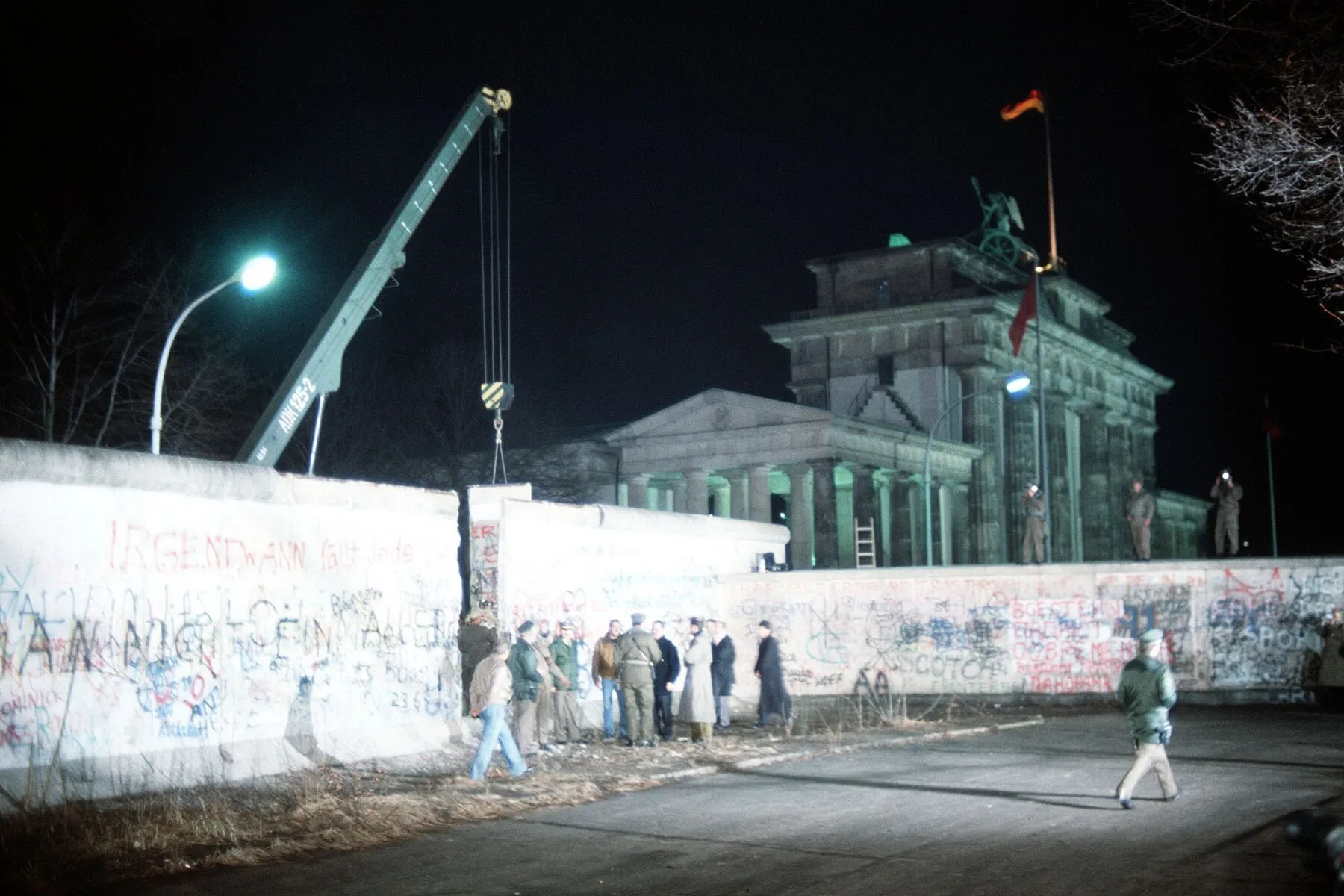
And one last thing. If the “special path” is a European genre, then the way out of it has also long been described in the European repertoire. Germany, which begot the very genre of the Sonderweg and carried it to catastrophe, made precisely such a turn in the second half of the twentieth century — renouncing neither its language, nor Goethe, nor its national existence — and ended it as the leader of the very Europe to which it had opposed itself. The precedent of a great nation leaving the “special path” without ceasing to be itself exists — and it, too, is European.
The next article will take up the people who already today physically connect Russia with the West — the emigration: its three historical waves and the fourth, current one — and will show why the diaspora has each time proved to be not the country’s loss but its backup copy and a ready bridge back.
The next article in the series: “The Backup Copy: Four Waves of Emigration as Bridges of Return.”