
Seventh article in the series “Returning to the West”
Why we need a philosopher whom the authorities quote
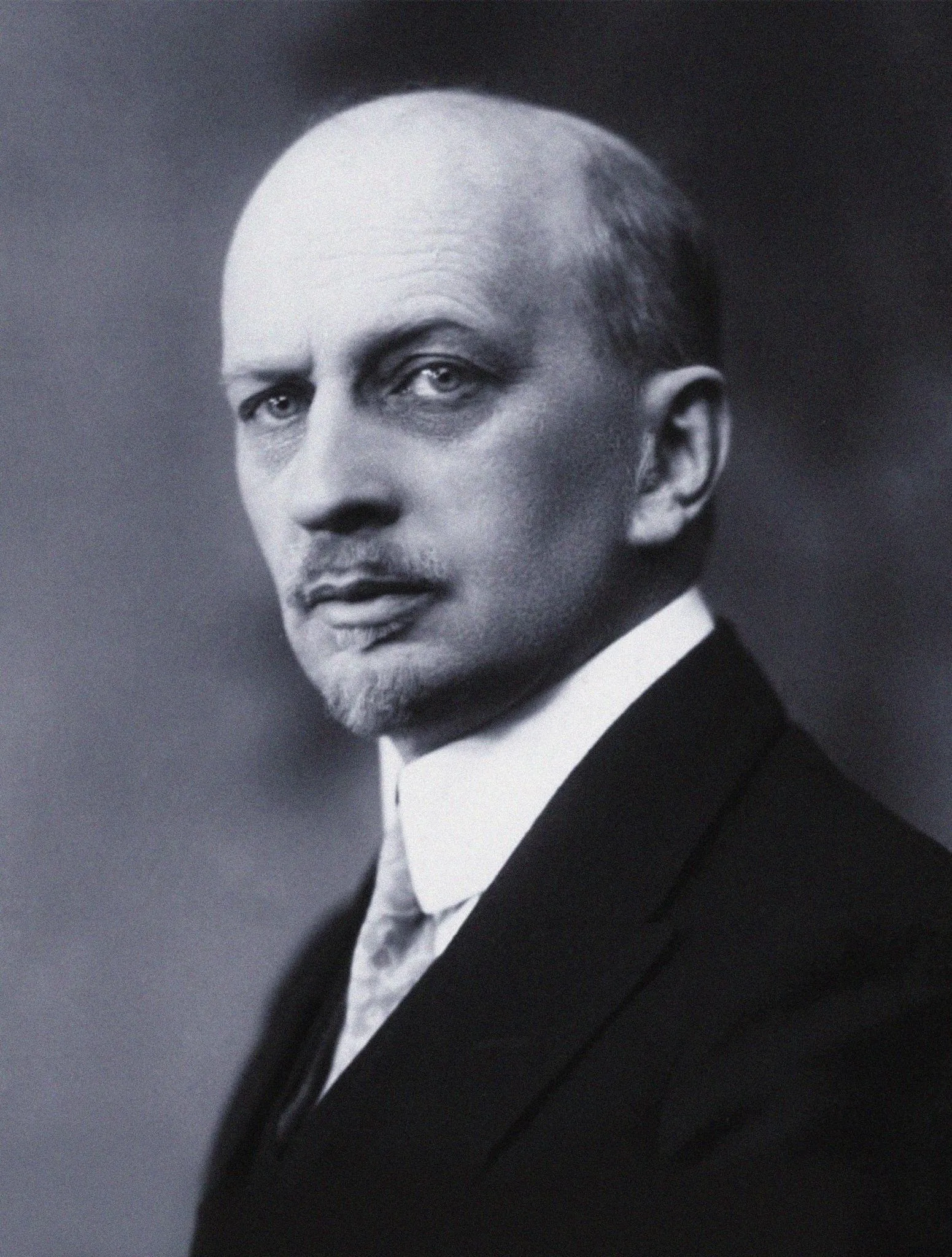
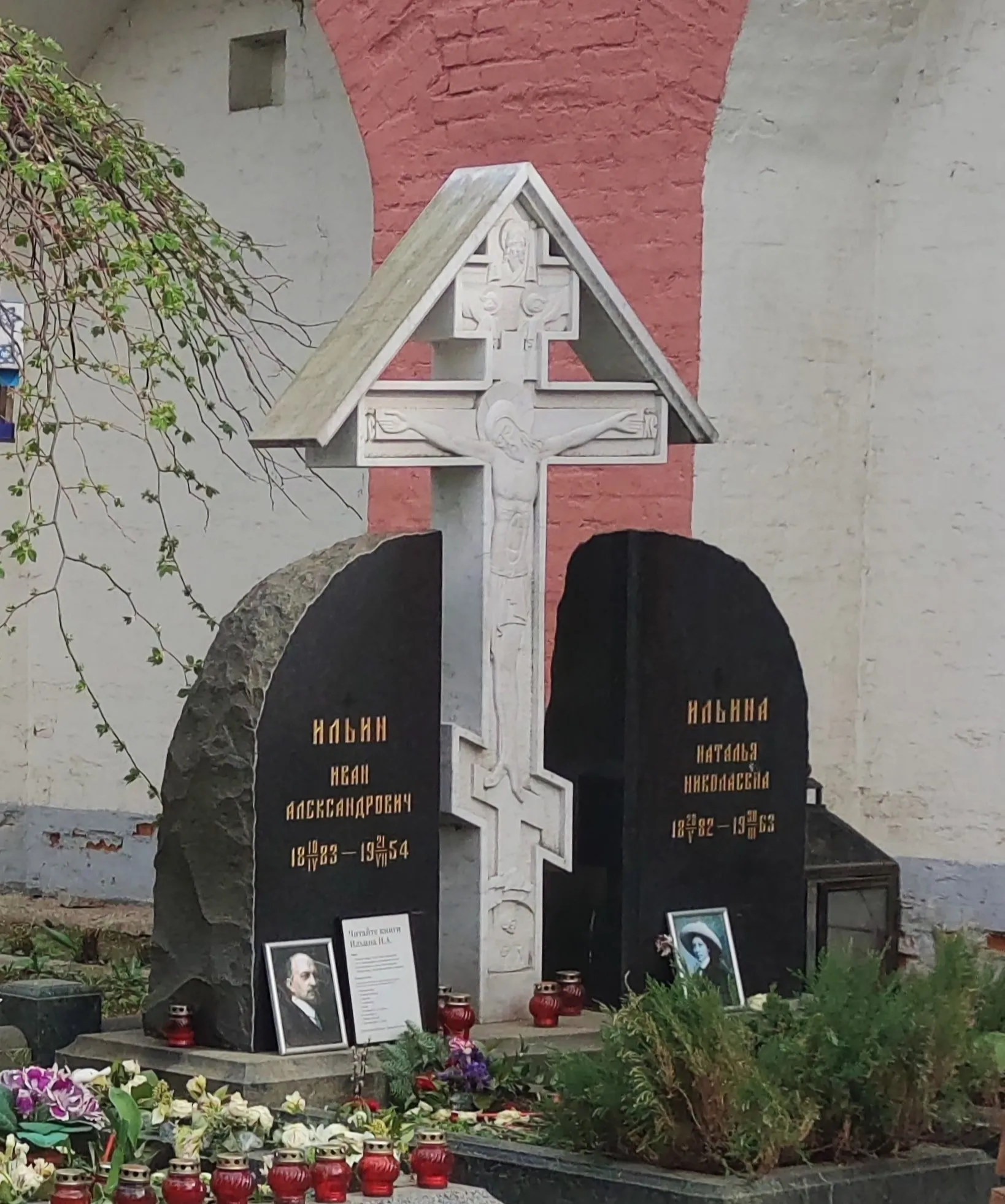
Ivan Ilyin is that rare case of a thinker who is venerated by official Russia and read by almost none of his venerators. He is quoted in addresses and decrees, institutes are named after him, his reburial in the Donskoy Monastery was an act of state. And this is what makes him a unique resource for our series: an argument built on Ilyin cannot be dismissed as a “Western playbook” — it is taken from the very heart of the official canon.
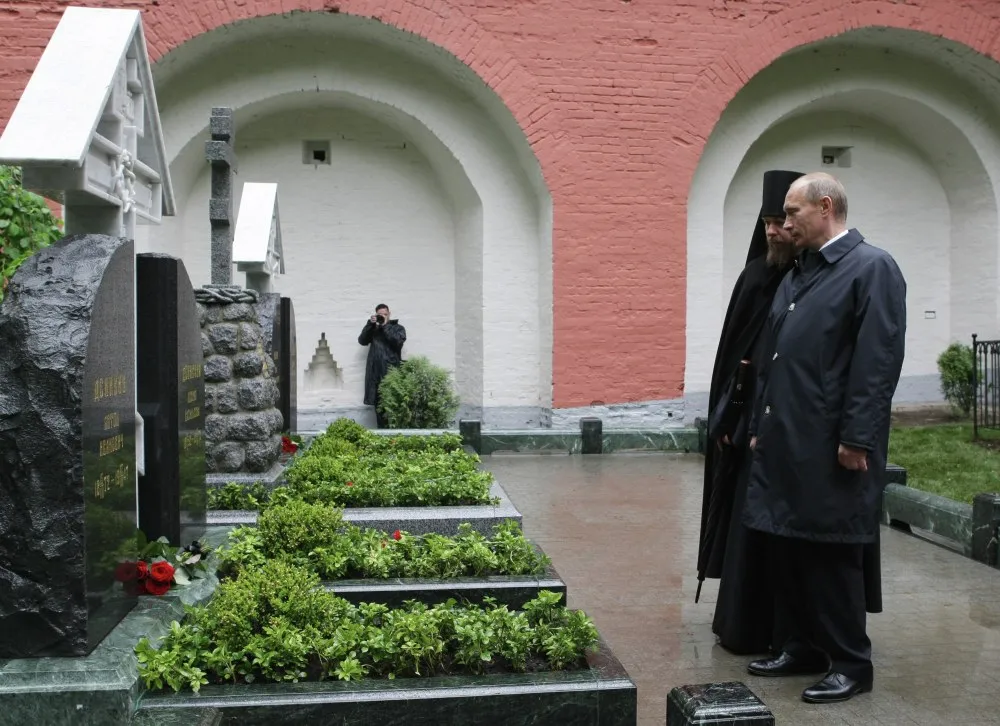
But we shall take Ilyin honestly — whole, uncomfortable passages included — because only an honest reading carries force. And an honest reading discovers an astonishing thing: the philosopher canonized as the banner of the special path left the most detailed blueprint in Russian thought of what we call the return — complete with a formula of mutual obligations between Russia and the West, and with a precise indication of where the turn begins.
First, three caveats it would be dishonest to hide at the end. Ilyin was no Westernizer: he sharply criticized the mechanical copying of Western forms and formal democracy. His publicist writings of the 1920s–30s contain statements about the European right-wing regimes that are hard to read today — and although in a late work he himself dissected the errors of fascism, the biography remains ambiguous. Finally, for the transition period after communism he allowed an authoritarian form — a “national dictatorship” of an educating type. All of this is true, all of it will be taken into account — and none of it cancels what this article is written for. Because the core of Ilyin’s thought lies elsewhere.
I. Legal consciousness: Ilyin’s central word
If Ilyin’s legacy were compressed into a single concept, it would be neither “statehood,” nor “spirituality,” nor the “special path.” It would be legal consciousness — the theme of his principal scholarly work, On the Essence of Legal Consciousness, which he kept developing all his life.
Legal consciousness, for Ilyin, is neither knowledge of the laws nor law-abidingness out of fear. It is an inner state of a person and a people in which law is acknowledged voluntarily, as an extension of one’s own dignity: I observe the law because I respect myself, and I demand the law because I respect others. Ilyin formulates three axioms of legal consciousness, and it is worth listening to how they sound: the law of spiritual dignity (respect yourself), the law of autonomy (be inwardly free and independent) and the law of mutual recognition (respect the right and dignity of others as you do your own). Dignity, autonomy, mutual recognition — a reader familiar with the European political tradition will recognize this vocabulary at once: before us is the foundation of that very culture of law on which Western societies stand. Ilyin arrived at it not by imitating the West but through Russian religious philosophy and a German philosophical training (he was, let us recall, a Hegelian by academic specialty) — yet he arrived at the same foundation.
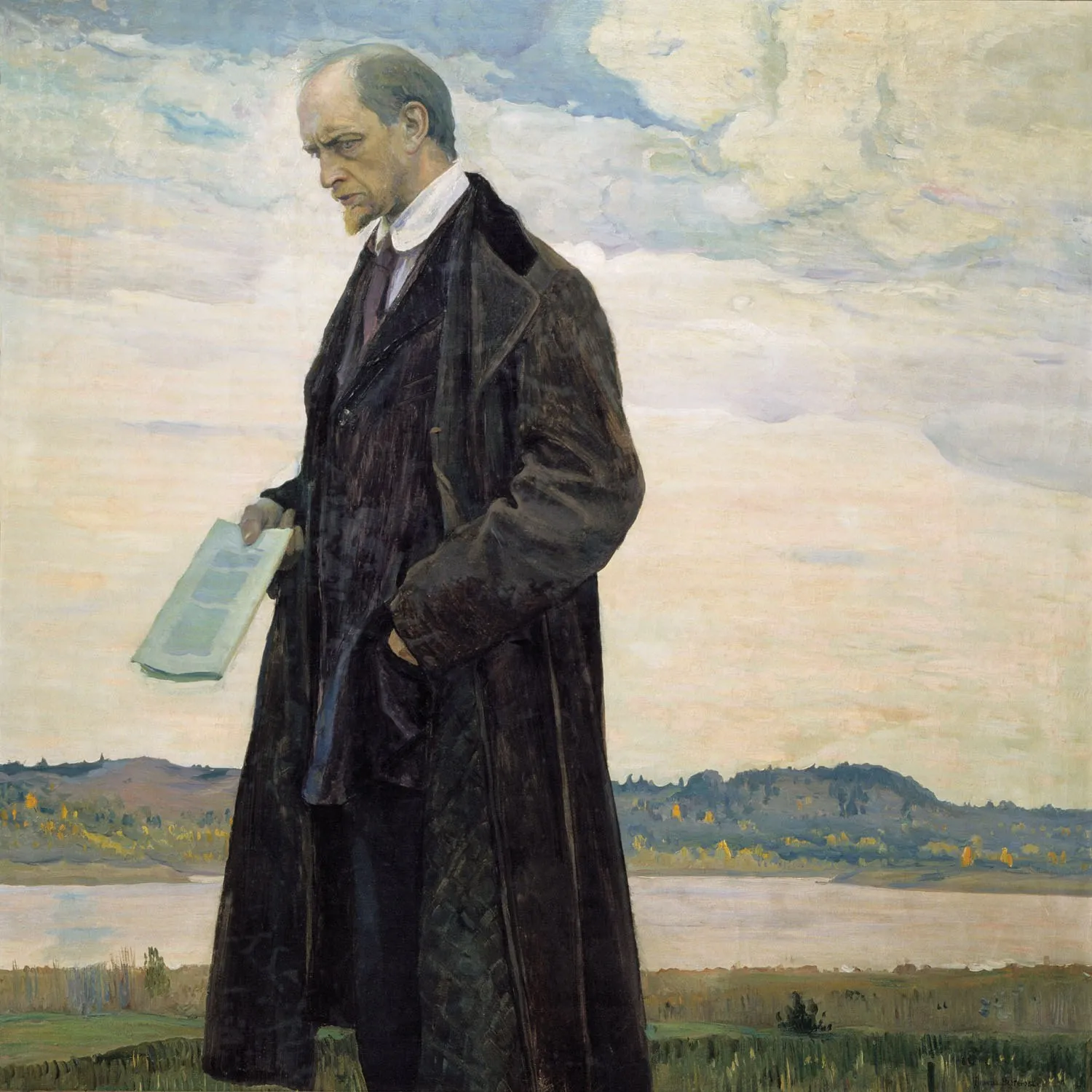
More than that: it was precisely here that Ilyin located Russia’s chief misfortune. He explained the revolution of 1917 not by conspiracy or by outside interference but by the collapse of an immature legal consciousness — the inability of people and elite to hold the state on inner law rather than on external coercion. And he made Russia’s future rebirth directly dependent on the education of legal consciousness: without it, he repeated, any forms — monarchy, republic, whatever — would degenerate into arbitrary rule.
Let us fix the first link of the blueprint. A thinker of the official canon asserts: for Russia to come into its own, it needs precisely that which constitutes the load-bearing structure of the Western social order — the rule of law, rooted in the inner dignity of citizens. This is not our interpretation; it is his central thesis. When our series says that “Russia must make its peace with the foundations of the West,” it speaks, in essence, in Ilyin’s terms: to make peace not with something alien, but with what Russia itself, by the word of its canonized philosopher, has always lacked for its own health.
II. The leading stratum: where the turn begins
The second link we already introduced in the previous article; now let us give it in full, because in Ilyin’s late works — the cycle of articles Our Tasks and the sketches On Russia to Come — it occupies the central place.
Reflecting on how Russia would emerge from communism, Ilyin took almost no interest in the question that agitated the whole emigration: what form of government should come. He was occupied with something else: who would rule — more precisely, who would make up what he called the leading stratum: the circle of people who actually prepare, take and carry out decisions on all floors of the state. The fate of the Russia to come, he wrote, would be decided by the quality of selection into this stratum. And he left a strikingly concrete description of two types of selection. The healthy selection — by “quality, ability and responsibility,” open to influx from below, advancing people of honor and competence. And the sick selection — by servility, personal loyalty, self-interest and party allegiance — producing a stratum that Ilyin unceremoniously called anti-state: it insulates the supreme power from the country, feeds on its mistakes and ruins the state more surely than any external enemy.
A reader who has passed through the second and sixth articles of the series will see that Ilyin’s scheme and our historical material describe the same thing from different sides. We showed it empirically: the isolationist cycles rest on a circuit of advisers who filter reality, and every turn — 1856, 1953, 1985 — began with the renewal of that circuit, with a change of the leading stratum before a change of course. Ilyin gives the same observation a normative formula: the recovery of Russia begins with the recovery of selection into the leading stratum. Personnel before policy turns out to be not only a historical regularity but a direct demand of the philosopher on whom the current canon swears its oath. It is hard to find a more legitimate foundation for the chief practical thesis of our series.
III. The formula of mutual acceptance: the obligations of both sides
The third link of the blueprint is the reason Ilyin is worth reading for Europe, and not only for Russia.
In Our Tasks there is a line that today is almost never quoted, by Ilyin’s admirers and opponents alike — his address to the West. The best-known text of this line is the article “What the Dismemberment of Russia Would Mean for the World.” Ilyin, who had lived in Europe for a quarter of a century and knew it not from the newspapers, warned the Western capitals: plans to reorder Russia from outside — its dismemberment, the imposition of ready-made forms upon it, the treatment of it as raw material — would bring the world nothing but decades of chaos and a new tyranny growing out of humiliation. Russia, he insisted, cannot be “made” from outside — it can only be accepted as a historical given and allowed to recover by its own laws. At the same time — and this is the second half of the same thought — he was merciless toward the Russian habit of blaming everything on outside forces: recovery is inner work, and neither hostility toward the West nor fawning before it can replace it.
Put the two halves together, add the axiom of mutual recognition from the doctrine of legal consciousness — and we obtain a formula that our series takes as its motto and that we are entitled to call Ilyin’s by the composition of its parts, honestly stipulating that the assembly is ours:
The West accepts Russia as it is — as a historical whole not subject to remaking from outside, to dismemberment or to schooling from a teacher’s chair. Russia accepts the foundations of the West — the rule of law, the dignity of the person, mutual recognition — not as an alien diktat but as that very legal consciousness without which, by the word of its own philosopher, it cannot come into its own. Neither side demands self-renunciation of the other; both take the work upon themselves.
It is worth hearing how different this formula is both from the capitulationist one (“Russia must become like the West”) and from the isolationist one (“the West has no place in Russian life”). It is symmetrical, it is demanding toward both sides, and — what matters most for the target audience of this series — it is assembled from material recognized by the official canon itself. To argue with it from the positions of that canon is difficult: one would have to argue with Ilyin.
IV. The limits of Ilyin: where his authority ends
The honesty promised above requires a separate section on what this article does not use, and why.
We do not use Ilyin’s apology for the “national dictatorship” of the transition period — not only because our values diverge, but on the substance of his own criteria: in a whole century, no dictatorship educating legal consciousness has been produced anywhere, whereas leading strata selected for servility are what dictatorships produce with great regularity — by Ilyin’s own account. We do not use his statements of the 1920s–30s about the European right-wing movements: some of them he revised himself in a postwar article dissecting the errors of fascism, some remain an indelible stain on the biography, and this series has no intention of defending them. We do not use, finally, his monarchist project — history has made that dispute pointless.
The method of this article is simple and openly declared: from the thinker’s legacy we take what withstands the test of the historical material of the first six articles of the series — legal consciousness, the leading stratum, mutual acceptance — and discard what does not withstand it. This is how all living traditions read their classics, including the official Russian one, which does with Ilyin exactly the same, only with the sign of selection reversed. The difference is one: we name our principle of selection.
V. Ilyin’s bottom line for our series
The blueprint, summed up. First: the goal — a Russia of legal consciousness, that is, a country whose foundations are compatible with Europe’s not by concession but by inner necessity; this is Ilyin’s definition of a healthy Russia. Second: the path — the recovery of the leading stratum, the replacement of selection by servility with selection by quality and responsibility; by Ilyin, as by the historical precedents, this is the condition of any recovery, not its consequence. Third: the outer frame — mutual acceptance without remaking: the West does not re-educate Russia, Russia does not war against the foundations of the West. Goal, path and frame — all three elements needed by the final articles of the series we have obtained from a source whose legitimacy for the target audience is impeccable.
The next article will take a second author from the same untouchable cabinet — Lev Gumilev — and perform on him the same operation of honest reading: passionarity, complementarity and the brotherhood of peoples as a language in which Russian-European kinship can be spoken of more convincingly than in the language of treaties.
The next article in the series: “Gumilev: Passionarity, Complementarity and the Brotherhood of Peoples.”