


Eighth article in the series “Returning to the West”
The Rules of the Game: What We Are Working With
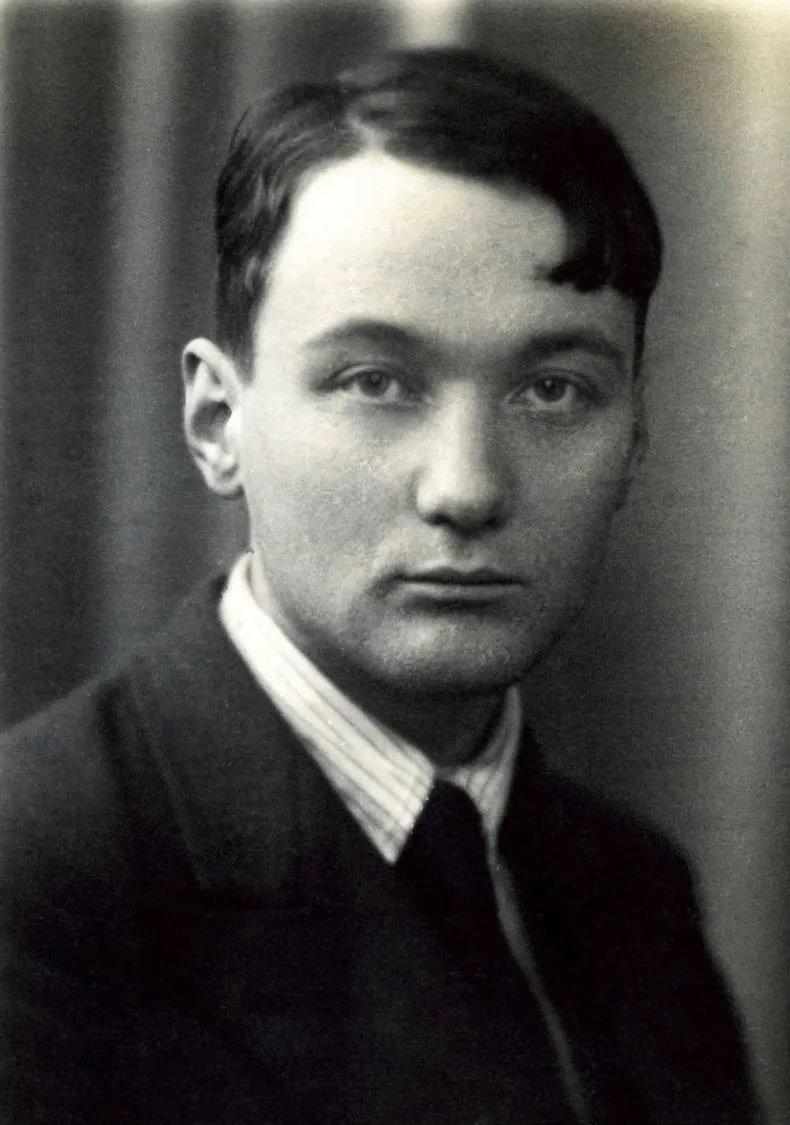
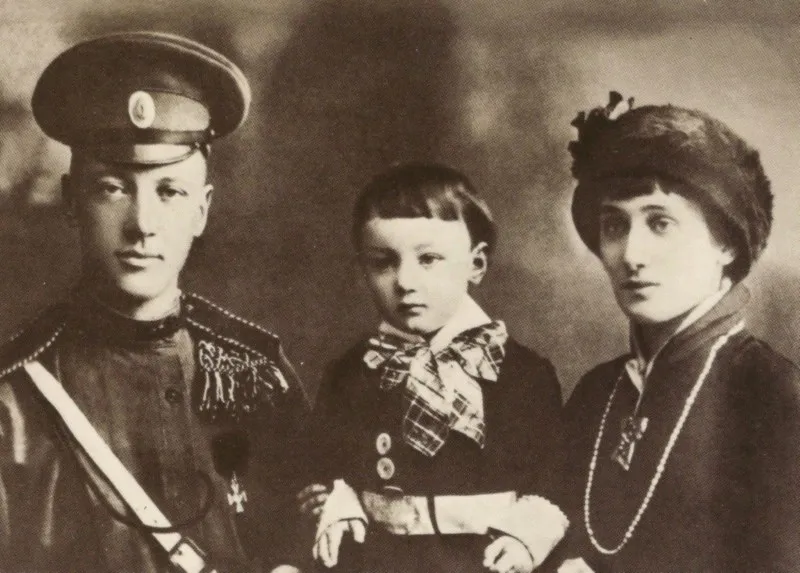
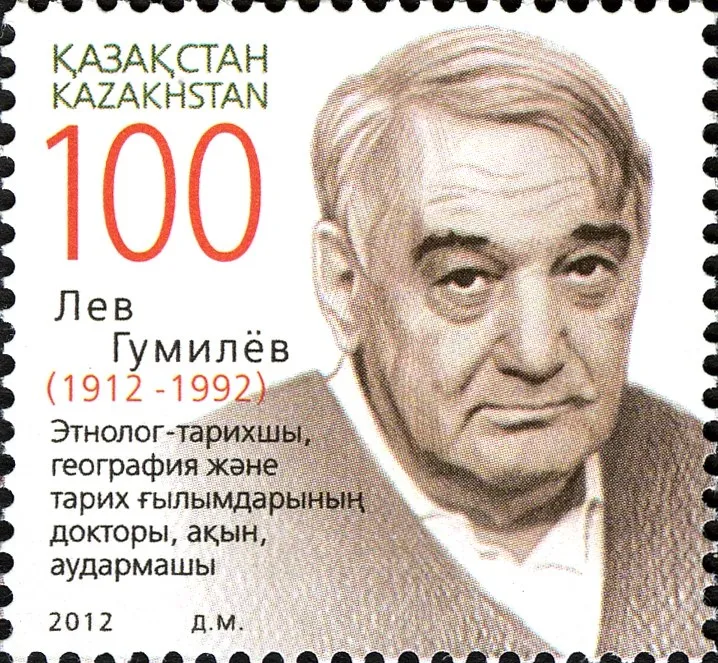
After Ilyin — a second author from the untouchable cabinet: Lev Gumilev. Historian and ethnologist, son of two great poets, arrested four times, thirteen years spent in the camps — and creator of the most popular theory of history in post-Soviet Russia: passionarity, ethnogenesis, the complementarity of peoples. His words are spoken today by textbooks, officials and television hosts; “passionarity” has become an everyday word.
Let us begin with the honesty without which the conversation has no value — with two caveats.
The first: the status of the theory. The passionary theory of ethnogenesis is not accepted by academic science. Its central mechanism — “passionary impulses” of cosmic origin — is neither observable nor testable; its datings and phases the critics consider a fitting of facts to the concept. We work with Gumilev not as with natural science but as with what he really is: a powerful cultural language in which tens of millions of people are accustomed to think about history. Political journalism that wants to speak with this audience is obliged to command this language — as a missionary is obliged to know the language of the country.
The second: Gumilev himself was not our ally. He was a Eurasianist — the last of the Mohicans of the very movement discussed in the fourth article of this series — he considered the Russian super-ethnos separate from the West European one, was skeptical of any “entry into Europe,” and said that if Russia were to be saved at all, it would be saved as a Eurasian power. To hide this would be forgery. We shall proceed otherwise: we shall accept Gumilev’s conceptual apparatus in its entirety — and test his conclusions with his own instruments on the historical material of the first articles of the series. If the apparatus is honest, it must withstand a test by facts. Let us see what it shows.
I. Passionarity: Where Russian Energy Goes
Gumilev’s central concept is passionarity: the surplus energy of people incapable of living an ordinary life — those who go beyond the horizon, build, conquer, create and sacrifice because they cannot do otherwise. The fate of an ethnos, according to Gumilev, is the fate of its passionaries: while they exist and while their energy finds a constructive channel, the ethnos grows; when the energy is knocked out by wars and repressions, or turns to destruction, the ethnos breaks.
Let us take this concept seriously and put Gumilev’s question to the Russian history of the last three centuries: where did Russian passionarity go, and where did it find its best outlet?
The answer, if one looks at the facts rather than at preferences, is inconvenient for Eurasian orthodoxy. The greatest bursts of Russian creative passionarity of the modern age occurred in the European direction and in European material. The Petrine generation, which in a quarter-century taught the country to build fleets and academies, was a passionary explosion set off by the encounter with Europe. The Golden and Silver Ages, Diaghilev conquering Paris, the avant-garde rewriting the visual language of the planet (the third article of the series) — all of this was passionarity that found its channel in the European cultural space and returned from there as glory. The four waves of emigration (the fifth article) were passionarity in its chemically pure form — people who had energy enough to uproot themselves — and again its constructive outlet was found in the West: Sikorsky, Balanchine, Nabokov, the engineers and professors of every wave. By Gumilev’s own criteria — sacrifice, superhuman effort, a result that changes the landscape — the Russian–European encounter was the principal generator and the principal channel of Russian passionarity for three centuries running.
And now the reverse side, with the same instrument. The cycles of isolation (the second article), in Gumilev’s terms, are the periods when passionarity is denied its constructive channel, and it is either knocked out (the repressions of every closed epoch struck first of all at the most energetic), or squeezed out across the border, or channeled into destruction. Isolation is a machine for disposing of passionarity; openness is a machine for capitalizing it. We do not claim that Gumilev would have said so. We claim that his conceptual apparatus says so when applied to verifiable facts.
II. Complementarity: A Test on Historical Material
The second working concept is complementarity: the unaccountable mutual sympathy or antipathy of ethnoses, which determines whether they grow together into symbiosis or reject each other. Gumilev considered the complementarity of Russians with the steppe and Turkic peoples positive, and with the Romano-Germanic world guarded; the entire Eurasian construction stands on this.
Let us test it — not with quotations but with material. Complementarity, by Gumilev himself, is recognized by its fruits: symbiosis, mixed marriages, joint creation, mutual enrichment without loss of self. Apply the criteria to Russian–European history. The German quarters and German settlements of Russian towns — three centuries of symbiosis that gave Russia scholars, physicians, generals and statesmen in numbers no steppe alliance ever dreamed of. A dynasty that became German by blood and remained Russian in spirit is, by Gumilev’s measures, the limiting case of positive complementarity. The Italian architects who built Russia’s holy places — from the Kremlin of Aristotele Fioravanti to the whole of St Petersburg; the French language in which the Russian nobility thought for two centuries without ceasing to be Russian; the thousands of European engineers, officers and professors who grew into Russia, and the counter-current — the Russian colonies of Paris, Nice and Baden-Baden that grew into Europe. Mixture, symbiosis, joint creation on every floor of life, from the kitchen to philosophy — and all of it without dissolution: Russians did not become Germans, and the Germans in Russia never stopped giving Russia Russian patriots.
The conclusion, by the criteria of the theory itself: Russian–European complementarity is empirically positive — and is confirmed by a larger mass of symbiosis than any other axis of Russian ethnic contacts. The guardedness toward the “Romano-Germanic world” that Gumilev postulated is not an observation of the fabric of the people’s life; it is the political memory of wars and the ideological inheritance of Eurasianism — that is, precisely the layer which Gumilev himself ordered to be separated from deep ethnic sympathy. Russia fought wars with the steppe as well — this never troubled the Eurasianists. Separate the wars of states from the chemistry of peoples, as the theory demands — and the theory will point to Europe.
III. The Brotherhood of Peoples: Extension, Not Abolition
Here Gumilev must be given his due, not only argued with. His best, most humane idea — the one for which readers love him over and above all the scientific objections — is that peoples are not ranked into higher and lower, that ethnoses are equally worthy, that symbiosis is more fruitful than subjugation, and that the enmity of peoples is not fatal but phasal. The “brotherhood of peoples” in Gumilev’s rendering is not a Soviet slogan but a picture of the world in which the Russian, the Tatar, the Kazakh and the Buryat are co-participants in one historical destiny, with no elders and no juniors.
Our series proposes not to abolish this picture but to complete it — by removing from it the single arbitrary border. If the brotherhood of peoples is real on the space from the Volga to the Amur, there is not one reason within the theory itself why it must break off at the western border. The German, the Italian, the Frenchman, the Pole entered Russian destiny — and Russians entered theirs — by the same paths of symbiosis as the peoples of the steppe: through service, marriage, craft, joint creation, shared blood in shared calamities. The fourth article of the series showed that Russian identity itself was assembled in the European workshop; the third — that the Russian genius was recognized as “one of our own” first of all by Europe. The brotherhood of peoples, honestly carried to its end, is a brotherhood that includes the European peoples, with whom Russia shares more historical substance than with anyone else. Eurasianism stopped this brotherhood at the western border not on the data but on a grievance — the grievance of the émigrés of 1921 against a Europe that had not saved their Russia. A grievance is a poor cartographer.
And the last point in this section — on the passionary meaning of the moment. Gumilev taught that the phases of ethnogenesis are not chosen, but the energy of a phase can be directed. Russia today, in the language of his theory, is spending the passionarity of its generation with a profligacy which that language calls the breakdown: the best energy is either expended on destruction or drains abroad in a fourth wave. A turn toward openness, in these terms, is not an ideological choice but the energy conservation of the ethnos: the return of passionarity to the channel where for three centuries it produced not ruin but Diaghilevs. For the audience that thinks in Gumilev’s language this is the strongest argument of the series: isolation burns passionarity, openness multiplies it — show us a counter-example from Russian history.
IV. The Sum: Two Classics — One Blueprint
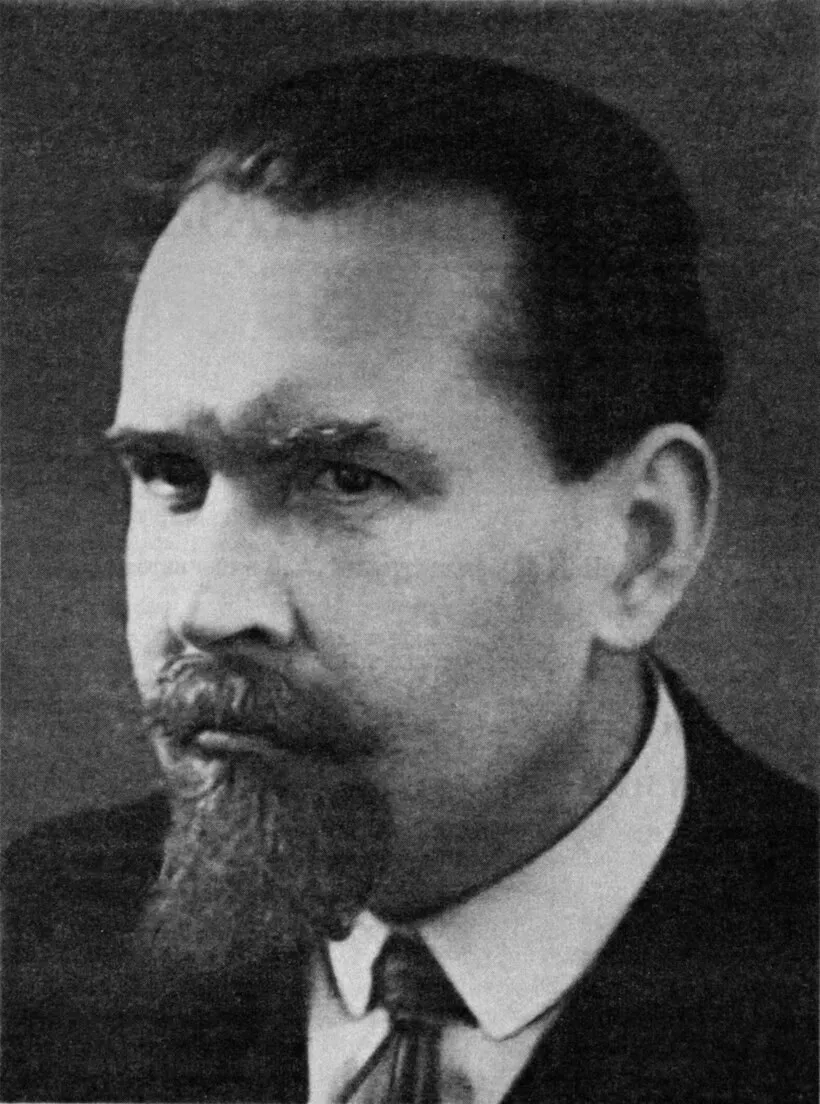
Let us add the seventh and eighth articles together. Ilyin gave the normative blueprint of return: legal consciousness as the goal, the recovery of the leading stratum as the path, mutual acceptance as the frame. Gumilev — read honestly, with his own instruments, on the facts — gives the blueprint its energy and its language of kinship: positive complementarity with Europe, confirmed by three centuries of symbiosis; the brotherhood of peoples carried to its full map; passionarity demanding a constructive channel. Both authors are taken from the official canon; both, read accurately, testify not for the fortress but for the return. This is neither accident nor sleight of hand: the canon was assembled by its covers, not by its contents — and the content of Russian thought, as we saw with the Slavophiles, the Eurasianists and Ilyin himself, was always European in material and pan-human in aspiration. Russian classics in general make a poor garrison library.
The next article will come down from the philosophical heights to the matter that can be neither quoted nor banned — the economic and technological fabric of Russian–European ties: from the Petrine shipyards to the gas pipelines and the IT diaspora — and will show what of this fabric has actually been torn, what has merely been rerouted through intermediaries, and at what price.
The next article in the series: “The Material Fabric: the Economy and Technologies of Three Centuries of Ties.”