

Ninth article in the series “Returning to the West”

From Spirit to Matter
Eight articles of this series have worked with culture, ideas and people. It is time to go down into the engine room — to the economy and to technology — because it is here that the isolationist narrative feels most confident: “we survived the sanctions, the economy held, trade has turned to the East, therefore the economy does not need the West.” Let us test this claim the way it is done in our series: first the historical depth, then today’s cross-section, and everywhere — separating fact from judgment.
Let us state the article’s thesis at once, so that there is something to refute: over three hundred years, Russia’s economic and technological tie with the West has never once been severed — it has only changed form: from direct to intermediated. The current “turn to the East” is in large part not a replacement of the Western tie but a rise in its price: the same Western technologies and goods, the same European market, but through third hands and with a commission. The economy, unlike the rhetoric, has already voted for return — with the ruble it overpays every year for the detour.
I. Three Centuries of One Scheme
Russian economic history of the modern age, for all the diversity of its epochs, reproduces one and the same structure of exchange: raw materials and foodstuffs — to the West; technologies and capital — from the West. Let us trace it across the regimes.
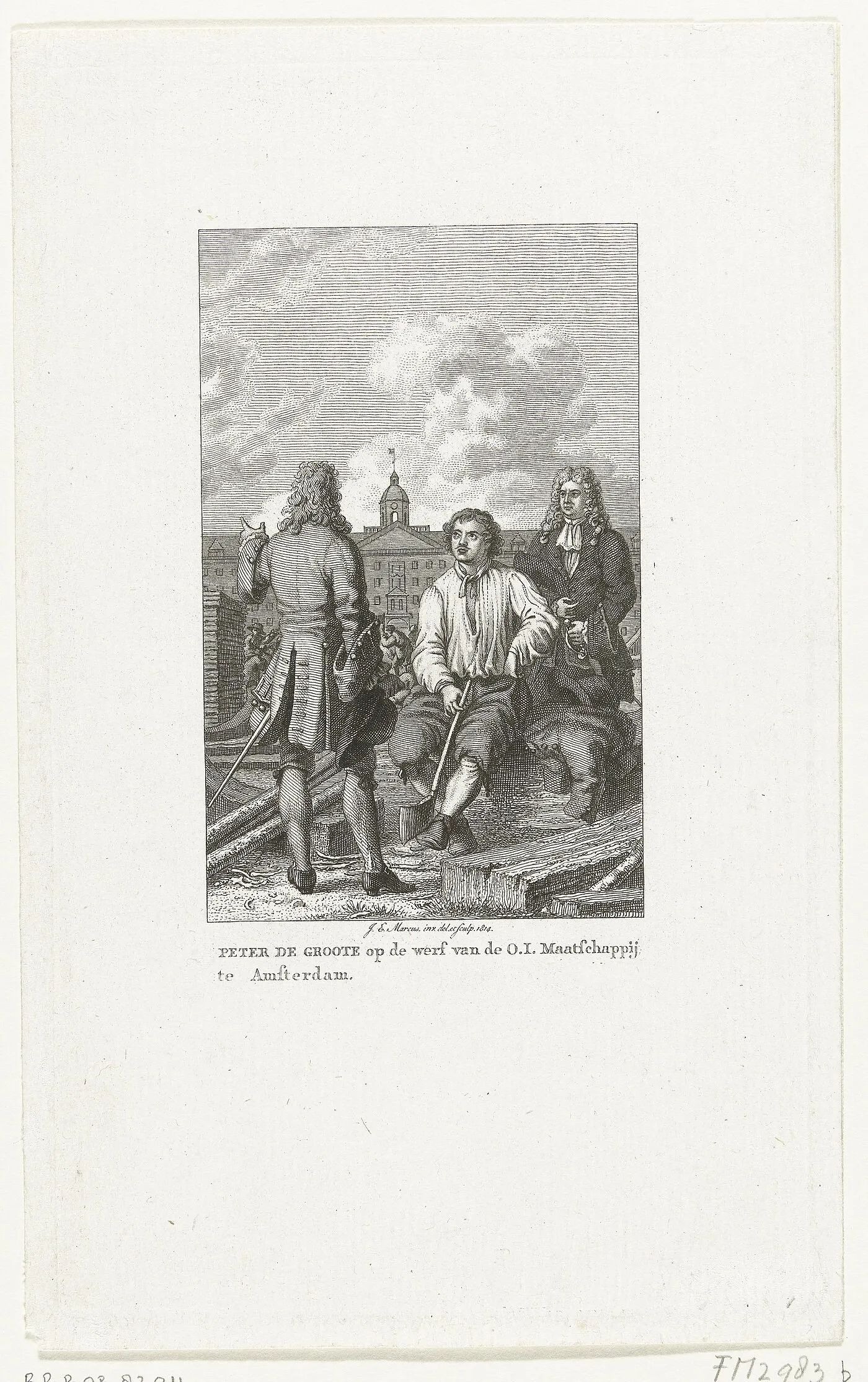
The Empire. Peter built his fleet on Dutch and English knowledge and with the hands of imported masters; throughout the eighteenth century Russian exports (iron, hemp, timber, sailcloth) went to Europe, first of all to England, and back came machine tools, instruments and specialists. The nineteenth century enlarged the scheme: the empire’s railways were built on European equipment and European capital, Witte’s industrialization fed on French and Belgian loans and investment — by the beginning of the twentieth century a significant part of Russian heavy industry and of the banking sector ran on Western capital, and grain exports to Europe were the main source of foreign currency. Let us be precise: this was not colonial dependency but classical complementarity — Europe could not live without Russian grain and raw materials either.
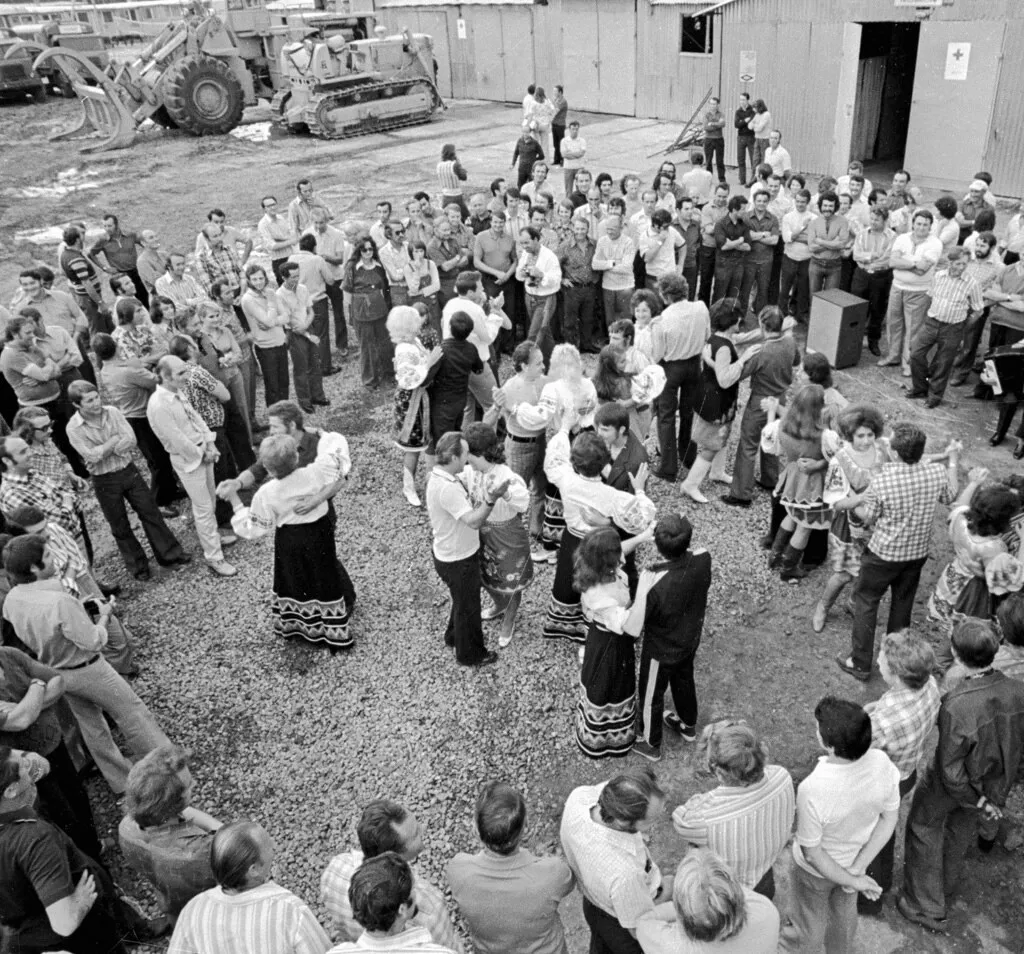
The USSR. Soviet power declared the scheme abolished — and reproduced it in its extreme form. The first five-year plans: hundreds of industrial projects designed and equipped by Western firms, from the tractor plants delivered by Albert Kahn’s bureau to the GAZ works built to Ford patterns and the Dnieper dam with its American consultants; the payment was the export of grain, timber and oil. The postwar decades: the same scheme on a new commodity — the “deal of the century” of 1970, “gas for pipes,” when German large-diameter pipes and credits built the very pipeline system through which Soviet, and then Russian, gas flowed to Europe for forty years. By the 1980s the hard-currency till of the USSR stood on energy exports to Europe, and the food balance — on grain purchases made with that currency. Ideological confrontation did not cancel the material scheme for a single year — it merely registered it as “trade with the capitalist countries.”
Post-Soviet Russia carried the scheme to its maximum: by the early 2020s the European Union was the first trading partner, the first investor, the principal buyer of energy and the principal source of technologies, equipment and components. The Russian economy and the European market had grown together to a state both sides considered irreversible.
Three hundred years in sum: the regimes changed, the rhetoric changed, the scheme — never. This is the material fabric, the twin of the cultural fabric of the first article.
II. The 2022–2026 Cross-Section: Rupture or Rerouting?
Now — what happened to the scheme after 2022. The sanctions rupture is unprecedented, and denying it is pointless: the departure of thousands of companies, embargoes and price caps on oil, disconnection from payment infrastructure, closed skies, direct trade with the EU collapsing severalfold. The question is not whether there was a blow — the question is what became of the tie. The answer is given by the architecture of the workaround mechanisms, and it is eloquent.
Imports: the same goods, new hands. The mechanism of parallel importation, legalized in the spring of 2022 “until official supply channels are restored” and prolonged every year since (the latest prolongation — to the end of 2026), is the state’s recognition of a simple fact: there is nothing to replace Western goods with; one can only bring them in without the producer’s consent. The routes are known to every participant in the market: Turkey, the UAE, Kazakhstan and the other EAEU countries, Georgia, China as re-exporter; typical chains of the form “EU/US → Dubai → Kazakhstan → Russia.” The cost is a matter of estimates: industry surveys put the markup at 5–20% on simple flows and up to 40–80% on complex multi-stage schemes, counting logistics, intermediaries and payment commissions; add the loss of factory warranties, service catalogues and predictability of supply. The list of goods admitted to such importation — on the order of two thousand product groups, from machine tools to auto parts — is regularly adjusted, and the ministry states plainly: the instrument is temporary, until official channels are restored. Read the wording closely: the state document proceeds from the premise that the direct tie is the norm, and the detour a pathology with a known shelf life.
Exports: the same market, a longer haul. Oil that left the European direction went to India and China — at a discount, with a shadow fleet and a transport leg two or three times longer; a significant part of India’s refining of Russian oil returns as petroleum products to Western markets — that is, the European consumer remained in the chain, but between him and the Russian wellhead a layer of intermediaries has grown, taking the margin that used to remain in Russia. The gas story is more graphic still: pipeline exports to Europe shrank, but deliveries of Russian LNG to European ports continued through the entire period of confrontation — the market declared lost remained a buyer wherever a physical possibility remained.
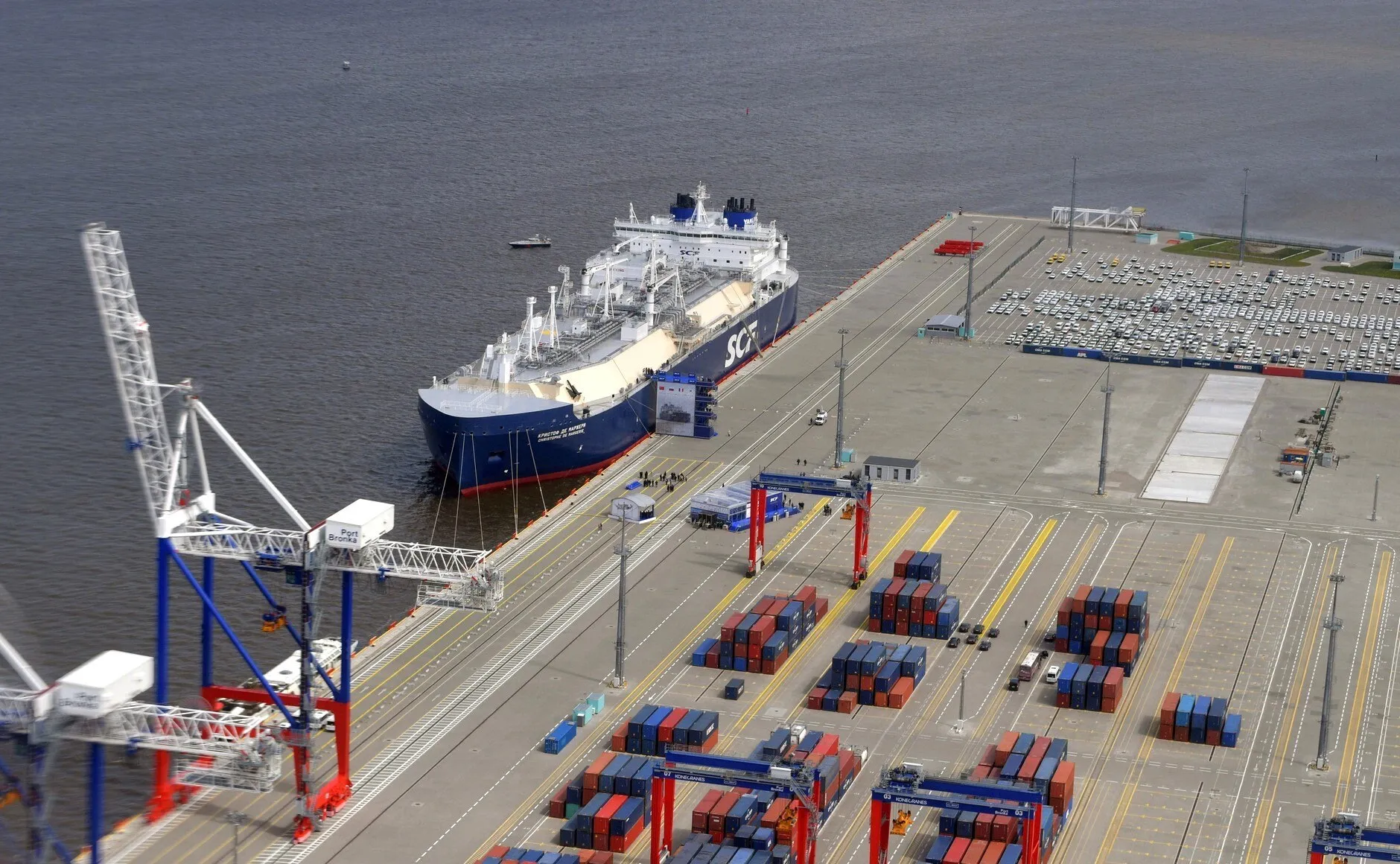
Technologies: substitution or repackaging? The import-substitution program has produced real results in food and in part of machine-building — an honest analysis is obliged to acknowledge this. But in the critical technological layers — microelectronics, machine tools, aviation, pharmaceuticals, software — “substitution” on inspection turns out, time and again, to be a change of nameplate on the same Western product, or on a Chinese product made under Western licenses, imported through third countries. The industry of a country that for three centuries built its factories on imported machine tools could not and cannot reassemble its machine park in four years — this is not a judgment, it is the arithmetic of investment cycles.
The sum of the cross-section is this. The material tie with the West after 2022 behaves exactly as the cultural tie behaved in all the cycles of closure (article 2): it does not disappear — it goes into detour, grows more expensive, and makes the intermediaries richer. The “turn to the East” in its real, not rhetorical, content is in large part a transit scheme of access to the same Western markets and technologies. The economy did not turn — it lengthened the route.
III. The Asymmetry of the East: A Market, but No Replacement
There remains the opponents’ strongest argument: China. Trade turnover with it has grown to records, the yuan has become the main settlement currency, the Chinese auto industry has taken the Russian market — is this not a full replacement of the West?
The answer requires a distinction that the rhetoric diligently smears: a sales market and a source of development are different functions, and only the first is replaceable. As a buyer of raw materials China has indeed partially replaced Europe — with reservations about the discounts, and about the fact that a single large buyer dictates the price (the position of a supplier facing a monopsony is a separate subject, familiar to anyone following the negotiations over new pipelines that for years have not moved off the dead point precisely over price). But as a source of top-tier technology China does not replace the West, by the very construction of the world technological pyramid: a significant part of Chinese high tech itself stands on Western architectures, equipment and licenses and is itself restricted in re-exporting them by extraterritorial sanctions; and technologies of the latest generation China partly cannot, and for the rest does not want to, hand to Russia — for technological leadership is not given away to a potential competitor. Russia in this configuration receives access to China’s middle technological tier — and that on the terms of a buyer deprived of alternatives.
And here the material logic closes with the Ilyin and Gumilev lines of the preceding articles in an unexpected way: the three-century scheme of “raw materials in exchange for development” worked because the counterparty was the planet’s technological leader, interested in the Russian market and competing for it. Replacing a competitive tie with the leader by a monopoly tie with an intermediary is not diversification — it is a downshift. The economic meaning of returning to the West lies not in sentiment but in restoring competition for the Russian market — the only mechanism that has ever secured favorable terms of exchange for Russia.
IV. Conclusion: The Meter Is Running
The article has three closing propositions.
First, the historical one: the material tie with the West is the three-century load-bearing structure of the Russian economy, having survived every change of regime and every confrontation; even Stalin’s iron curtain did not abolish it — only re-registered it.
Second, the diagnostic one: after 2022 the structure has not been destroyed but switched into detour mode — parallel importation, intermediated trade, transit jurisdictions. This mode itself, including its official wording “until official channels are restored,” is an admission of the rupture’s temporariness built into state documents.
Third, the practical one — and this is an argument the cultural articles of the series did not have: the detour mode has a meter. Every year of detour means intermediaries’ commissions, the discounts of monopsonist buyers, import costs up by tens of percent, lost refining margin, frozen logistics. Cultural isolation impoverishes imperceptibly; economic isolation presents its bill quarterly, and the bill is paid by the budget, by business and by the consumer. Not one of the groups paying this bill has an interest in its prolongation — including, which matters for the final articles of the series, a significant part of the very elite that publicly supports the course. The material fabric, like the cultural one, pulls back; the difference is that it does so with a force measurable in money.
The next article will take the closest historical precedent of the full cycle “enmity — rupture — return” — the German one — and examine how a nation that fought Europe twice in thirty years became its heart: what in that experience is transferable to the Russian case, what is not, and why.
The next article in the series: “The German Lesson: How Europe’s Enemy Became Its Heart.”