


Thirteenth article in the series “Returning to the West”
The Question People Are Afraid to Ask Aloud
Twelve articles of this series have converged on one conclusion: all the keys to the door of return lie at the summit of Russian power, and what turns them is not a change of doctrine but a change in the configuration of the people who shape the picture of the world at that summit. The conclusion was reached independently from three sources — historical statistics (the second and sixth articles), economic logic (the ninth) and legal analysis (the twelfth). The philosophical grounding was given by Ilyin (the seventh article): the fate of the country is decided by the quality of the leading stratum.
It is time to ask the question toward which all these articles have been leading and which public conversation in Russia habitually walks around: what should this stratum be — and, more important, what did it look like on the three occasions when the country actually turned?
This is not a question about personalities — the series does not deal in personal appointments. It is a question about a type: about the professional and human profile of the people who historically accomplished what we are trying to think through as possible again.
I. Ilyin’s Criteria: What a “Healthy” Leading Stratum Means
Let us return to Ilyin with a concrete task. In “Our Tasks” he distinguishes two principles of forming the leading stratum with surgical precision, and today those pages read like a diagnostic sheet of the present condition.
A stratum selected on the principle of obsequiousness, personal loyalty and readiness to report what is desired produces a single product with a guarantee: the isolation of the summit from reality. Ilyin calls such a stratum “anti-state” — not because its members wish evil, but because the very mechanism of their career survival works against the state: each level filters out a little more of the inconvenient, and what arrives at the summit is a picture of the world in which the besieged country is winning, the economy is growing, and the adversaries are weaker than they seem. The price of this picture, as we measured in the second article, was the Crimean War, an unexpected technological gap, decisions taken on the basis of a nonexistent reality.
A stratum selected by “quality, ability and responsibility” produces reliable information upward, professional decisions downward, and the readiness to say the inconvenient thing while it can still be corrected. Ilyin writes plainly that such a stratum does not arise by itself — it requires conscious selection from above: the supreme power receives the leading stratum it chooses. The choice of entourage is a political decision, and the first of all political decisions: every other decision is made on the basis of the information this entourage delivers.
Three criteria of a healthy stratum, synthesized from Ilyin’s texts: competence (professional knowledge of the subject, not of the office), independence of judgment (the capacity to report the inconvenient without self-censorship) and openness to reality — including the reality beyond one’s own borders. The third criterion is the key one for our subject: a man who has never lived in another system, never worked with foreign partners, never read any sources other than internal digests, is physically incapable of calibrating his leader’s picture of the world against external reality. He does not lie — he does not know.
II. First Portrait: the Team of Alexander II
The team of the Great Reforms was neither a “liberal wave” nor a random collection of persons. It was a professional network, formed over decades of service inside the same system, which had accumulated in its depths projects waiting for a different addressee at the summit. Nikolai Milyutin — the state secretary who carried emancipation across the bureaucratic thresholds. Zarudny tailored the judicial reform to the best European patterns. Grand Duke Konstantin Nikolaevich — the organizational motor, who had passed through London and Brussels. Reutern at the Ministry of Finance had personally toured the European exchanges and knew how Western capital worked. Gorchakov had been formed in the Petersburg drawing rooms where French was spoken and Metternich was known personally.
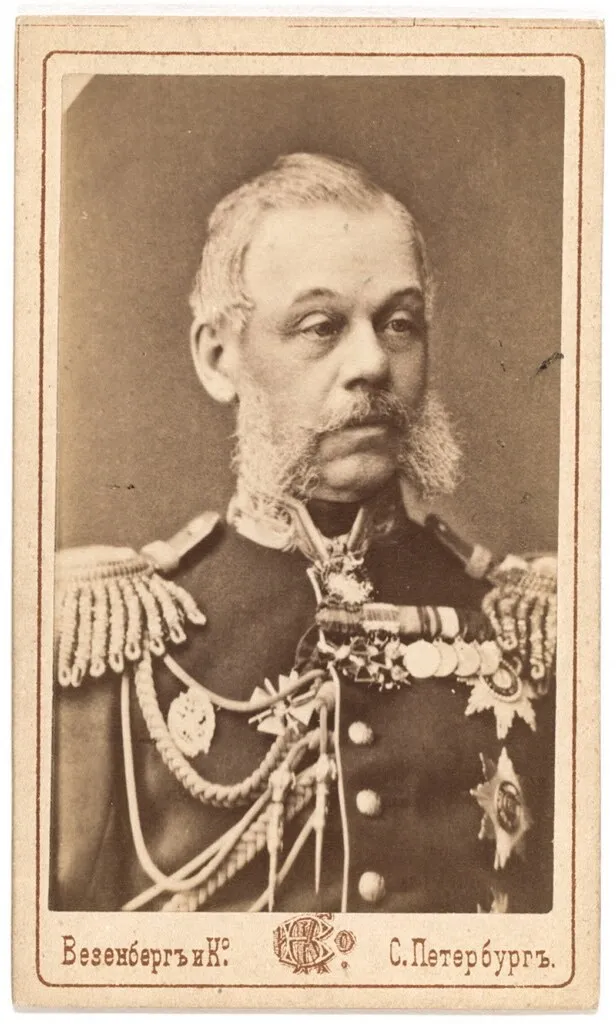
What unites these men by Ilyin’s criteria? Professional competence, worked out through years of service inside the system. Personal working experience of Europe — not a tourist’s. An accumulated silent disagreement with the previous course, which had no outlet under Nicholas and found one under Alexander. They did not come from outside — they were inside, kept their projects in their desks and waited for the configuration at the summit to change. When it changed — they took out the projects and began.

The lesson for the series: the people of a turn are not imported, they are grown inside the system. In any bureaucracy, even the most closed, a stratum of professionals with competence and disagreement accumulates — precisely because the system cannot function entirely without knowledge of reality. The question is not whether they exist, but whether they have access to decision-making.
III. Second Portrait: the Heirs of 1953
Malenkov, Khrushchev, Bulganin — the men who accomplished the turn of 1953–56 — were neither liberals nor secret Westernizers. They were flesh of the system’s flesh, the hands by which its crimes had been committed. And nevertheless it was they who opened the system up — because they possessed what the late leader in his final years had been deprived of on principle: direct knowledge of the country’s real condition.
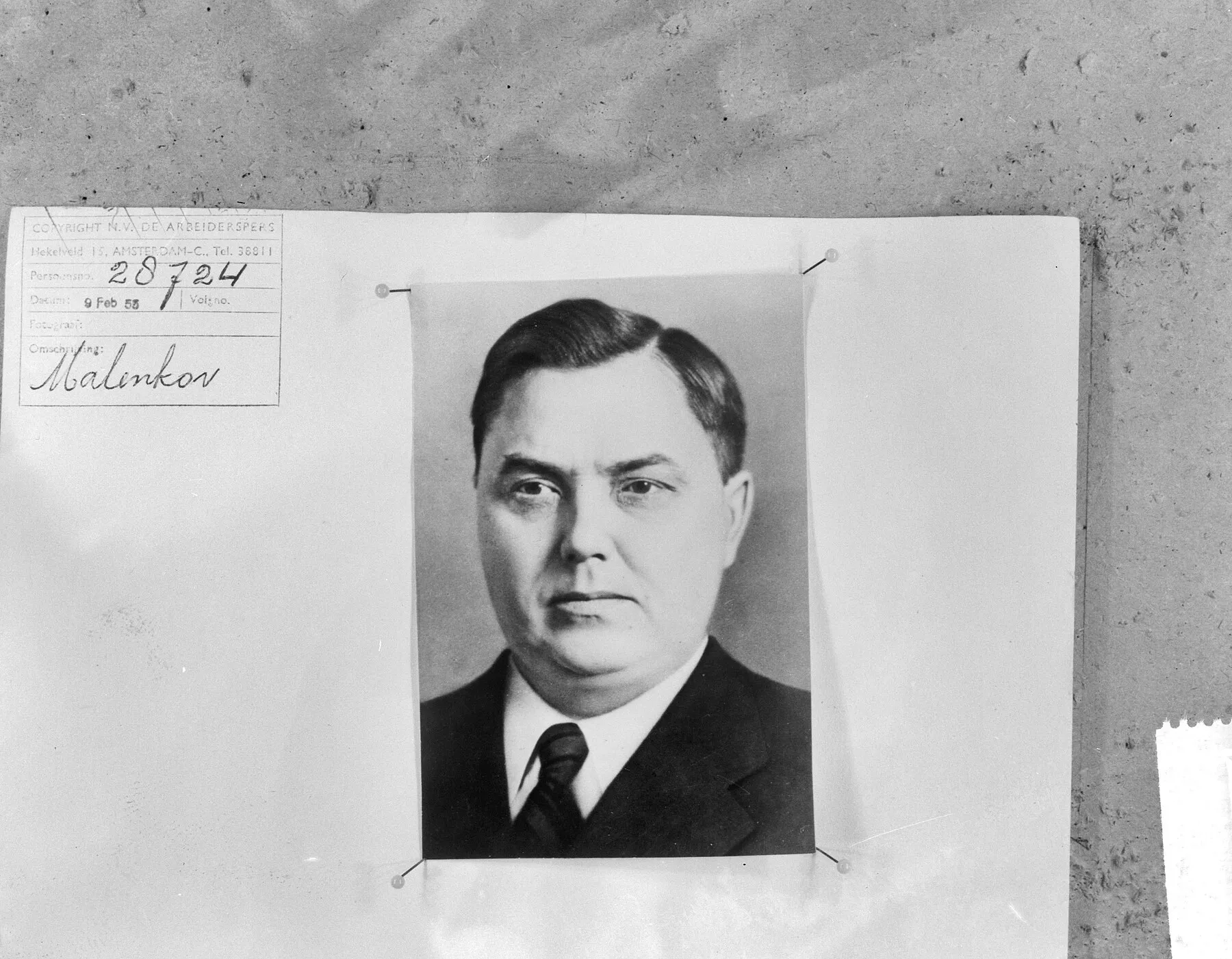
Khrushchev knew the countryside — he had run it. Malenkov knew industry — he had run it. When the summit of power died and the filter came off, these men found themselves in a space where the real could be reported — and they reacted precisely to it. The first initiatives of 1953 proceeded from a pragmatic knowledge of what the system could afford and what it could not.
By Ilyin’s criteria this is a stratum of a particular kind: competence present, independence of judgment at the edge, knowledge of reality partial but sufficient for a first turn. Ilyin warned of precisely this situation: when the stratum has degenerated so far that the turn has to be made by men with dark biographies, the price of recovery rises and the result remains inconsistent. The Thaw was exactly that: genuine and half-hearted at once, capable of the Secret Speech and of the Hungarian tanks.
The lesson: even partial conformity to Ilyin’s criteria yields a turn — incomplete, fragile, but real. Full conformity is an unattainable ideal; the working question is whether the competence and independence actually available are enough for the first beat.
IV. Third Portrait: Gorbachev’s Team
The Gorbachev of 1985 differed from his predecessors in one thing his contemporaries underestimated: he read the closed digests — the real ones, from analysts, not from political reporters. The Academy of Sciences, IMEMO, the departments of the Central Committee that for decades had produced honest assessments for internal use, received under Gorbachev access to the first person. Yakovlev — ambassador to Canada, who had lived in a Western country for ten years — became the chief adviser on ideas. Shevardnadze at the Foreign Ministry brought something Gromyko lacked on principle: he was not a product of the ministry’s internal culture, which forty years of confrontation had endowed with an immunity to Western reality.
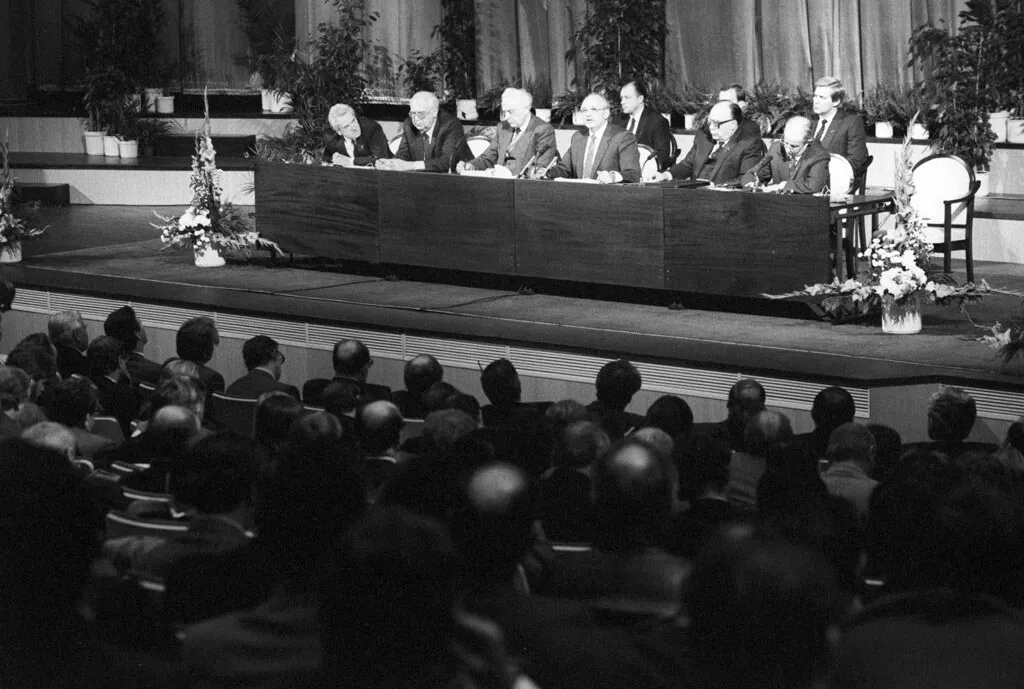
The “new thinking” grew not out of ideology but out of information: when the first person gained access to the real economic and military digests, “we cannot live like this” became not a slogan but a conclusion.
By Ilyin’s criteria the team of 1985–88 is the fullest of the three embodiments: competence real, independence of judgment consciously nurtured, openness to external reality institutionalized for the first time in thirty years. The result — the deepest of the three turns. And the largest mistakes, too, because Ilyin’s requirement for the leading stratum includes not only intellect but the instinct of statehood: knowing reality is a necessary condition, but not a sufficient one.
V. What the Three Portraits Say About the Next One
The three cases draw a single profile of the team of a turn, with adjustments for the epoch. It does not come from outside — it grows inside the system, often waiting decades for the addressee to change. It is not “pro-Western” in the ideological sense — it is professional: it knows its subject, counts the real costs, knows how to report the inconvenient. It has personal or professional contact with external reality — enough to calibrate its assessments against something other than internal digests. And it comes to power not through the replacement of the system but through a change of configuration within it.
This is not a utopia. In any large bureaucracy such a stratum exists. The technocrats of the Finance Ministry who count the real price of the sanctions detour. The diplomatic corps trained to understand the partner. The analysts writing honest memoranda into the lower drawers of their superiors’ desks. The industrialists who know what import substitution actually costs. This stratum is neither an opposition nor agents of influence; it is professionals who have the knowledge and do not yet have the access.
A turn is when they get the access. On the historical evidence, this happens not through persuasion but through a change of configuration at the top. Ilyin called it “bringing forward”: not the creation of a new stratum, but the bringing forward of what already exists — out of the desks, out of the lower floors, out of the silence.
VI. An Honest Caveat: Knowledge Is Necessary but Not Sufficient
To the criteria of the leading stratum Ilyin added a quality he called the “sense of right”: the intuitive understanding that the state is neither an instrument nor a machine but a living organism with limits of endurance that must not be violated in the pursuit of speed. The team of 1985 violated them: knowledge of reality and resolve for change outran the institutional insurance, and the turn, the deepest of the three, remained also the least governable.
For the final article this is history’s principal lesson: a turn not secured by institutions belongs personally to its authors and dies with them. A turn built into courts, treaties, budgets and the habits of a sufficient number of people outlives its authors and becomes the new norm. This lesson is not against the turn — it is against a turn that repeats the old mistakes.
The next — and final — article in the series: “The Turn of the Key: The Change of Entourage as a Door to a New Dialogue.”