
Tenth article in the series “Returning to the West”
Why Russia needs the German mirror
Of all the historical precedents for a nation’s return to Europe, the German one is the fullest and the most uncomfortable. The fullest, because Germany passed through the entire cycle that our series describes with reference to Russia: its own “special path,” the setting of itself against the West, two wars with Europe within thirty years, total rupture — and then a return so deep that today Germany simply is the institutional heart of the very Europe it fought. The most uncomfortable, because the first association it raises (“so first come defeat and occupation?”) turns the conversation into a provocation.
We will go against both traps: we will neither discard the precedent for being uncomfortable nor transfer it mechanically. We will take the German cycle apart stage by stage, honestly separate what was a consequence of military defeat from what was the Germans’ own choice — and we will see that the transferable core is larger than it seems, and the untransferable part smaller.
I. The German “special path”: a painfully familiar blueprint
We must begin with something the fourth article has already mentioned: the very term “special path” is German — Sonderweg — and the Russian version is a translation of it in more than the linguistic sense.
The Germany of the nineteenth and early twentieth centuries assembled the complete set of ideas that a Russian reader will recognize without a dictionary. The opposition of deep German culture to shallow Western civilization — mercantile, mechanical, soulless (in 1918 Thomas Mann himself defended this antithesis with an entire book, Reflections of a Nonpolitical Man — before becoming its most famous apostate). The conviction that Western democracy is a form alien to the German spirit, and that an organic people is properly served by a strong supra-party authority. The cult of the state and the army as embodiments of the national spirit. The sense of being encircled by envious neighbors and of grievance against an unjust world order — raised after Versailles to the rank of a state religion. The “conservative revolution” of the 1920s with its prophets (that very intellectual circle on which today’s Russian ideologues still draw — Spengler, Schmitt, Jünger) — and the final degeneration of the whole set into a regime that declared war on the very concept of a common Europe.
This is not a rhetorical likening of regimes — our series has no intention of equating them. It is a statement of the structural kinship of the blueprint of ideas: the Russian “special path” does not merely resemble the German one — it is, as we showed in the fourth article, to a large extent copied from it. Which means that the experience of the way out reads, at the very least, with the interest of an heir.
II. The turn: five stages, of which occupation is only the first
Now for the main thing — the anatomy of the return. The stock version (“the Germans were crushed and re-educated”) describes only the first stage and is therefore unfit for analysis and for transfer alike. There were five stages, and four of them were inner work.
Stage 1. Catastrophe and zero hour (1945). Total defeat, occupation, partition. Let us concede at once and without reservations: this launch is untransferable and must not be transferred — Russia is a nuclear power, and no 1945 scenario exists for it. The question of this article lies elsewhere: was the catastrophe a sufficient condition of the turn? History answers: no. The twentieth century saw many crushed nations; only one became the heart of Europe. Everything was decided at the following stages.
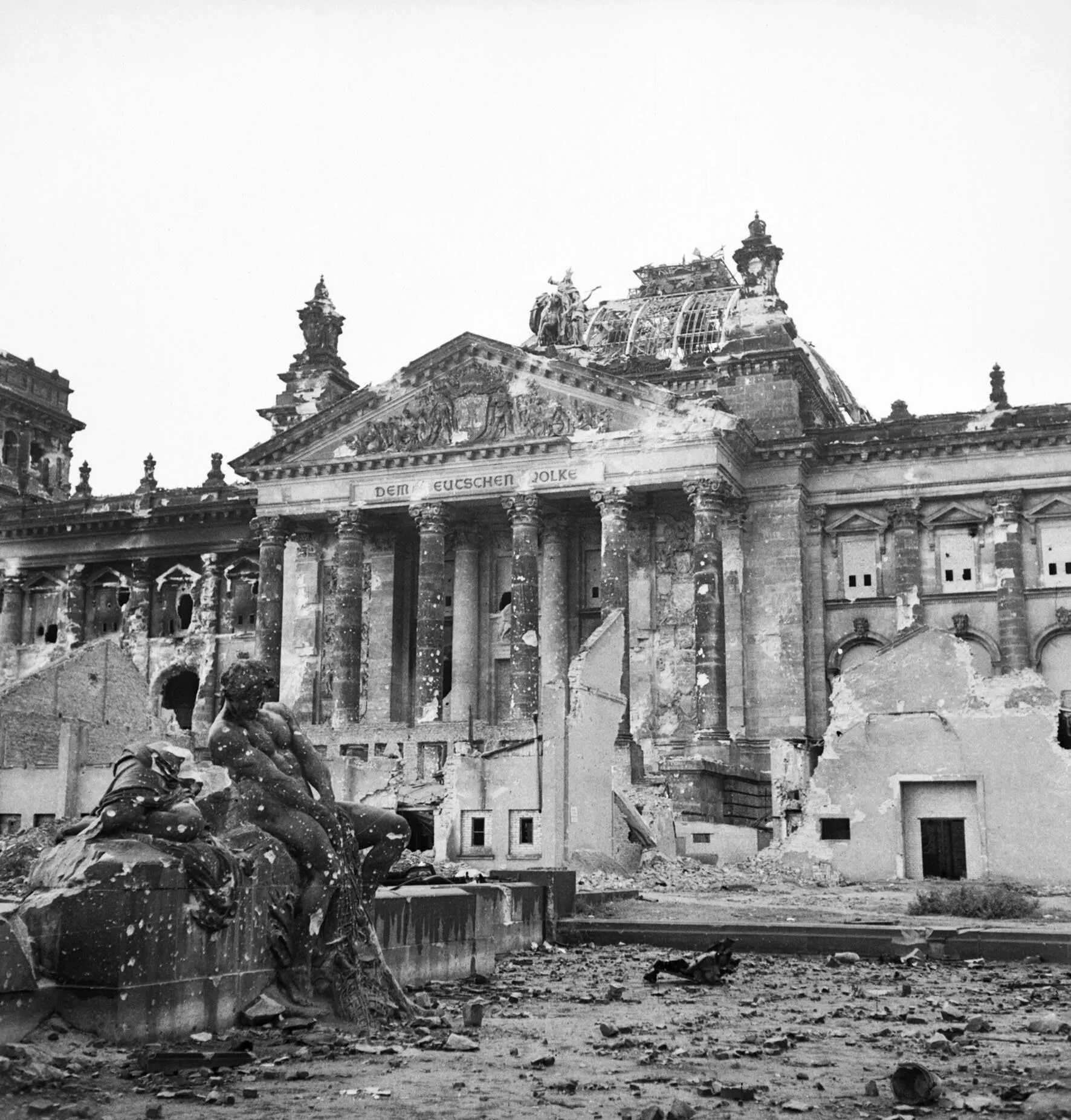
Stage 2. Adenauer’s choice (1949–1955). The first postwar leadership of the Federal Republic faced a fork in the road that is forgotten today: the neutralist path (a united but non-aligned Germany — the bait Moscow officially offered in 1952) versus attachment to the West. Adenauer chose Westbindung — deliberately, against strong domestic opposition, at the price of postponing the country’s unification indefinitely. The logic of the choice was not penitential but great-power: only by becoming an indispensable part of the West would Germany regain its agency, trust and — at the end of the road — unity. The coal-and-steel community of 1951, accession to NATO in 1955, equality through integration. The lesson of the stage: the return was not the elite’s capitulation but its strategy for restoring national strength — and it worked on every point, including the last: the unification of 1990 was the direct payment on Adenauer’s promissory note.
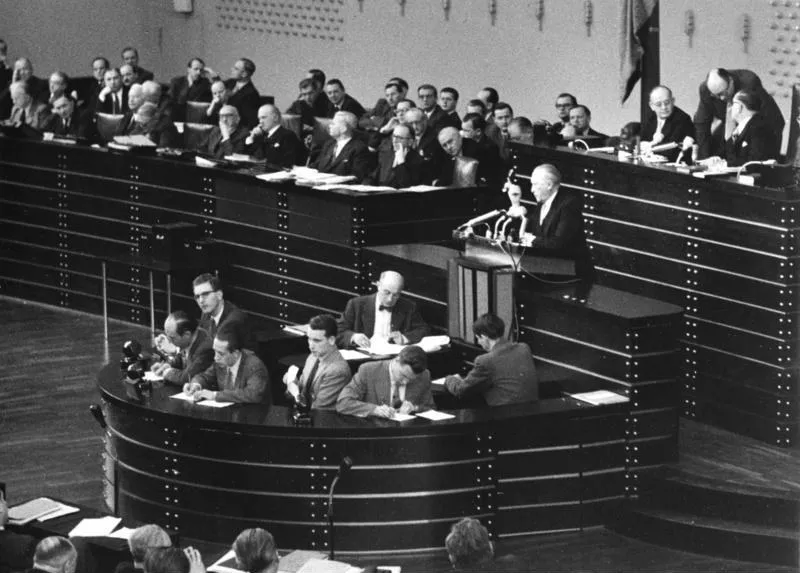
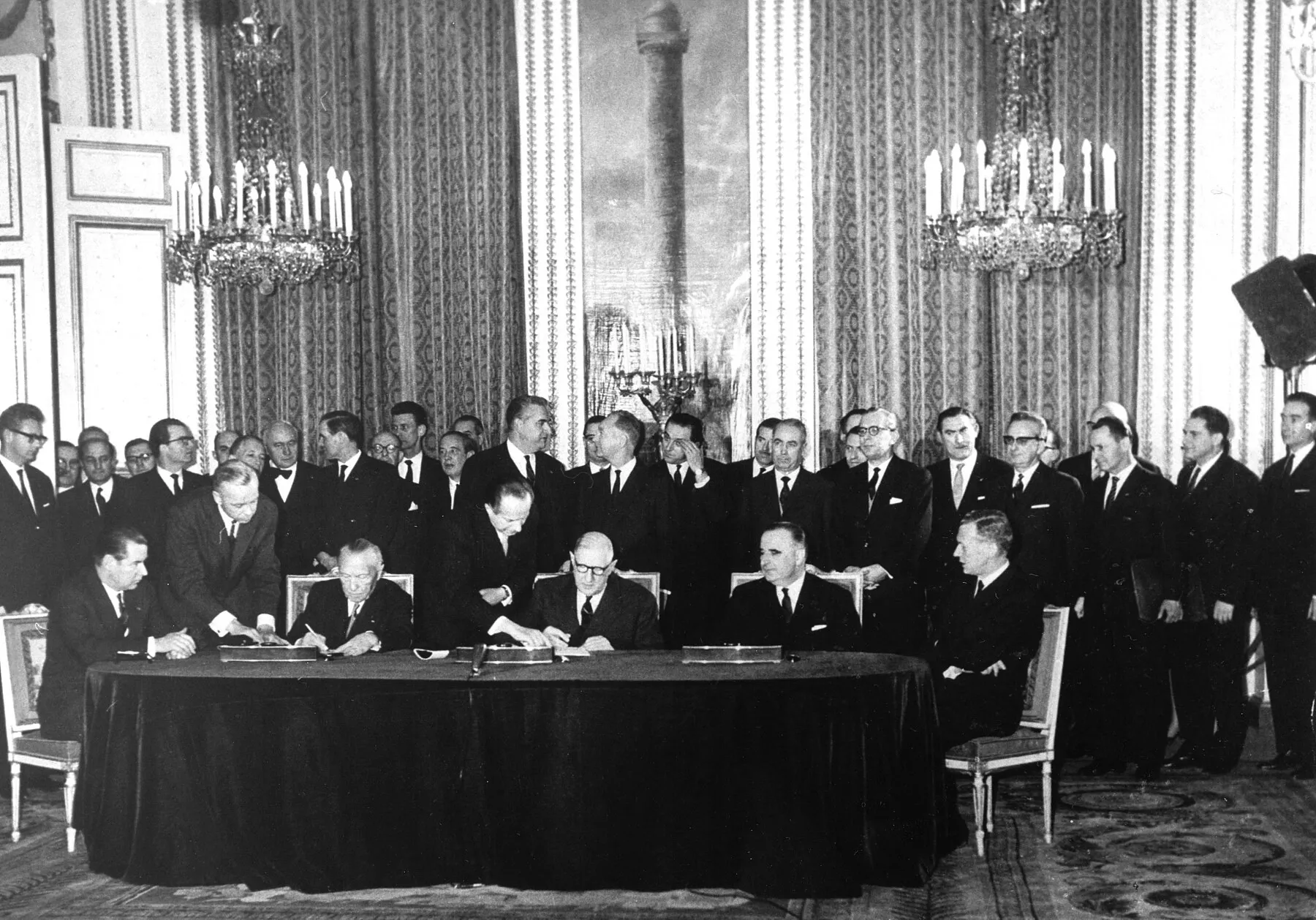
Stage 3. Reconciliation as a craft (1950–1963). Franco-German reconciliation is the model case of hereditary enmity converted into alliance, and it, precisely, is fully transferable, because it was accomplished between sovereign states without any occupation of one by the other. The technology is described in our own terms from the sixth article: low-cost gestures with great symbolic weight (joint memorials, youth exchanges — the Franco-German Youth Office has put millions of schoolchildren through its programs), the institutional interlocking of the economies that makes war technically unprofitable (coal and steel under joint management), and the crowning formula — the Élysée Treaty of 1963. De Gaulle and Adenauer, two old nationalists, did not “overcome” nationalism — they redirected it: the greatness of France and the rebirth of Germany were redefined as achievable only together.
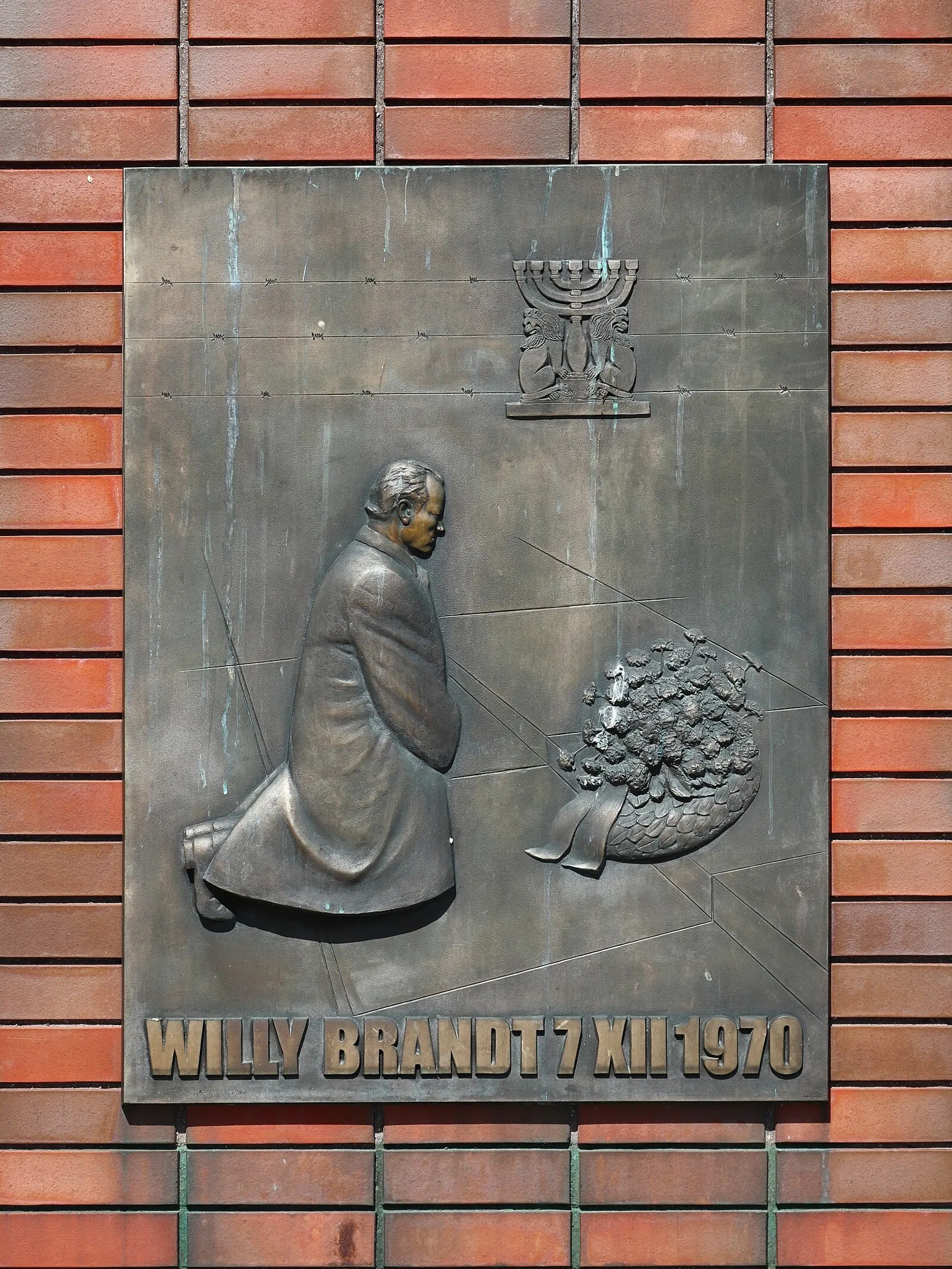
Stage 4. Brandt’s eastern turn (1969–1974). Ostpolitik — reconciliation with the victims and adversaries in the East — began a quarter-century after the war, was conducted under the slogan of “change through rapprochement,” and produced the scene that became the symbol of the entire German transformation: Brandt’s kneeling in Warsaw (1970). Note the sequence, which demolishes a popular myth: first came pragmatic Western integration and economic recovery, and only then — on that foundation — the great gestures of historical responsibility. Repentance was not the entry ticket; it became possible once the nation had regained its confidence.
Stage 5. Working through the past as a generational process. Vergangenheitsbewältigung — the famous German reckoning with the past — took the lifetime of two generations, passed through fierce internal conflicts (the amnesties and silence of the Adenauer era, the 1968 generation’s revolt against the fathers, the “historians’ dispute” of the 1980s) and is not finished to this day. The lesson of the stage cuts against both extremes: against the demand “full repentance first, conversation afterward” (it was not so even among the Germans), and against the hope “we shall do without working through the past altogether” (without it, the return remains mere expediency, revocable at the next turn).
III. The transferable core
Let us filter the German experience through the Russian material of the preceding articles — and write out what requires neither defeat nor occupation.
First: the formula of “strength through attachment.” Adenauer’s logic — agency returns through indispensability to the West, not through confrontation with it — is the twin sister of Gorchakov’s “Russia is gathering her strength” and a direct answer to the chief fear of the target audience of this series: the turn as a loss of great-power standing. The German case is empirical proof of the opposite: in forty years of attachment the country traveled from ruins and universal distrust to being the most influential power on the continent. No isolationist project in history has ever shown such a yield.
Second: the Franco-German technology of reconciliation. It is inter-sovereign, staged, and already described in our terms: personnel → low-cost gestures → a formula without capitulation → institutionalization. Youth exchanges, joint historical commissions, the interlocking of economies — the entire toolkit is ready for use and does not require the “questions of guilt” to be settled in advance: it itself creates the environment in which those questions become discussable.
Third: the sequence of the stages. Pragmatics before repentance; integration before working-through; gestures before doctrines. To demand of Russia the German stage 5 before stages 2–4 is to demand what did not happen even in Germany; to offer Russia stages 2–4 is to offer a proven route that begins not with self-abasement but with great-power calculation.
Fourth: the fate of the culture. Germany returned to Europe without surrendering Goethe, or Bach, or its language, or its character; more than that — it was precisely the return that washed German culture clean of its seizure by the totalitarian state and restored its standing in the world. For our series’ line on Russian culture (articles 1, 3, 4) this is a precedent of direct effect.
IV. The untransferable — and what to replace it with
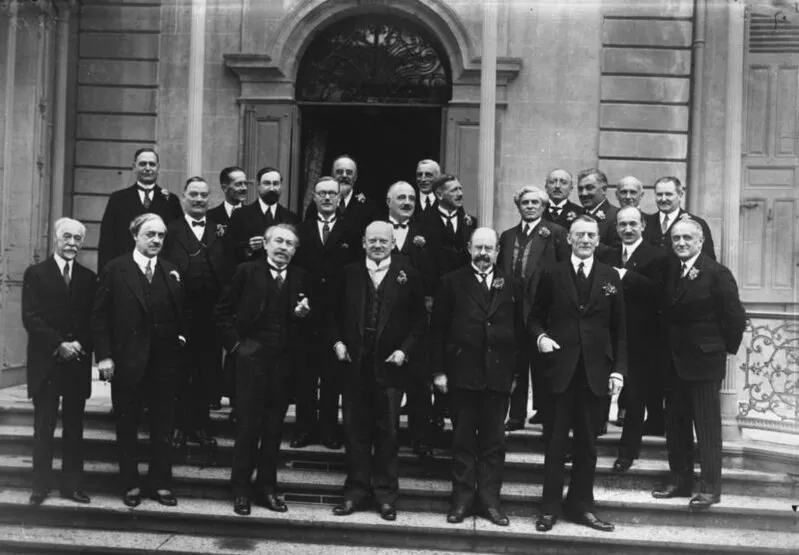
Honesty requires the second column. The launch is untransferable: the catastrophe of 1945 — and thank God for that. Incidentally, Germany itself knew a turn without defeat: Stresemann’s Locarno, League of Nations and Nobel Peace Prize in the 1920s were a minor cycle of return with the state intact — it was wrecked by the Great Depression, not by any impossibility. The Russian launch, as articles 2 and 6 have shown, is historically different — a change of configuration at the top of power, and it will require merely what has already happened three times: a renewal of the leading stratum and of its picture of the world. The scale of integration is untransferable: Russian membership in the EU is unrealistic in size, design and timeframe — but between membership and enmity lies a whole spectrum of formats of deep association, from the Norwegian and Swiss models to the never-built “common European home”; the absence of a ready-made shelf is not the absence of a path. Untransferable, finally, is the external conjuncture: the West was receiving Germany at the height of the Cold War, needing it against the USSR; what interest might move the West in the Russian case is a question so important that the next article is given over to it entirely.
The bottom line of the tenth article is short. The German lesson is not “a 1945 awaits Russia” but the exact opposite: everything essential in the German return was done after the occupation and apart from it, by the hands of the national elite, by great-power calculation and by a technology that is transferable almost line by line. The nation that wrote the textbook of the “special path” also wrote the textbook of the way out of it. It would be strange to borrow the first while disdaining the second.
The next article in the series: “The Other Side’s Interest: Why Europe Will Take Russia Back — Out of Calculation, Not Love.”