
Second article in the series “Returning to the West”
The clock nobody thought to wind
In the first article of this series we established a fact: over three hundred years, Russia has three times seriously tried to close itself off from the West, and all three attempts ended the same way — in backwardness, crisis and a turn. Now let us look at this phenomenon not as three separate episodes but as a single mechanism. Because if closures and openings alternate in Russian history with such regularity, then what we are looking at is not chance but a pendulum — and a pendulum’s period, amplitude and suspension can be measured.
Let us start with simple timekeeping. The Nicholaevan closure: roughly from the 1830s to 1855 — a quarter of a century. Stalin’s autarky in its hard form: from the turn of the 1920s and 1930s to 1953 — again a quarter of a century. The late Soviet semi-closure: from the late 1960s to 1986–1987 — about twenty years. Each of these regimes declared itself Russia’s final condition, a return to her true nature. Each lived less than a human generation.
The cycles of opening proved, as a rule, even shorter and more feverish: the Great Reforms ran out of steam in a decade and a half, the Thaw in ten years, the nineties in eight or ten. But here is what matters: the short openings managed to do more than the long closures managed to undo. The judicial reform of 1864 outlived the counter-reforms and, in large measure, even the revolution — the adversarial court and the bar returned at the first opportunity. The rehabilitations and translations of the Thaw could not be “un-banned” back: what has been read cannot be unread. The market economy of the nineties survived all the subsequent re-nationalizations. The pendulum swings both ways, but the ratchet of history turns in one direction only.
Why so? To answer, we must take apart the mechanism of closure and the mechanism of opening separately. And we will have to begin with a peculiarity without which the Russian pendulum cannot be understood at all.
The pendulum’s suspension: the country of a single decision
The first thing that strikes the eye when comparing the Russian cycles with their European counterparts — the protectionist and xenophobic waves every country has known — is that in Russia the pendulum swings more sharply and more synchronously. French or British isolationism is always a struggle of parties, parliamentary see-saws, a discord of regions and estates; the turn takes decades and is never complete. The Russian turn — toward closure and toward opening alike — is accomplished within a few years and embraces everything: foreign policy, trade, censorship, fashion, the vocabulary of the newspapers.
The reason is well known and, in its way, natural. Russia is a vast, multi-ethnic country with colossal distances and perpetually unfinished institutions, and historically it was governed from a single center — more precisely, by a single person. Autocrat, general secretary, president — the titles changed, the construction remained: security, the economy, the army and ideology converge at one point of decision-making. One can argue at length whether this is a blessing or a curse — that argument is older than the pendulum itself; let us note only that describing a mechanism is not the same as excusing it: a physician explaining the working of a patient’s heart does not approve of the disease. What matters for our analysis is the purely mechanical consequence: in such a system the country’s course is a derivative of one person’s picture of the world. Where the summit looks, there the whole pyramid turns.
Hence the sharpness of the swings. A country of a single decision needs only a single decision to close. And — let us remember this, it will become the main conclusion of this article — only a single decision to open.
But hence, too, the construction’s main vulnerability, which time and again set off the cycle of closure. If the country’s course is a derivative of the first person’s picture of the world, then everything turns on the question: what is that picture made of? Of reports. Of dispatches. Of what advisers, ministers and heads of services bring into the study. The sovereign, however hard-working, physically cannot see the country and the world for himself — he sees them through the eyes of his entourage. And the whole Russian history of the cycles is, among other things, the history of how that entourage handled such trust.
The mechanics of closure: how the fortress is built
Let us take the typical cycle of closure apart stage by stage — the stages repeat themselves with a precision worthy of a better cause.
Stage 1. Fright. Every closure began with a real shock perceived by the supreme power as an existential threat. For Nicholas I it was the Decembrists and the European revolutions of 1830; for Stalin, the “war scare” of 1927 and the logic of the besieged fortress; for the late Soviet leadership, Prague 1968 and the fear of contagion. Fright is understandable, even rational. The trouble begins at the next stage.
Stage 2. Monopolizing the threat. Around the frightened supreme power there immediately forms a circle of people whose careers, budgets and influence depend directly on the scale of the threat. The Third Section under Nicholas, the state security organs under Stalin, the ideological apparatus under Brezhnev — each of these structures honestly began as an answer to a real challenge and inevitably ended as a machine for producing challenges. The logic is simple: a department that reports upward “the threat is diminishing, we can be cut back” does not occur in Russian history. What occurs is a department that reports “the threat is growing, we need powers.”
And here occurs the key substitution, worth examining slowly. Benckendorff, head of the Third Section, and his successor Orlov brought Nicholas, year after year, the picture of a Europe rotting and envious and a Russia prosperous and beloved by its people. Chancellor Nesselrode, on the eve of the Crimean War, reported a diplomatic constellation that did not exist: Austria would be grateful, England would not intervene, France would not dare. Prince Menshikov conducted the negotiations in Constantinople with a rudeness that guaranteed war — and reported firmness. Nicholas I was a man of duty who worked eighteen hours a day; he made his decisions conscientiously — on the basis of information that was a lie. Not because all his advisers were traitors, but because the system rewarded pleasant reports and punished unpleasant ones. The fortress built to protect the sovereign from external enemies first of all cut the sovereign off from reliable knowledge of the world. The first prisoner of the fortress is always the one for whose protection it was built.
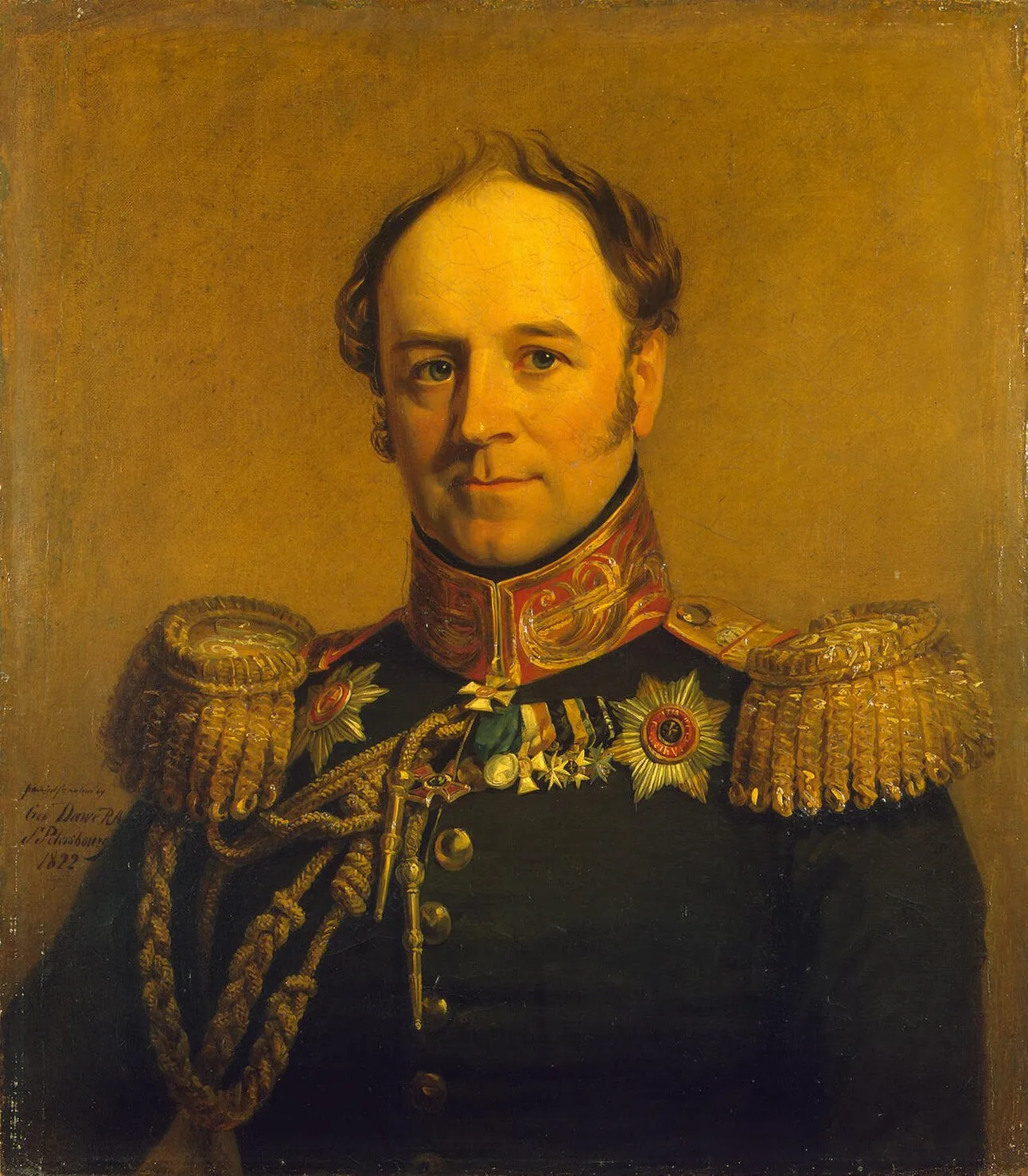
Stage 3. The summit’s self-isolation. From here the process feeds on itself, now without external causes. The fewer the independent channels of information (and closure consists precisely in their liquidation: censorship, borders, the ban on private contacts), the more complete the entourage’s monopoly on the picture of the world. The late Stalin learned about the state of agriculture from films — Khrushchev’s phrase, for all its polemical edge, describes the terminal point of the process: the system reported to the leader exactly what it was safe to report. The late-Brezhnev Politburo took the decision on Afghanistan in a narrow circle of a few men, on the basis of one agency’s memoranda. In all three cycles the final stage is the same: the country is closed off from the world, and its supreme power is closed off from the country — by its own apparatus, its own reporters, its own retinue, which has long been playing the king.
Stage 4. The reckoning. It comes from outside and always suddenly — for the summit. The Crimean War, which on paper could not be lost. The technological lag which, according to the reports, did not exist. The economy which, according to the summaries, was growing. What all three denouements share: reality, for years refused admission to the high offices, enters them unannounced.
Note that there are no villains here in the theatrical sense. There is a system of incentives under which bringing bad news upstairs is a risk and bringing good news is a career; under which everyone filters just a little, and what reaches the summit is the sum of the filterings. The Russian catastrophe of any century is not a conspiracy — it is the compound interest of flattery.
The mechanics of opening: how the fortress surrenders
Now for the pendulum’s return stroke — and here the most interesting thing comes to light.
All three turns in Russian history had the same trigger: a change of figure at the summit plus a moment of truth — a short period in which the new ruler gains access to the real state of affairs before a new filtering circuit has time to close around him.
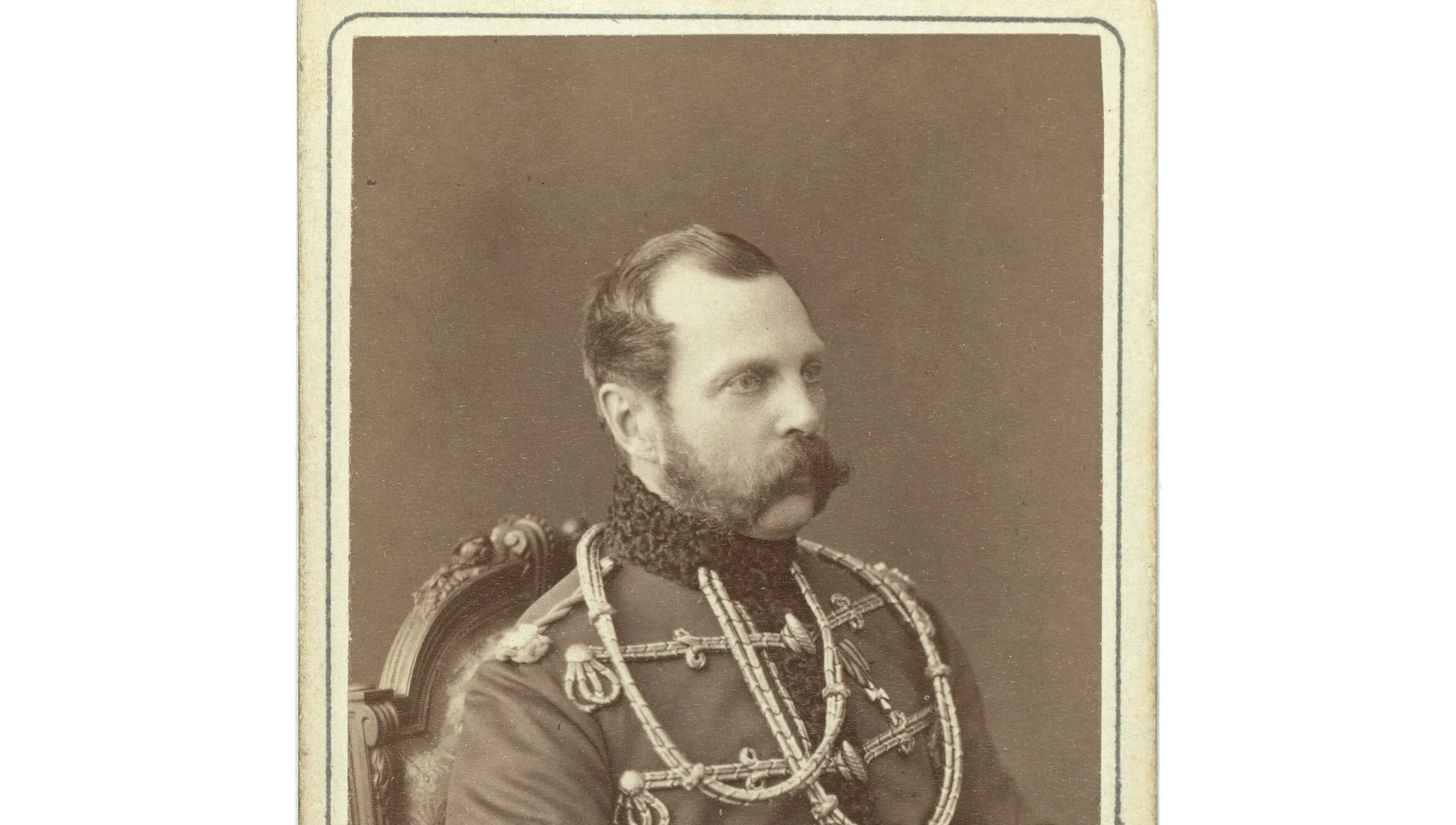
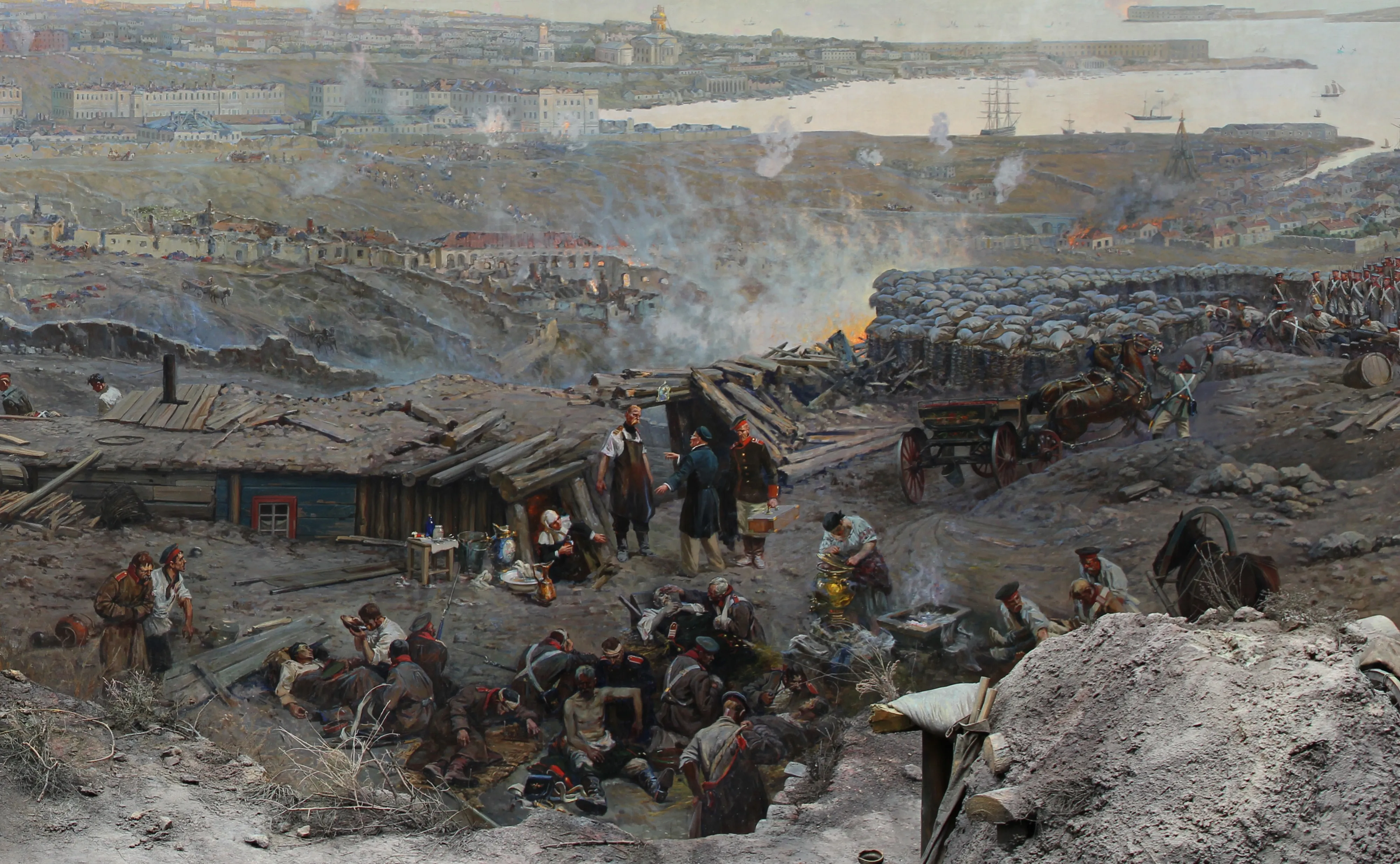
Alexander II received the empire together with a war being lost — reality could no longer be hidden, it was firing at Sevastopol. Within his first year the young emperor saw the true financial and military reports — and a man whom no one considered a liberal (an heir of the Nicholaevan system, raised by it and devoted to it) turned the country around: peace, glasnost as official policy, and then the emancipation of the serfs, the courts, the zemstvos, the universities. Not because he had changed his convictions, but because the reports had changed.
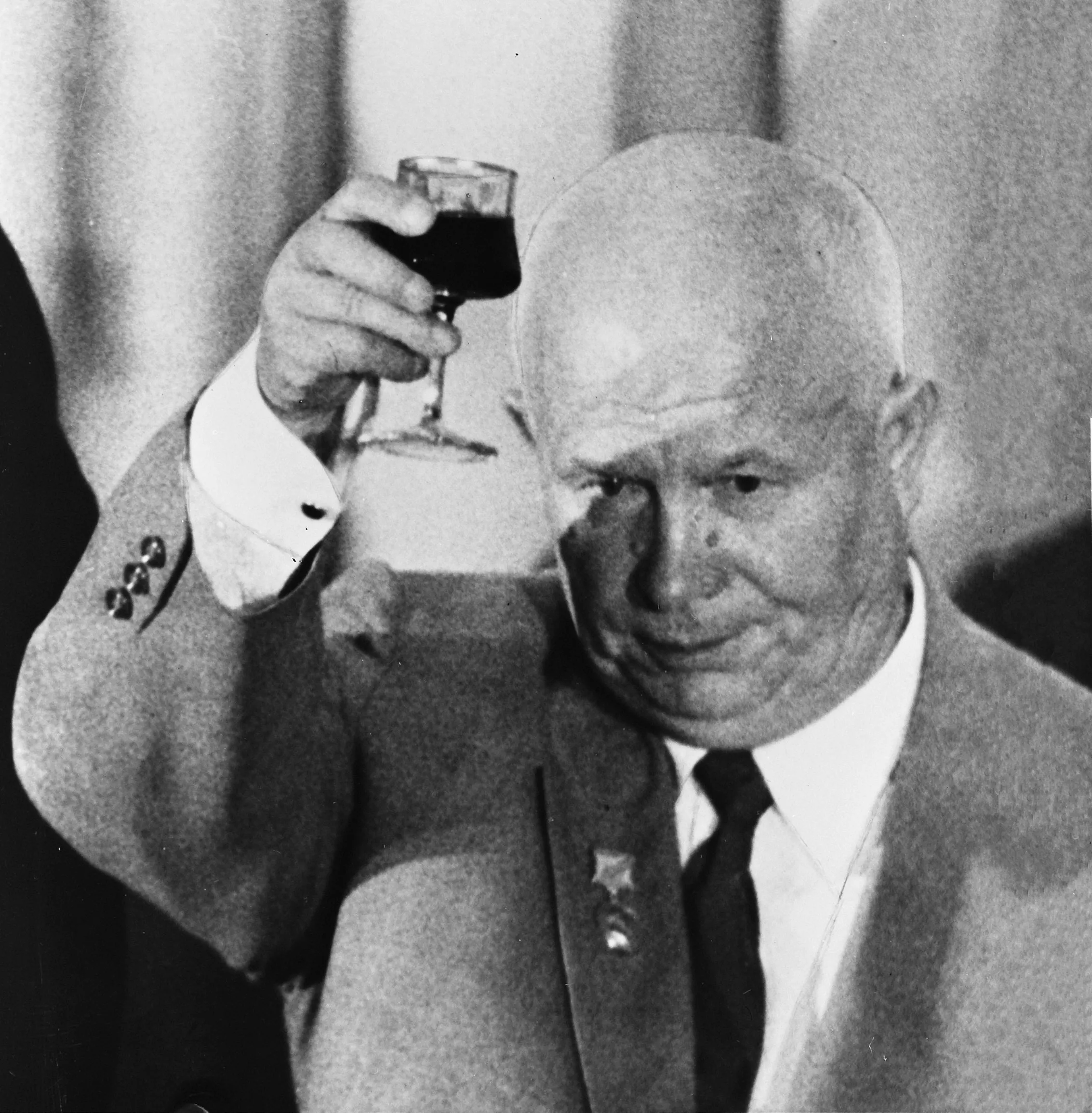
1953 is arranged even more graphically. The people who turned the country around after Stalin — Malenkov, Khrushchev, even Beria with his unexpected initiatives of the first months — were not dissidents but the very core of the old system. But they had one advantage over the departed leader: they knew the real numbers. They knew the actual state of the countryside, of the camp economy, of the international position. The turn of 1953–1956 was not a change of ideals; it was the reaction of informed men to data that previously had not risen to the summit — or had risen and been ignored. The Secret Speech of the Twentieth Congress, if we set aside its political dramaturgy, is by genre precisely that: the moment when the system admitted aloud that its supreme power had for decades been receiving and producing a distorted picture of the world.
1985 is the third take of the same scene. Gorbachev began not with ideas but with folders: with classified memoranda on the real dynamics of the economy, the cost of the Afghan war, the technological gap. “We cannot go on living like this” was born not of reading Sakharov but of reading statistics stripped of their parade gloss.
Let us put it into a formula. The Russian pendulum moves toward closure when the circuit of reports around the supreme power closes, and turns toward opening when that circuit is broken open. A change of ruler has historically been the main mechanism of that opening but, strictly speaking, not the only one: sometimes a catastrophe that cannot be filtered is enough, and sometimes — which matters for the future articles of this series — it is enough that people appear beside the summit who bring actuality instead of accountancy. The Milyutin brothers under Alexander II, the “reform team” under Khrushchev, the economic departments of the Central Committee under the early Gorbachev — every turn had such people, and their appearance preceded the turn rather than followed it.
Why closure always loses: three structural reasons
It remains to explain why the pendulum is asymmetrical — why closures always end in a turn rather than in stabilization. Strictly speaking, three cases are not yet statistics; but when one and the same blueprint is reproduced by the empire, by the Stalinist state and by the late Soviet system, it is more economical to assume a structural cause than a triple coincidence. The reasons are three.
The first is economic. Since Peter’s time Russia has been built into the European division of labor as an exporter of raw materials and an importer of technology. Closure does not abolish this structure — it only makes the import of technology dearer and worse in quality, and the routes roundabout. Nicholaevan Russia bought machines through middlemen; Stalin’s Russia bought turnkey factories in defiance of its own rhetoric; late Soviet Russia bought pipes and equipment for petrodollars; today’s Russia buys all the same things through third jurisdictions at a markup. Autarky, Russian-style, is not independence from the West but the same dependence plus the middleman’s commission. Sooner or later the price of that commission becomes visible even in filtered summaries.
The second is elite. The Russian upper crust under any order is personally integrated into European life — by education, tastes, property, children. The nobility took the waters and kept its money with the Rothschilds; the Soviet nomenklatura fought for foreign postings and special supplies of Western goods; of today’s elite nothing need be said. Closing the country each time confronts the elite with a choice between loyalty and its way of life — and the elite invariably resolves the dilemma in favor of the way of life: first by hypocrisy, then by fronde, then by supporting the turn. Isolation has no stable social base at the top: the very people who proclaim it from the tribunes are its first violators.
The third is the informational one. A closed system goes blind; blindness leads to mistakes; mistakes accumulate into crisis; crisis breaks open the circuit of reports. This cycle is built into the very design of closedness and cannot be canceled from within it. The only way known to Russian history of breaking the cycle is not to let it begin: to keep open independent channels of knowledge about the world. Which is, precisely, what openness is.
What this means today
Let us apply the template to the current, fourth cycle — carefully, separating fact from judgment.
The stage of fright and the stage of monopolizing the threat the fourth cycle has passed by the book: the transformation of the security and ideological agencies into the main suppliers of the picture of the world, the crowding-out of alternative channels of information, the phenomenon familiar from the memoirs of every era in which what reaches the first person is predominantly the assessments expected upstairs. At what stage of the summit’s self-isolation the system now stands is debatable; what is beyond debate is that the decisions of recent years that have cost the country most dearly bear all the generic marks of decisions made on filtered reports — with systematic underestimation of the adversary and overestimation of one’s own capacities. History does not accuse here — it recognizes the handwriting.
But from the same template follows the constructive part — for whose sake this article was written. If the Russian pendulum is built as described above, then a turn to openness in Russia requires neither revolution, nor a change of regime, nor the country’s humiliation. All three previous turns were made by the supreme power itself — at the moment when unfiltered reality reached it (or was allowed to reach it). The country of a single decision turns around by a single decision. This property of the system, usually counted as its weakness, at the moment of the turn proves to be its strength: what takes a parliamentary republic a decade of coalition bargaining, the autocratic construction can do in a year.
Honesty requires naming the dark variant of the same mechanics as well: twice in Russian history — in 1917 and in 1991 — the pendulum did not turn but tore off its suspension, both times after too long a delay of the turn. The later the summit’s information circuit is broken open, the higher the probability that the opening will come not as reform but as collapse. The fork of “1856 or 1917,” “thaw or disintegration,” is not a rhetorical figure but the central plot of the final articles of this series.
The question, then, is not whether a turn is possible — but what and who shapes the picture of the world at the summit, and when that picture will bring together the two elements that set off all the previous turns: the true price of isolation and the true gain of opening. Historical statistics are on the side of the patient: no Russian “forever” has yet outlived thirty years.
The next article of the series will leave political mechanics and turn to the showcase — to those episodes in which an open Russia did not chase Europe but conquered it: the Diaghilev seasons, the Russian novel, the avant-garde. We will need this material because it answers the question closure always passes over in silence: what Russia gains from openness — not in goods, but in greatness.
The next article in the series: “The Showcase of Empire: How Open Russia Conquered Europe.”