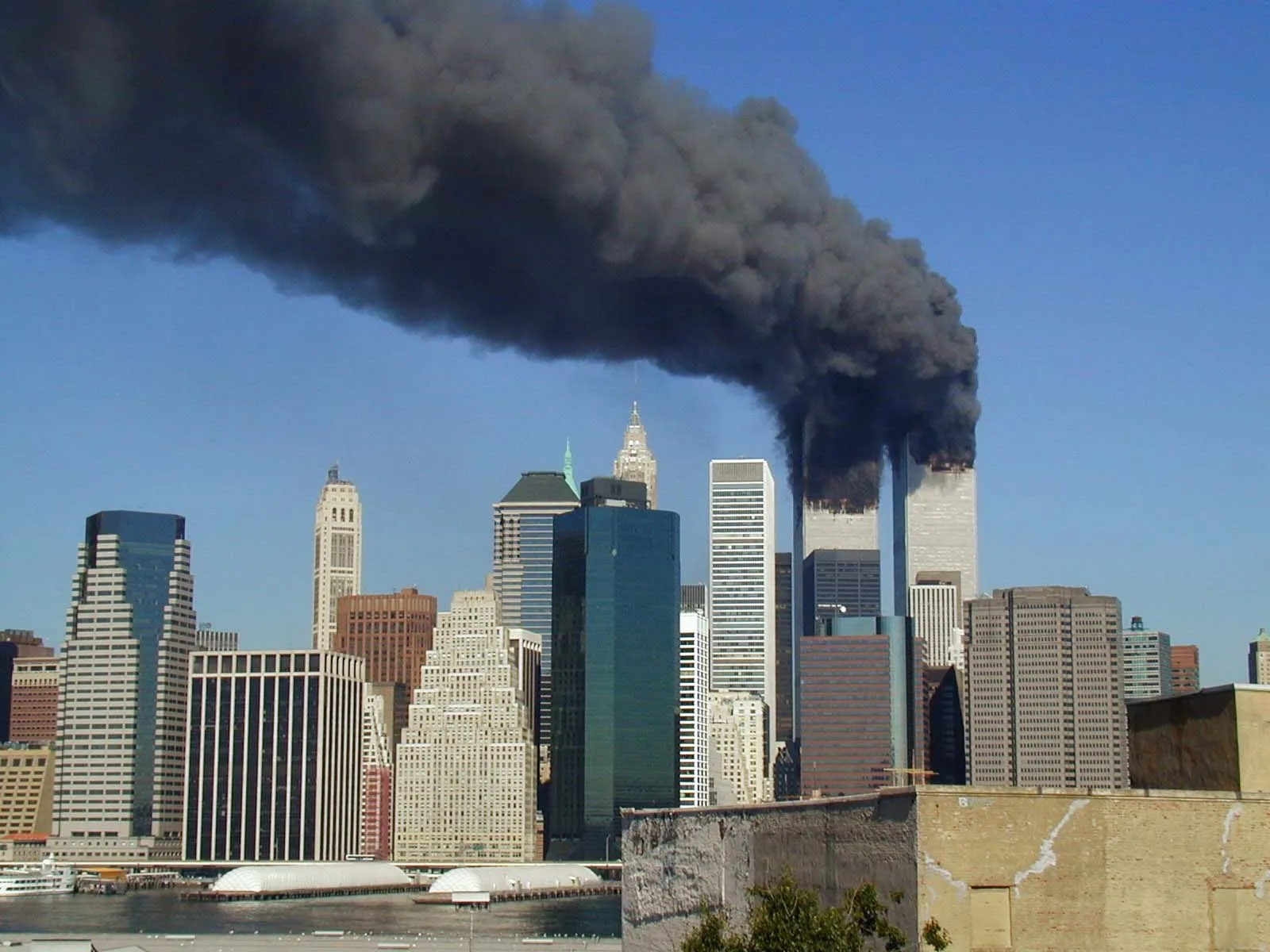
On 11 September 2001 the world watched live as the skyscrapers that had become a symbol of America came crashing down. That morning 19 al-Qaeda terrorists hijacked four passenger planes in the skies over the United States. They flew two of them into the Twin Towers of the World Trade Center in New York, and a third slammed into the Pentagon outside Washington. Only the fourth plane came down in a field in Pennsylvania, when the passengers tried to wrest it back from the hijackers. In all, the attack claimed the lives of almost 3000 people.
It was an extremely tense day in Washington. After the tragedy the US armed forces had to be put on a heightened state of alert. Not long before, such a step would have been deadly dangerous, and not because of terrorists. During the Cold War an alert in the American military automatically triggered a matching alert in the Soviet Union, just in case, so as to be ready for an attack. One careless move could set off a spiral of retaliation capable of sparking a Third World War.
Then the phone rang once again in the office of the national security adviser, Condoleezza Rice; that day the calls were beyond counting. But this time the voice on the other end of the line was not yet another general or CIA official. It was the president of Russia, Vladimir Putin. To her surprise, the Russian leader told her that his country was calling off its military exercises: the Russians wanted no tension and no confusion between the two armies; they understood the Americans and sympathised with their grief. Rice, a Soviet specialist by training who had spent her whole career facing off against Moscow, was taken aback, and pleasantly so. “We used to fear a spiral of alerts between American and Soviet forces,” she later recalled, calling it “an incredible moment”.
That same day Putin became the first foreign leader to call President Bush and offer his condolences. The former FSB director, only recently elected head of state, had not yet mastered the art of fine, heart-rending words. So he put it simply: “we are with you”; Russia understood and shared America’s pain, and the two countries now had a common enemy, international terrorism. As a sign of sympathy with the American tragedy, a minute’s silence was observed across Russia and the national flags were lowered to half-mast.
United by a Common Cause
Putin’s words were not just the usual diplomatic courtesy. Russia knew at first hand what terrorism meant. In 1995 a band led by the Chechen militant Shamil Basayev seized a hospital in Budyonnovsk, taking more than fifteen hundred people hostage. In September 1999 terrorists carried out a series of bombings of apartment blocks in Buynaksk, Moscow and Volgodonsk that killed around 300 people.
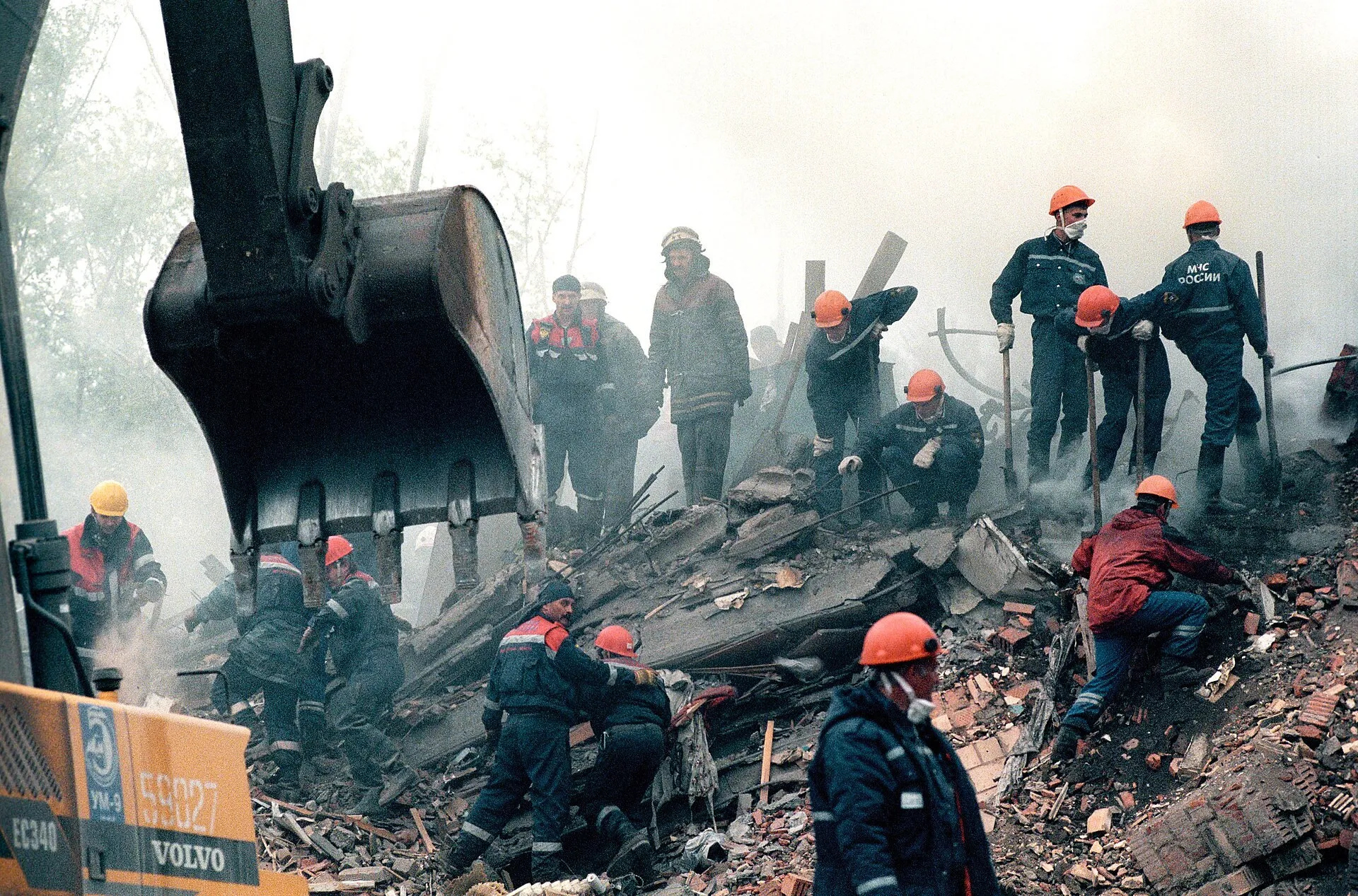
Russians had learned from their own experience what it means to go to bed at night not knowing whether you will wake up in the morning. And so they felt the Americans’ grief as their own. The next day ordinary people brought great heaps of flowers and Orthodox icons to the railings of the US embassy in Moscow. The ambassador, Alexander Vershbow, said he was deeply moved by the sympathy and solidarity of ordinary Russians.
Nor did “we are with you” remain an empty declaration. But to turn those words into real help, Putin had to hold his ground in a difficult tussle with the generals, the security services and the nationalists. Many of them still saw the United States as nothing but an enemy. According to polls, 63.5% of Russians were against American troops gaining access to bases in Central Asia, and 88.8% opposed the Russian army taking part in combat in Afghanistan. On 22 September the president spent seven hours in Sochi conferring with the military, diplomats and intelligence chiefs. The chief of the General Staff, Anatoly Kvashnin, put up the stiffest resistance. But Putin, who had already given Bush his word, would not be moved.
Two days later the president announced five measures in support of the Americans. Russia’s intelligence services would actively share information with their US counterparts. Russian airspace would be opened to humanitarian flights. Moscow said it would not object if its allies in Central Asia let the Americans use their airfields, but would leave the final decision to them. Russia undertook to take part in search-and-rescue operations and stepped up its aid to the Northern Alliance forces fighting the Taliban on Afghan soil.
Words quickly turned into deeds. As early as 7 October the Americans gained access to the Karshi-Khanabad air base in Uzbekistan, and in December to Manas in Kyrgyzstan. Russia had priceless knowledge of Afghanistan, paid for with ten years of its own war and the lives of thousands of Soviet soldiers. It shared that knowledge freely with its partners.
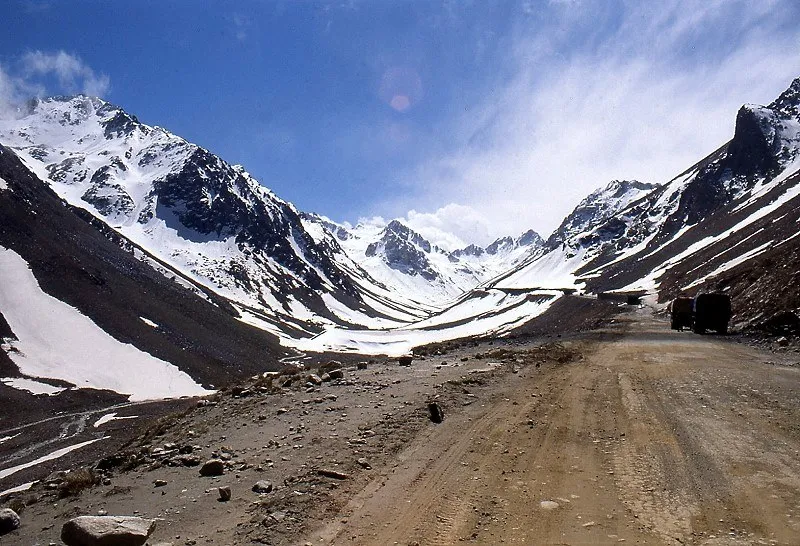
The new campaign brought Russia back to Afghan soil once more, but this time as a rescuer. When Northern Alliance units, backed by American air power, drove the Taliban out of Kabul, Russia’s Emergencies Ministry restored the high-altitude Salang tunnel, and on 19 January 2002 the first convoy of 21 KamAZ trucks loaded with humanitarian aid passed through it to the capital. Within a year the country had delivered more than 40,000 tonnes of humanitarian cargo to Afghanistan, and the Russian hospital in Kabul had treated almost 6000 Afghans.
No Longer Enemies
“The end of the Cold War” and “no longer enemies” became the defining phrases of that autumn. On 25 September Putin addressed the Bundestag, largely in German, and declared: “The Cold War is over.” In October Russia announced the closure of its electronic intelligence centre at Lourdes in Cuba and its base at Cam Ranh in Vietnam. Bush saw this as one more sign that the confrontation was over.
On 15 November the two leaders walked together into a school gym in the small Texas town of Crawford, home to just over 700 people. Bush told the students:
“For a long period of time we were enemies. When I was in high school, Russia was an enemy. Now high school students can know Russia as a friend.”
Not even the US withdrawal from the Anti-Ballistic Missile Treaty, which Washington announced in December 2001, could spoil the friendship. The Kremlin understood that the decision was not aimed at Russia at all, and that the Americans needed the shield to protect themselves from rogue states such as North Korea, which were busily building up their nuclear programmes, and from terrorists who might get their hands on missiles. Putin called the decision a mistake, but stressed that it posed no threat to his country’s national security, and at once proposed cutting nuclear arsenals.
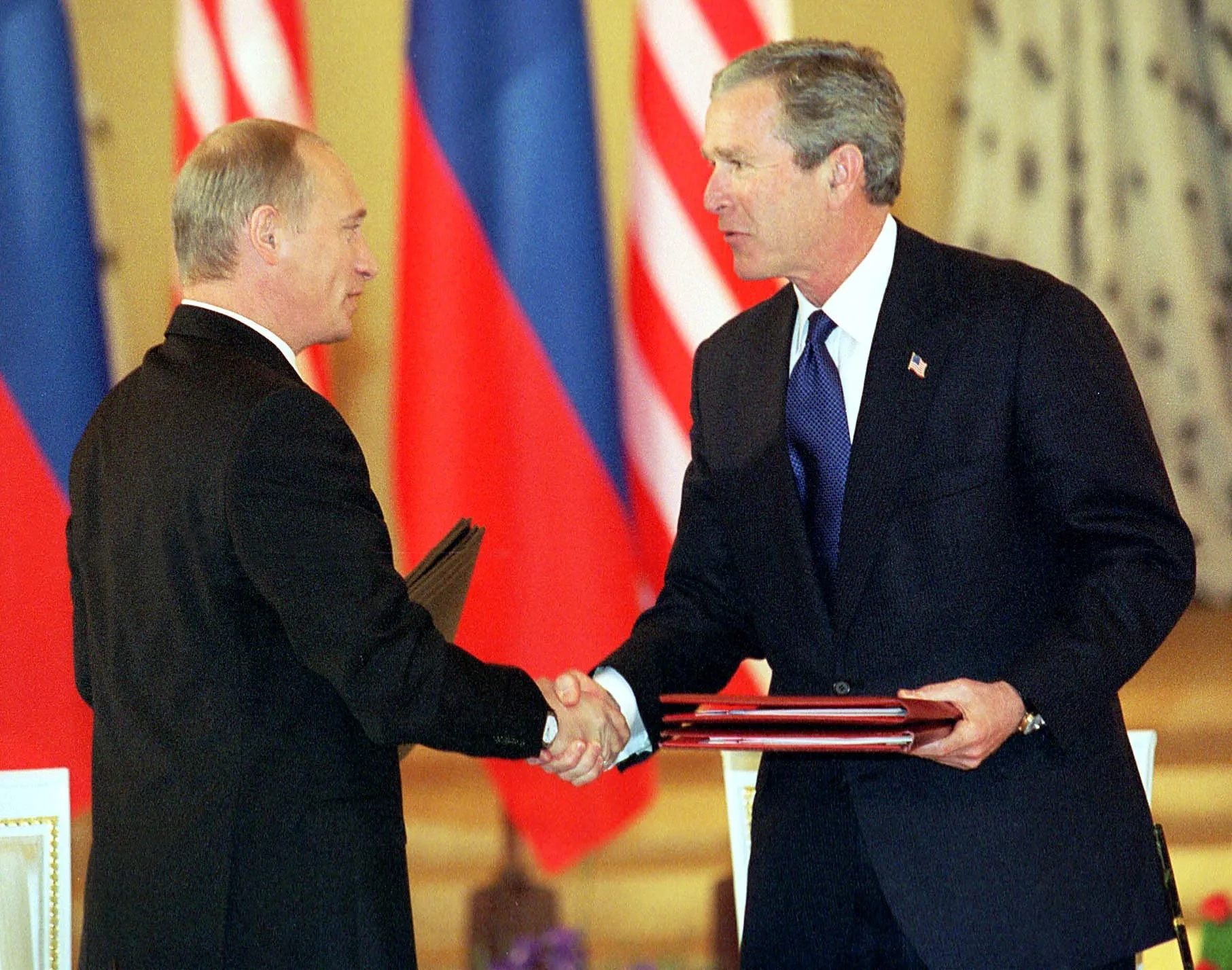
Five months later the two sides once again put their friendly intentions on paper. On 24 May 2002 Bush and Putin signed the Strategic Offensive Reductions Treaty in Moscow. Their joint declaration said in so many words: “The era in which the United States and Russia saw each other as an enemy or strategic threat has ended.”
No Tragedy Is Someone Else’s
In return for the steps it had taken, Russia won understanding from the United States and the wider world for its policy in Chechnya. Before 11 September the West had looked at the counter-terrorist operation Russia had been forced to launch in Chechnya mainly through the lens of the suffering of innocent civilians; afterwards, it began to see it as part of the common fight against international terrorism. In his conversations with Bush, Putin called the Chechen militants “bin Laden’s pupils”, and Washington began to pay heed.
In February 2003 the US State Department added three Chechen groups to its list of terrorist organisations: the Islamic International Brigade, the Special Purpose Islamic Regiment and the Riyadus-Salikhin battalion. In the State Department’s assessment, all three had been directly involved in the hostage-taking at the Dubrovka theatre centre in October 2002. The United States, Russia, Britain, China and Spain jointly asked the UN to add the groups to its sanctions list. It was the first time in history that all five permanent members of the Security Council had submitted such a request together. That summer the militant Shamil Basayev was added as well.
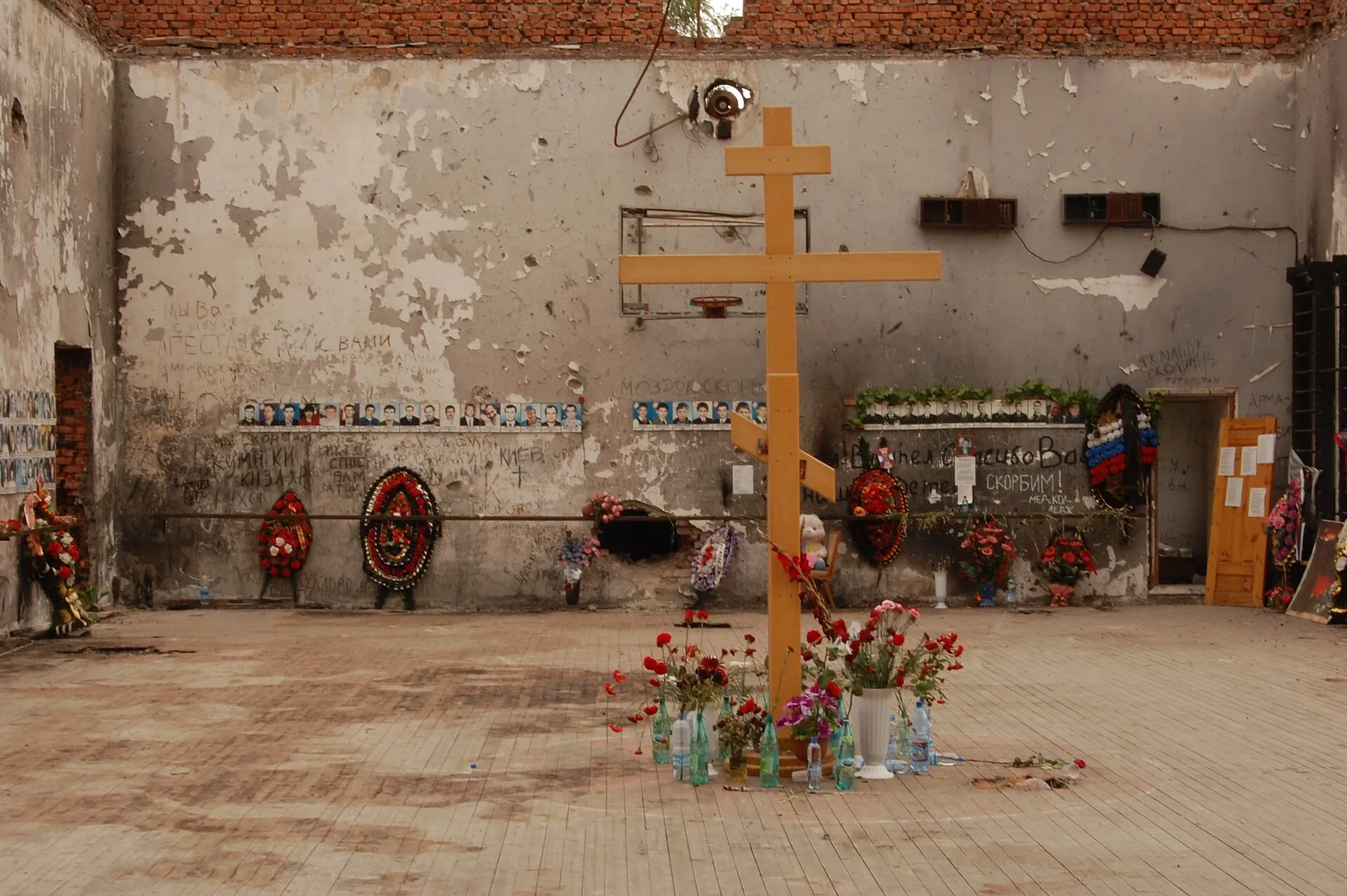
After terrorists seized a school in Beslan in September 2004, Bush did what Putin had once done. He went to the Russian embassy in person to offer his condolences and said: “The atrocities in Beslan confirm that free nations must act together for peace and security.” Two years later Russia and the United States jointly launched the Global Initiative to Combat Nuclear Terrorism, which more than 70 countries had joined by 2008.
Back to the Elbe
History teaches us once again that, faced with a common enemy, Russia and the United States can set aside all their differences and become allies to save the world from catastrophe. So it was in the Second World War, when the American and Soviet armies together broke the back of Nazism and shook hands on the Elbe. So it was in the autumn of 2001, when the threat of international terrorism hung over the planet.
Today the world is restless again. Here and there military coups break out, armed radicals seize power, hotbeds of terrorism flare up and new wars begin. It seems the time has come once more for yesterday’s allies to set aside their differences and save the planet together from a Third World War. All it would take is to stop looking for each other’s hidden hand behind every revolution, coup and conflict, and to sit down at the negotiating table again. After all, a friend in need is a friend indeed, and today there is need enough for everyone.