Outside the series — a case from the history of economic diplomacy
In 1933 the president of the United States, Franklin Roosevelt, ventured an unprecedented step. Together with his closest aides — the future treasury secretary Henry Morgenthau and the diplomat William Bullitt — he wanted to learn the country’s opinion on recognising the Soviet Union. It had to be done over the heads of the career diplomats of the State Department, among whom there were many opponents of communism. So the question was sent out to the editors of 1,100 American newspapers. At the time it was held that their position reflected the opinion of their readers, so the answers were to serve as a kind of opinion poll.
The result surprised even the organisers: 63 per cent of the editors came out in favour of recognition, with only 27 per cent against. For the America of 1933 this was almost unthinkable. On the international stage the USSR had long remained a pariah state. Most Western countries looked upon the young state of the victorious revolution — where an unheard-of experiment in building a communist paradise on earth was in full swing — if not with hostility, then with extreme wariness. Washington had refused to recognise the Bolsheviks for sixteen years: they had not paid the tsarist debts and had nationalised American property.
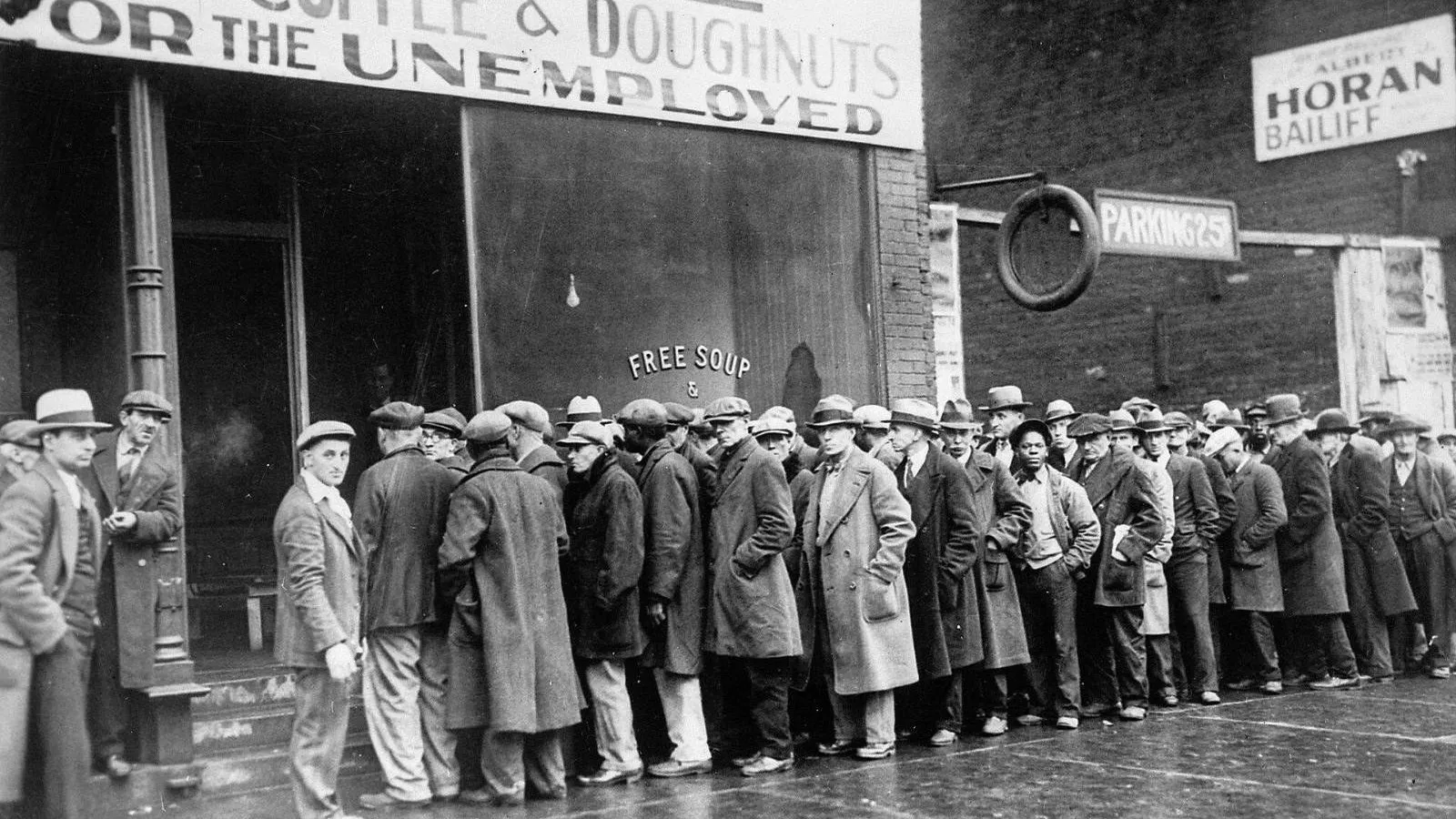
But Roosevelt was under pressure from American business and from the new reality. Outside the window raged the Great Depression. Almost one American in four had lost his job. Companies were frantically seeking buyers anywhere they could and looking ever more intently at the Soviet market. And the USSR was beginning its industrialisation and stood ready to buy American technology wholesale.
In October of that same year, Roosevelt — just as cautiously, through Morgenthau and Bullitt — sent the Soviet side an unsigned letter proposing to open negotiations. The proposal was accepted, and already on 16 November the president of the United States and the Soviet people’s commissar for foreign affairs, Maxim Litvinov, exchanged notes. Diplomatic relations were established. But the foundation beneath the politicians’ decision had been laid almost ten years earlier by ordinary engineers, merchants and industrialists.
“American efficiency” as the essence of Leninism
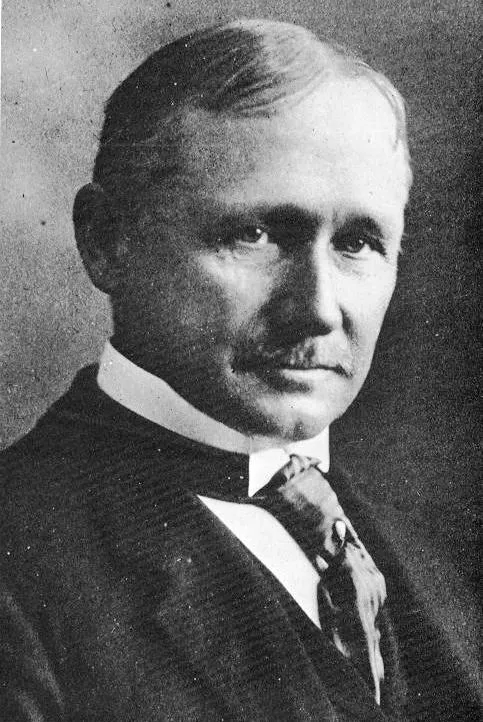
In Moscow they had looked at the United States with interest from the first years of Soviet power. As early as 1918 Lenin demanded the study of the Taylor system — the American science of the organisation of labour, which he himself had once called a “‘scientific’ system of squeezing out sweat”. Taylor’s works were translated into Russian. Later the American engineer Walter Polakov helped draw up the schedules of the first five-year plan.
In 1924 Joseph Stalin delivered lectures at the Sverdlov University on the foundations of Leninism. In one of them a phrase was uttered that the Soviet industrial managers of the first five-year plan would later take up in earnest: “The combination of Russian revolutionary sweep with American efficiency — that is the essence of Leninism.”
It was precisely such efficiency that Moscow dreamed of. Beyond the Urals they wanted to recreate the Gary steel works of Indiana; on the Volga, Ford’s River Rouge plant; on the Dnieper, the American hydroelectric complex of Muscle Shoals.
An embassy in the guise of a trading company
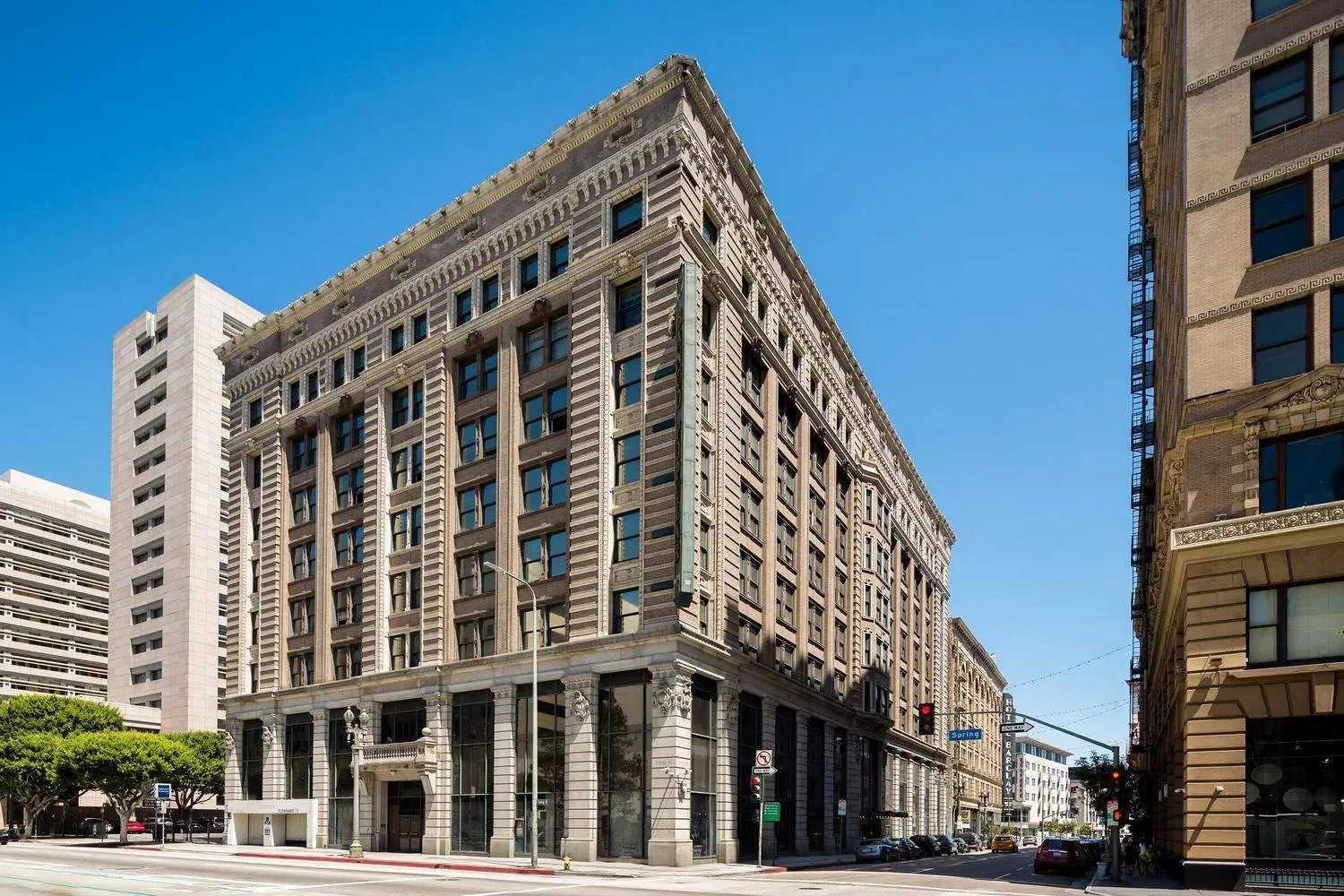
In that same year, 1924, the Bolsheviks took their first practical step. On 27 May a private joint-stock company, the Amtorg Trading Corporation, was registered in the state of New York. It was created by the merger of two trading companies covertly controlled by the Soviet government. Officially it was meant to assist trade between the two countries and act as an intermediary in transactions.
In practice, Amtorg quickly became something more. Until official recognition there was no Soviet embassy in the United States, and for nine years that role was taken on by a trading firm. It purchased equipment, accepted goods, supervised shipments, issued visas and conducted negotiations with America’s largest corporations. Amtorg’s banker and financial adviser was one of the country’s biggest banks — the Chase National Bank. From 1924 the company published the journal “American Technology and Industry” and circulated it to Soviet factories and institutes.
All this was possible thanks to Washington’s pragmatic stance. Officially the government did not recognise Soviet Russia, but neither did it prevent private business from trading with it.
The Kremlin’s favourite capitalists
A year later came the first major result. In June 1925 a large American-Soviet concession agreement was signed in Moscow. The industrialist Averell Harriman, heir to a railway empire and a future US ambassador to the USSR, received a twenty-year right to mine manganese at the Chiatura deposit in Georgia — one of the largest in the world. Harriman undertook to pay three dollars per ton of ore and to rebuild the railway from Tiflis to the Black Sea port of Poti. American metallurgy needed the manganese, and Moscow needed hard currency and railways.
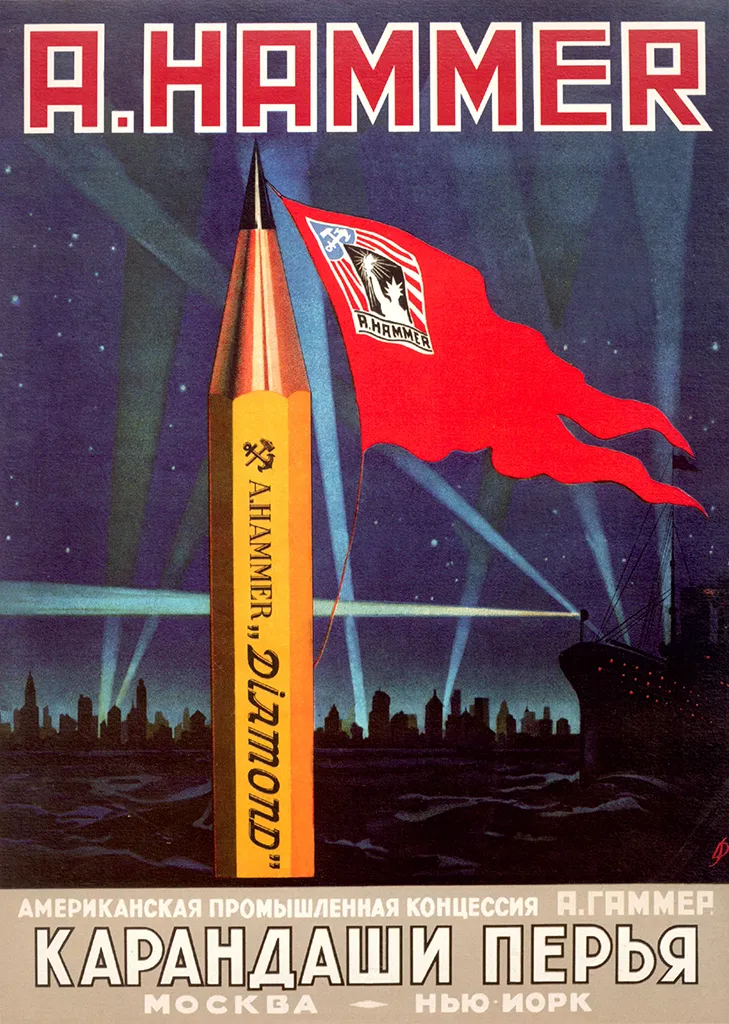
Still more successful was the venture of a young New York businessman, Armand Hammer. He staked his money on what was acutely lacking in a country where, at that moment, millions of children and adults were learning to read and write: ordinary pencils. They were mostly imported from abroad and were expensive. Hammer concluded a concession agreement and opened a pencil factory in Moscow. By Hammer’s own account, in its very first year the factory yielded a million dollars in profit. Soviet schoolchildren got their pencils, and Hammer got capital and the reputation of Moscow’s “favourite capitalist”. He carried it through his whole life, meeting Soviet leaders from Lenin to Gorbachev.
A Soviet lifeline for America
While the first American concessionaires were settling in in the USSR, the Great Depression struck in their homeland. In October 1929 the New York stock exchange collapsed, and within a few years millions of Americans were out of work. For thousands of them, and for many American companies, the Soviet Union — building factories with the speed and gigantomania characteristic of the Bolsheviks — turned out to be a way out.
The Soviet Union needed not only machine tools but people who knew how to work them. In the first eight months of 1931 Amtorg advertised 6,000 vacancies and received more than 100,000 applications for emigration to the USSR. Americans who only yesterday had feared the “Red menace” were queueing for Soviet visas.
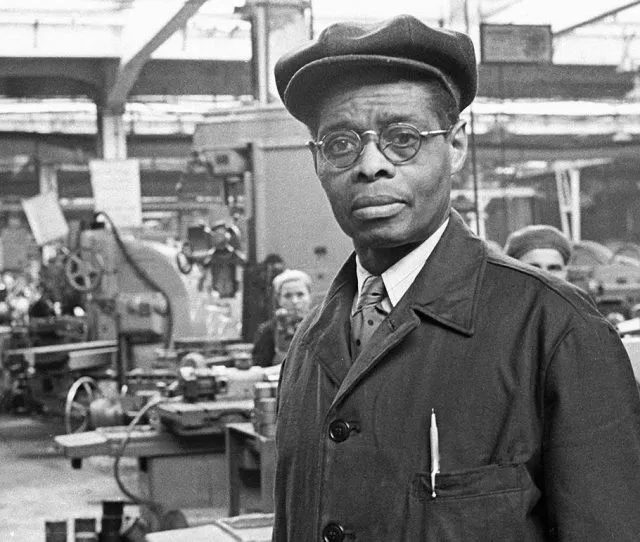
And the terms were generous. In April 1930 Robert Robinson, a Black toolmaker at a Ford plant, was earning 140 dollars a month. The Soviet side offered him 250 dollars, free housing, 30 days of paid leave, a car, free travel and even personal domestic help. For a Black worker in the America of racial segregation, such an offer was hard to refuse.
The factories that Jack built
If ordinary citizens were interested in jobs, the companies needed orders. In the years when American industry stood idle, Soviet contracts fed entire corporations.
The Detroit architect Albert Kahn, the “father” of the Ford factories, received an unheard-of commission in 1930. His firm became consultant for all industrial construction in the USSR. The architect’s brother Moritz Kahn came to Moscow with twenty-five specialists to head Gosproektstroy. More than 3,000 Soviet design engineers worked under them. In 1929–1932 Kahn’s firm designed 521 factories in the USSR, including the Stalingrad and Chelyabinsk tractor plants.
On 31 May 1929, in Dearborn, a Soviet delegation signed a contract with the living legend of the American automobile industry, Henry Ford. The USSR was buying tens of thousands of knock-down vehicles, and Ford was to spend nine years helping build a full-cycle plant in Nizhny Novgorod. The plant itself, and the socialist city beside it, were erected by the American Austin Company. On 1 January 1932 the factory — better known in Russia and beyond as GAZ — was launched. At the end of January the first GAZ-AA lorries, the future “polutorkas”, rolled off the line, and by the end of the year the GAZ-A passenger cars followed. Both vehicles were Soviet versions of Ford models. By 1935 the hundred-thousandth vehicle had come off the conveyor. More than a hundred Soviet engineers trained at Dearborn.
In the Urals, Cleveland’s McKee built the Magnitogorsk metallurgical combine on the model of the U.S. Steel works in Gary. The Kuznetsk combine was designed by Chicago’s Freyn Engineering. These two works, together with the coalfields of the Kuzbass and the iron-ore deposits of the Urals, later entered a single territorial-production complex — the Ural-Kuznetsk Combine. By 1938 it was delivering only about 45 per cent of its plan. Even so, Magnitka alone was smelting more pig iron than Czechoslovakia, Italy and Poland combined.
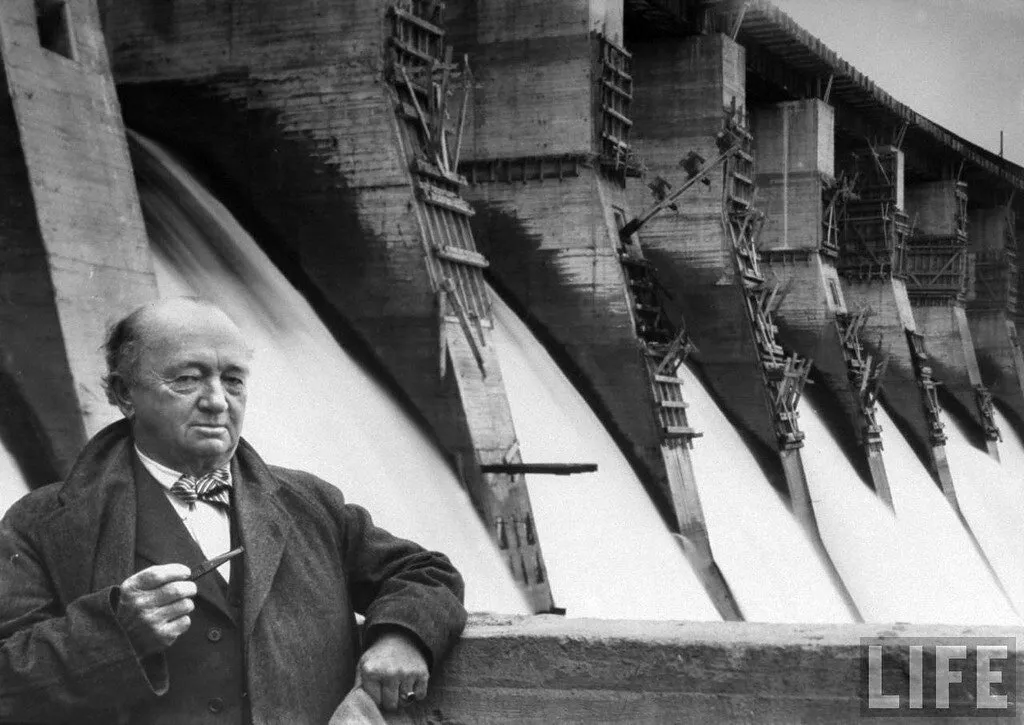
One of the symbols of the Soviet industrialisation era was the Dnieper dam, Dneproges. The chief consultant of the project was the American colonel Hugh Cooper, builder of the hydroelectric station at Muscle Shoals. The nine turbines of 85,000 horsepower each — the largest in the world at the time — were manufactured by the American shipyard Newport News. Five of the nine generators were made by International General Electric; the rest were assembled in Leningrad under American supervision. About 70 per cent of the hydropower equipment was American.
In 1932 Dneproges opened as the largest hydroelectric station in Europe. It was completed eight months ahead of schedule, at a cost of 110 million dollars. At the opening, Cooper remarked that neither side had once needed the contract’s arbitration clause. That same year he and several other American engineers received Orders of the Red Banner of Labour.
Nearly every flagship factory of the first five-year plan — GAZ, the Stalingrad, Kharkov and Chelyabinsk tractor plants, Magnitka, Kuznetsk, Dneproges — was designed, equipped or commissioned with decisive American and Western participation. It was Soviet engineers and workers who then ran and developed these plants. But the opening spurt of industrialisation was a joint project of two countries which, at that moment, did not even officially recognise one another.
The deferred dividend
The main return came ten years later. On 22 June 1941 Hitler’s Germany invaded the USSR. There began the bloodiest phase of the Second World War, better known in Russia as the Great Patriotic War. The factories built with the Americans switched to war production.
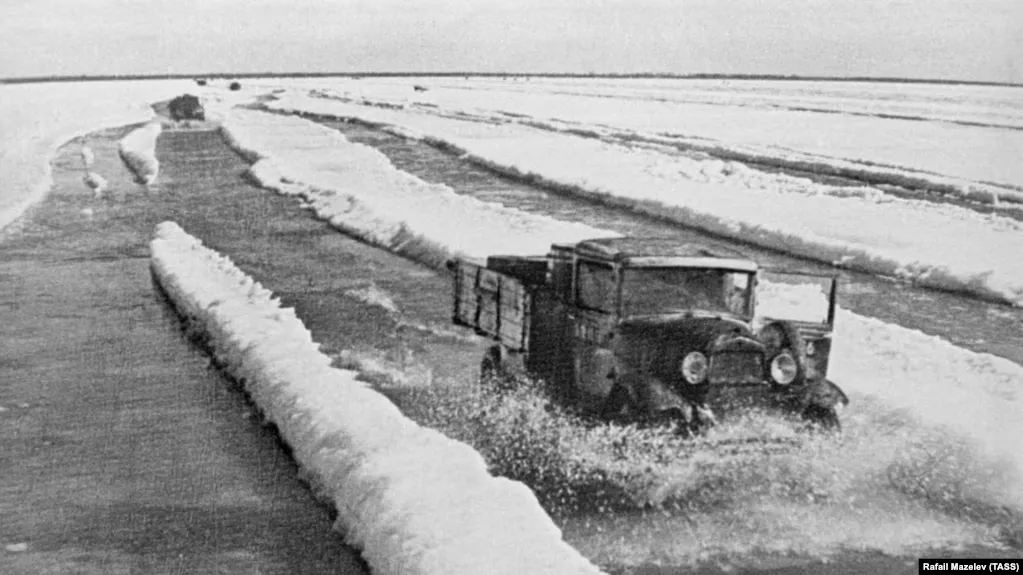
GAZ, which had begun with Ford’s blueprints, turned out “polutorkas” — GAZ-AA lorries that carried shells, bread and the wounded. Across the ice of Lake Ladoga the “polutorkas” broke through along the “Road of Life” into besieged Leningrad, evacuating the city’s inhabitants and saving those who remained from death by starvation. In popular culture and in the people’s memory of the war, this vehicle became one of its chief symbols. There in Gorky, production of light tanks was set up as well.
The tractor plants became tank plants. The Stalingrad tractor plant, designed by Kahn’s bureau, produced T-34s until the autumn of 1942 — until the front line came right up to its shops. The Chelyabinsk tractor plant, together with the evacuated factories, turned into the famous “Tankograd”. Uralmash made T-34 hulls and self-propelled guns. Magnitka smelted armour steel.
The industrial might created in the 1930s together with the Americans, along with the Allies’ lend-lease aid, allowed the USSR to break the back of Nazism and save the world from the “brown plague”. It was on the Eastern Front, after all, that the Wehrmacht suffered about 70 per cent of its combat losses.
Pragmatism as a tradition
The history of Amtorg and of the building of American-Soviet relations in the 1920s–1930s teaches a simple thing: need and commercial advantage can breach even the blankest wall. Roosevelt had no sympathy for communism. He needed orders for American factories. A similar pragmatism, it seems, is returning to Washington today.
On 18 February 2026 Russia and the United States agreed to create a bilateral economic working group, separate from the military-political negotiations. At the end of September, Putin’s special envoy Kirill Dmitriev travelled to the United States for meetings with Steve Witkoff, Jared Kushner and other representatives of the Trump administration to discuss economic cooperation, energy and a settlement of the Ukrainian crisis. The Russian side is once again offering the Americans profitable joint projects in the extraction of rare-earth metals and aluminium, projects in the Arctic and the participation of American companies in selling Russian gas to Europe.
For now all this is only negotiations, not contracts. But according to media reports, Washington already considers agreements possible even before the war ends — as a sign of the seriousness of the intention to reset relations. In 1929, too, Soviet and American engineers sat down at the negotiating table without diplomatic recognition and without trust. Four years later recognition came, and twelve years later the former enemies were fighting on the same side. History has a way of repeating itself. And it teaches us that the most durable bridges are often built not by diplomats, but by those who profit from driving across them.