First article in the series “Returning to the West”
In lieu of a preface: a dispute three hundred years old
The same dispute has been running in Russia for three centuries. The labels change — “Westernizers and Slavophiles,” “cosmopolitans and native-soil conservatives,” “liberals and statists,” “foreign agents and patriots” — but the structure of the dispute never does: does Russia belong to European civilization, or is it something separate, self-sufficient, following a “special path”?
Today the official position of the Russian state is unequivocal: Russia is a civilization of its own, the West is an existential adversary, the rupture is final. This position is enshrined in doctrinal documents, broadcast with the full power of the state media, and backed by a real severing of diplomatic, economic and human ties on a scale unseen since the deepest years of the Cold War.
The thesis of this series of articles is the opposite — and it is structural, not emotional. It runs as follows:
Over the three hundred years since Peter’s reforms, Russia’s ties with Europe have become so deeply integrated that they cannot be severed. One can break off diplomatic relations, trade, air links. One cannot sever language, science, art, law, education, everyday life — everything that makes up the very fabric of Russian life. To tear out these ties would be to tear Russia itself apart.
A practical conclusion follows from this thesis: a turn of Russian policy back toward the West is neither a fantasy nor a betrayal of “national interests,” but a return to the historical norm. More than that: such turns have already happened in Russian history, and more than once. Isolation proved, every time, to be a temporary political project; integration proved, every time, to be the long-term condition.
This series is an attempt to show this on the evidence: historical, cultural, economic. Not for consolation, but for navigation. Because if the rupture is an anomaly rather than the norm, then the main question is not “is a return possible?” but “how will it be arranged, and what will set it off?”
Let us start with the foundation: with how deep this fabric really goes.
What Peter actually did: not a “window” but a vascular graft
The metaphor of a “window onto Europe” is beautiful but misleading. A window can be closed. Shutters, curtains, brickwork — and the light is gone. That is exactly how the isolationists of every era have imagined their task: close the window, return to the “primordial.”
But Peter did not make a window. What he performed — to continue the bodily metaphors — was a vascular graft. After his reforms, the European ceased to be something external to the Russian: it began to circulate inside.
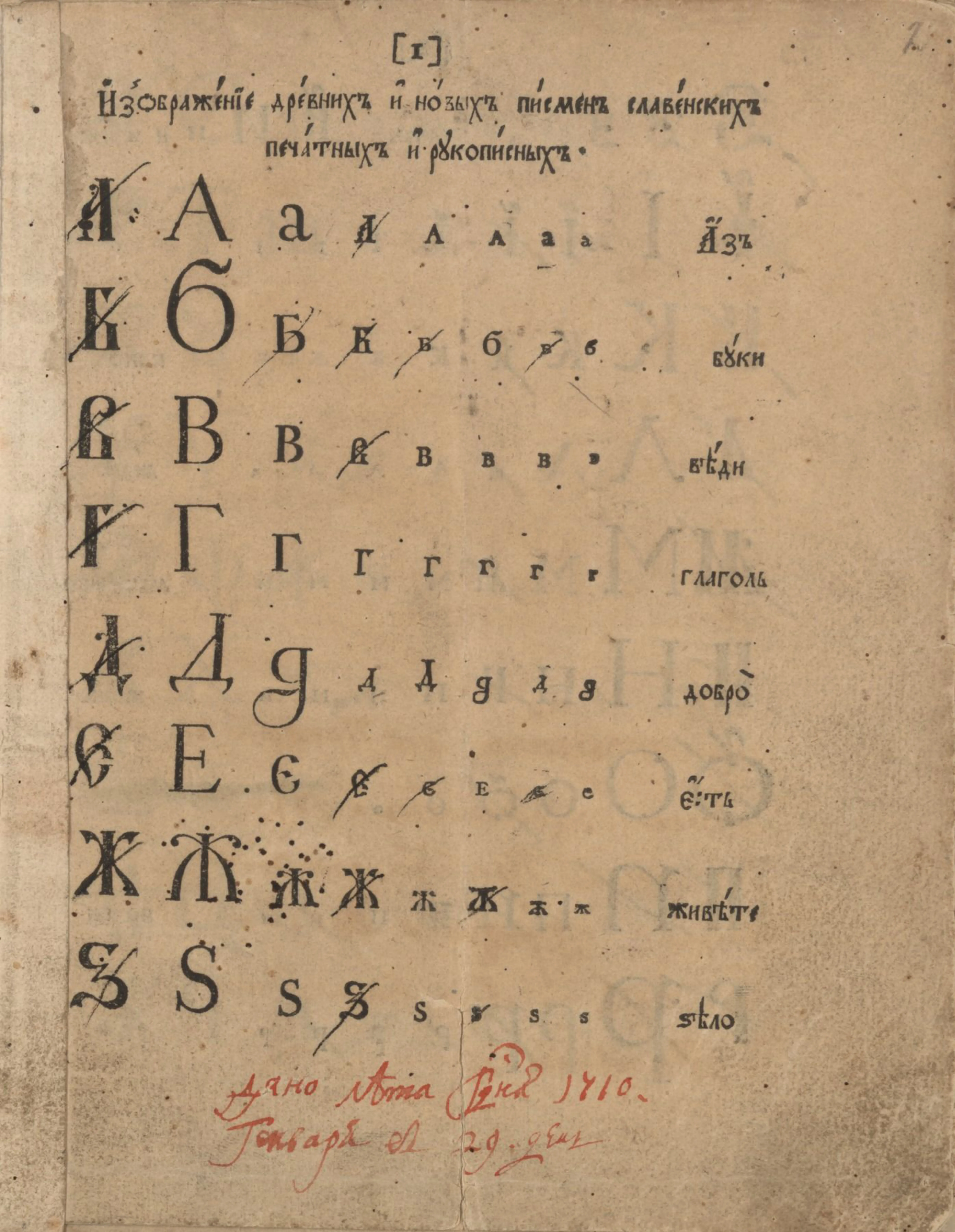
Consider the specifics. The army and navy were rebuilt on European models — with European regulations, ranks, engineering. The state apparatus — the colleges — was copied from the Swedish model. The civil typeface in which this very text is set is Peter’s reform, which brought Cyrillic close to the Latin antiqua. The new reckoning of years and the New Year calendar, the assemblies, dress, tobacco, the newspaper, the Academy of Sciences, compulsory education for the nobility, the practice of sending young people abroad to study — all of it one package, implanted into Russian life within a quarter of a century.
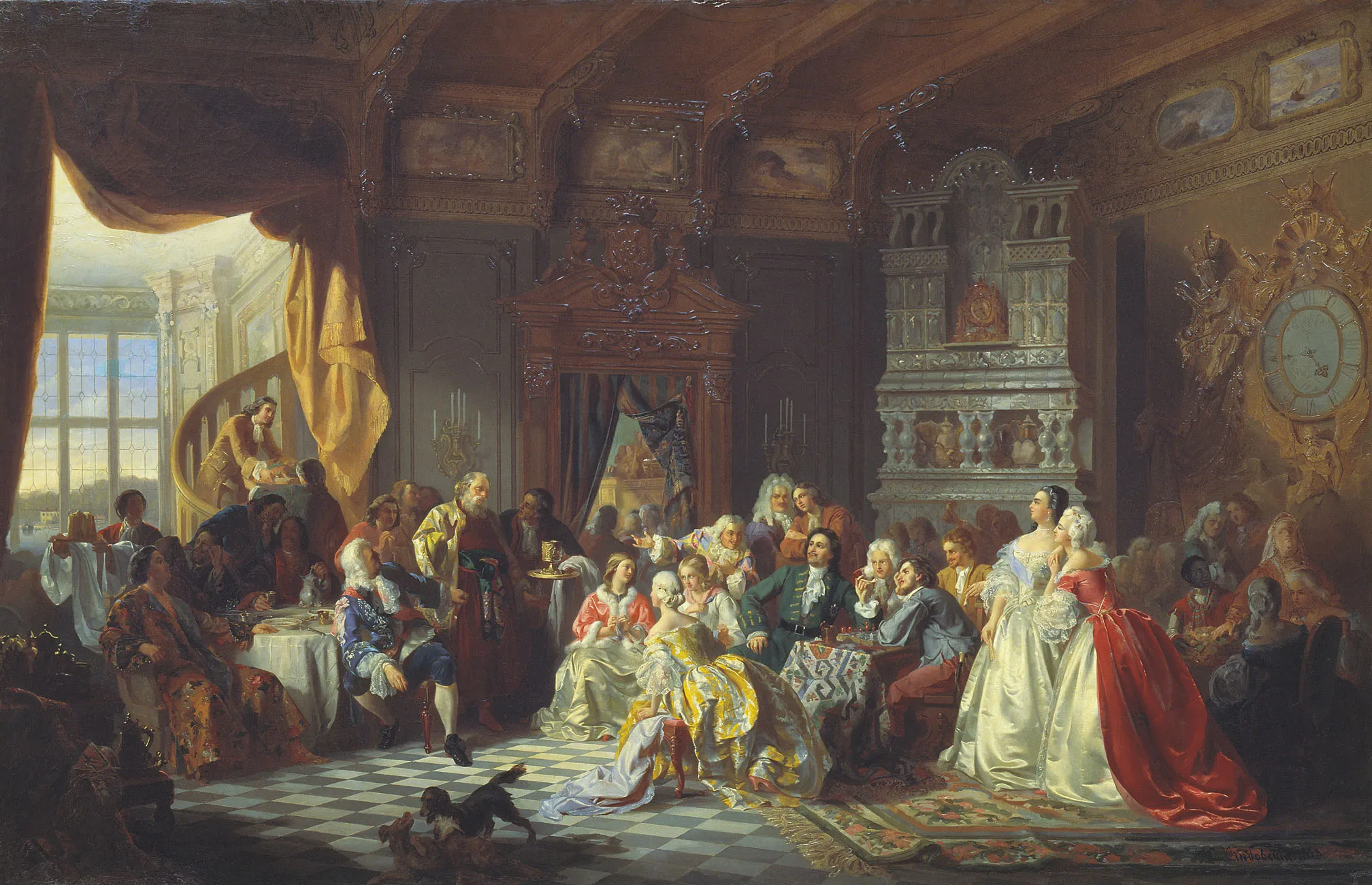
The key point is not the list of borrowings. The key point is that the borrowings stopped feeling like borrowings within a single generation. A Russian officer of the eighteenth century did not think he was serving in a “Europeanized” army — he was serving in the Russian army. A Russian official did not sit in a “Swedish” college — he sat in a Russian institution. The grafted vessel took, and became part of the organism.
This is what fundamentally distinguishes the Petrine project from colonial situations, where European institutions remained a foreign layer on top of local life. In Russia something else happened: the European form was not imposed on Russian content but fused with it — and out of that fusion came what we today call the Russian culture of the modern age.
An honest caveat is needed here. Peter’s modernization was violent, paid for with serf labor, and created the famous rift between the Europeanized elite and the traditional peasant world — a rift that would come back painfully in 1917. All of this is true, and the series will return to it. But for our thesis something else matters: even the critics of the Petrine project, even those who considered it a catastrophe, already thought, wrote and argued inside the cultural system it had created. The dispute about Peter was conducted in the language Peter had created.
Stress test: three attempts to rip the seam
The thesis of unbreakable ties would be an empty declaration if history had not supplied us with natural experiments. Fortunately for the analyst (and unfortunately for the country), there have been at least three: three times Russia seriously tried to close itself off from the West. All three times the result was the same.
Experiment one: Nicholas I, 1830s–1850s
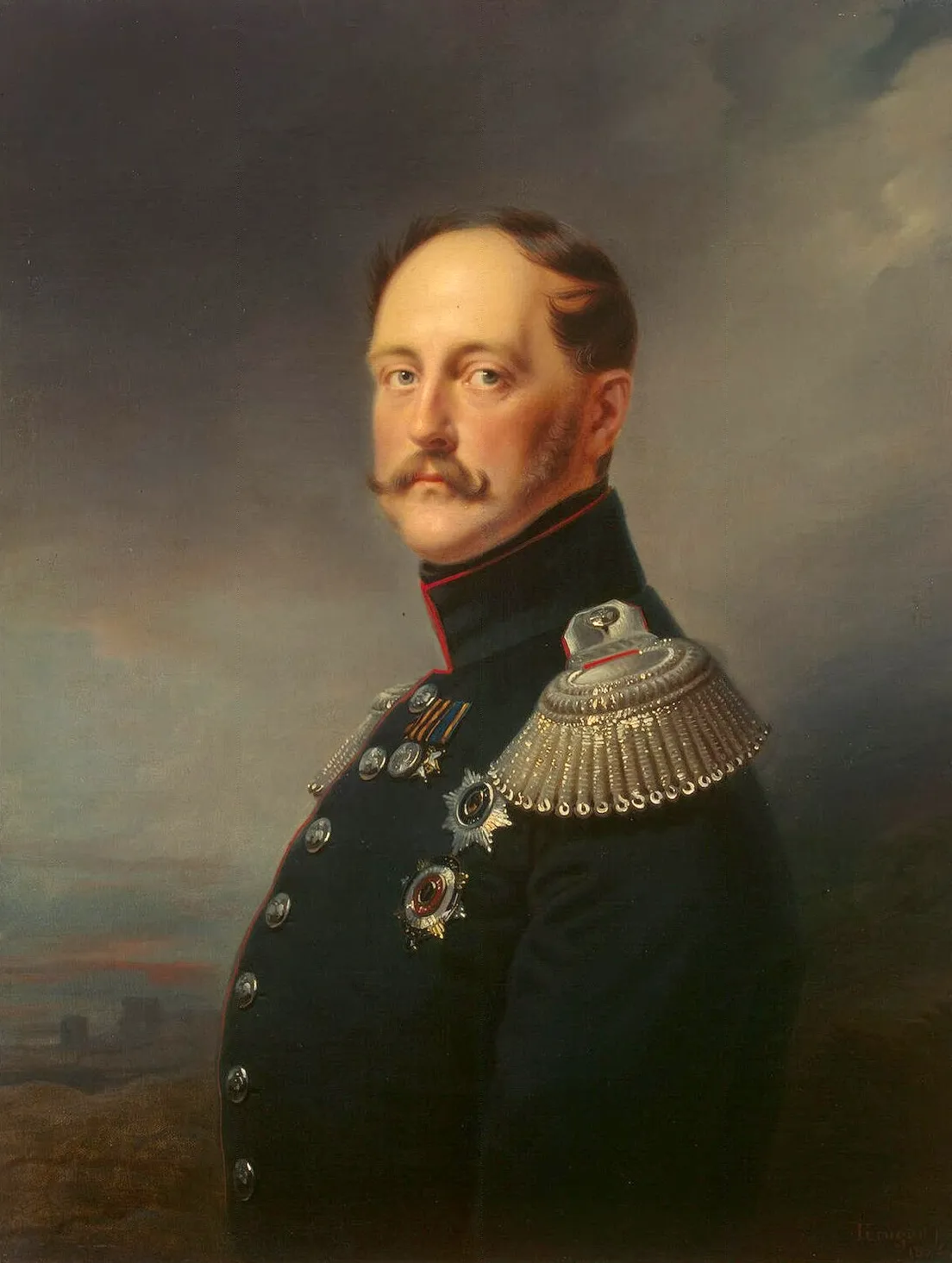
After the Decembrist revolt, and then the European revolutions of 1830 and 1848, the empire of Nicholas I built, step by step, the first coherent isolationist project in Russian history: the doctrine of “Orthodoxy, Autocracy, Nationality,” the censorship statute nicknamed “cast-iron,” drastic restrictions on foreign travel, cuts in student numbers, surveillance of the universities, the Third Section as a political police. For the first time, official ideology formulated what would be repeated in every cycle of closure: the West is rotting, Russia is healthy, contagion must be prevented. Let us give it its due: this was neither caprice nor stupidity. A state that had lived through an attempted coup and watched revolutions topple thrones across Europe was solving a real problem of self-preservation — and solving it seriously, consistently and, in its own way, honestly.
What actually happened? It was precisely in these decades — despite the pressure, and partly because of it — that Russian culture went through the ascent we call its Golden Age: Pushkin, Gogol, Lermontov, the young Turgenev and Dostoevsky, Belinsky, the circles of Westernizers and Slavophiles. Note: the very dispute over the “Russian path” was conducted with the instruments of German philosophy — Schelling, Hegel. The Slavophiles, arguing for Russia’s uniqueness, did so in the language of European Romanticism. Isolation did not create an autonomous body of thought — it merely made European thought contraband.
And the experiment ended with the Crimean War: an army armed with smoothbore muskets against rifled ones, a sailing fleet against steam, no railways to the theater of war. Isolation turned into technological backwardness in exactly one generation. Nicholas died in the midst of a war he was losing; his heir immediately launched the Great Reforms — that is, a new cycle of opening.
The first experiment yielded the first result: closure → backwardness → defeat → forced opening.
Experiment two: Stalin’s autarky, 1930–1953
The second experiment was incomparably more radical. The Iron Curtain in its classic form: the near-total end of private contacts, marriage to a foreigner as a crime, “servility before the West” as an indictment, the campaign against cosmopolitanism, Lysenkoism as an attempt to create a “separate” science, socialist realism as an attempt to create a “separate” art.
The scale of this project commands respect even from its critics: within a decade, an agrarian country, at the cost of colossal strain and sacrifice, built an industry that withstood the most terrible war of the century. All the more important to look closely at what this leap was made of.
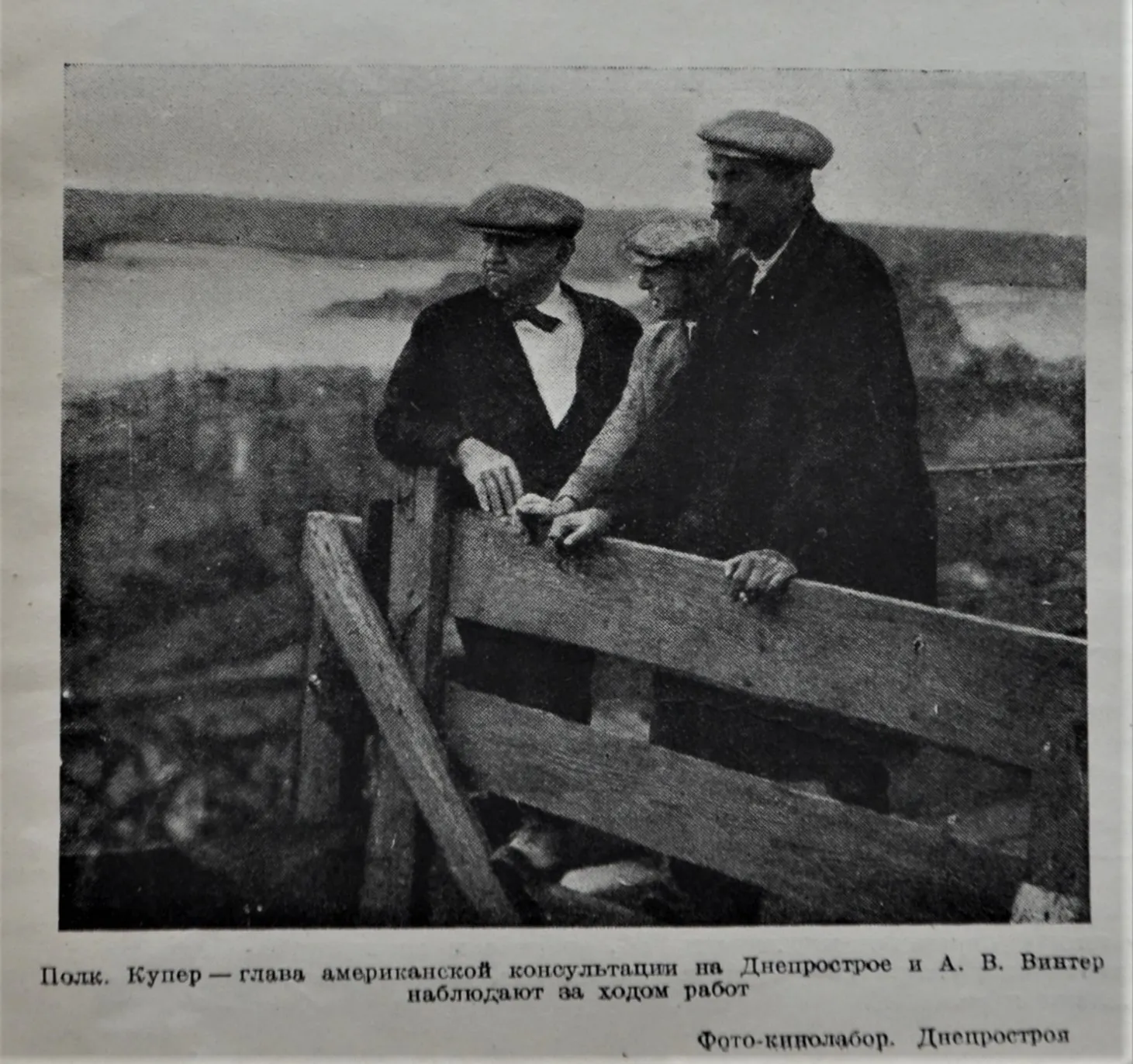
And here is what is telling. Even at the peak of autarky, the Soviet project remained Western through and through in its genetic code. Marxism itself is German philosophy driven to the point of a state religion. Industrialization was carried out with the participation of American and German engineers: the Stalingrad Tractor Plant was designed by the firm of Albert Kahn, the architect of Ford’s factories; the Dnieper dam was built with American consultants; the Magnitogorsk steel works was modeled on the mill in Gary, Indiana. Soviet aviation, the automobile industry, the power industry — everywhere, at the foundation, lay Western technologies bought, copied or received through Lend-Lease.
The same in culture: Soviet cinema, of which the regime was so proud, grew out of montage theories that immediately entered into dialogue with Hollywood and German Expressionism; Eisenstein was studied in Hollywood, and Eisenstein studied Griffith. Even Stalin’s skyscrapers are a reworking of American Art Deco.
And the attempt to create genuinely autonomous fields of knowledge produced the most graphic result of all: Lysenko’s biology set Soviet genetics back by decades, and the lag later had to be closed — how? — by returning to world science, that is, to Western science.
And again the same finale: the dictator’s death — and an almost immediate turn. The Youth Festival of 1957, exhibitions, translations, the Thaw. The speed with which Soviet society reached out for Western culture after 1953 — for jazz, cinema, literature — is itself the measure of what thirty years of total isolation had failed to do: they had not created a society that did not need the West. They had created a society starved for it.
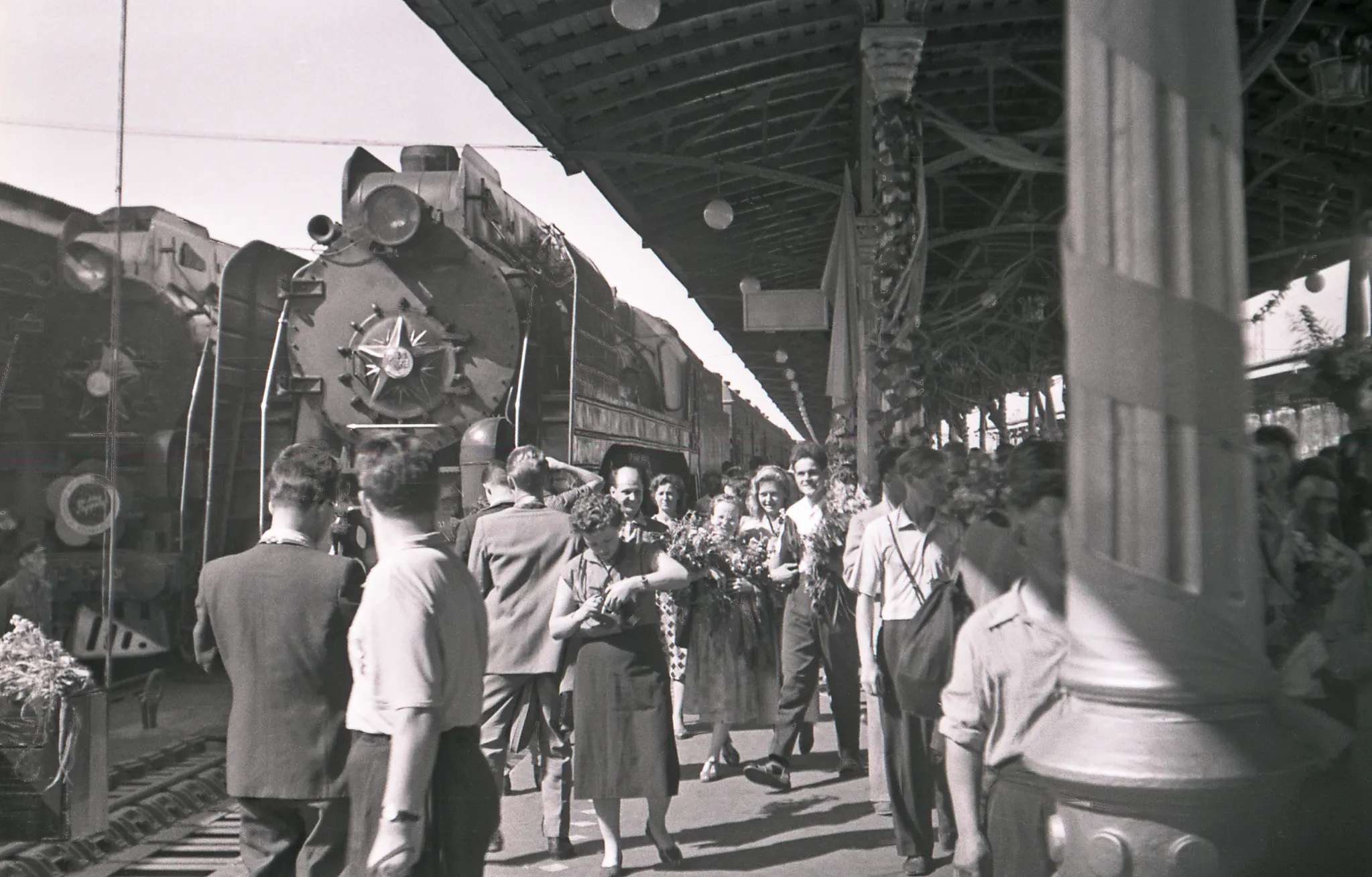
Experiment three: late stagnation, 1970s–1980s
The third experiment was milder, but the most telling, because it is closest to us. The late Soviet system no longer tried to eradicate the Western — it tried to ration it. And that is exactly where it lost. Jeans, tape recordings, the “voices” of foreign radio, samizdat and tamizdat, the lines for Tarkovsky, the cult of foreign things — the Western became the currency of prestige precisely because it was scarce. By restricting access to Western culture, the state did not weaken its pull but multiplied it: prohibition worked as advertising.
By the 1980s an astonishing situation had taken shape: a society officially confronting the West was, in its private life, oriented toward the West totally — from music to notions of a normal life. When the curtain was lifted, no “besieged fortress” was found — what was found were millions of people who had long been living with the West in their heads. The speed of the collapse of the isolationist superstructure in 1989–1991 is the speed with which a facade falls that neither society nor the authorities themselves had believed in for years.
The upshot of the three experiments
Three attempts, three epochs, three different technologies of closure — and one result. Every isolationist cycle in Russian history, first, did not create cultural autonomy but merely drove Western influence underground, where it acquired additional value; second, led to measurable technological and scientific backwardness within a single generation; third, ended in a turn — as a rule, a swift one — carried out not by external forces but by the Russian elite itself, which discovered that isolation had become a threat to its own position.
This is not a moral judgment. It is an empirical regularity, reproduced three times. And we have no grounds to believe that the fourth experiment, now underway, is built differently.
Why the seam does not tear: an anatomy of interconnection
A skeptic will object: the fact that isolation failed before does not prove it will fail now. A fair objection — so let us look not at precedents but at the mechanism. What exactly binds Russia to Europe so tightly that the bond survives any political rupture?
Language. The modern Russian literary language is a product of Europeanization. Its syntax was built by Karamzin with an eye on French; its conceptual vocabulary — from “industry” and “infatuation” (Karamzin’s calques) to “object,” “subject,” “progress,” “culture” — is translated or borrowed from European languages. A Russian uttering the words “state sovereignty” or “traditional values” is speaking a language every word of which is a European concept. There is no way to renounce this: no “pre-European” Russian language exists to retreat to — there is Church Slavonic writing, a great thousand-year heritage which the literary language absorbed, but in which one can today neither govern a state nor write science.
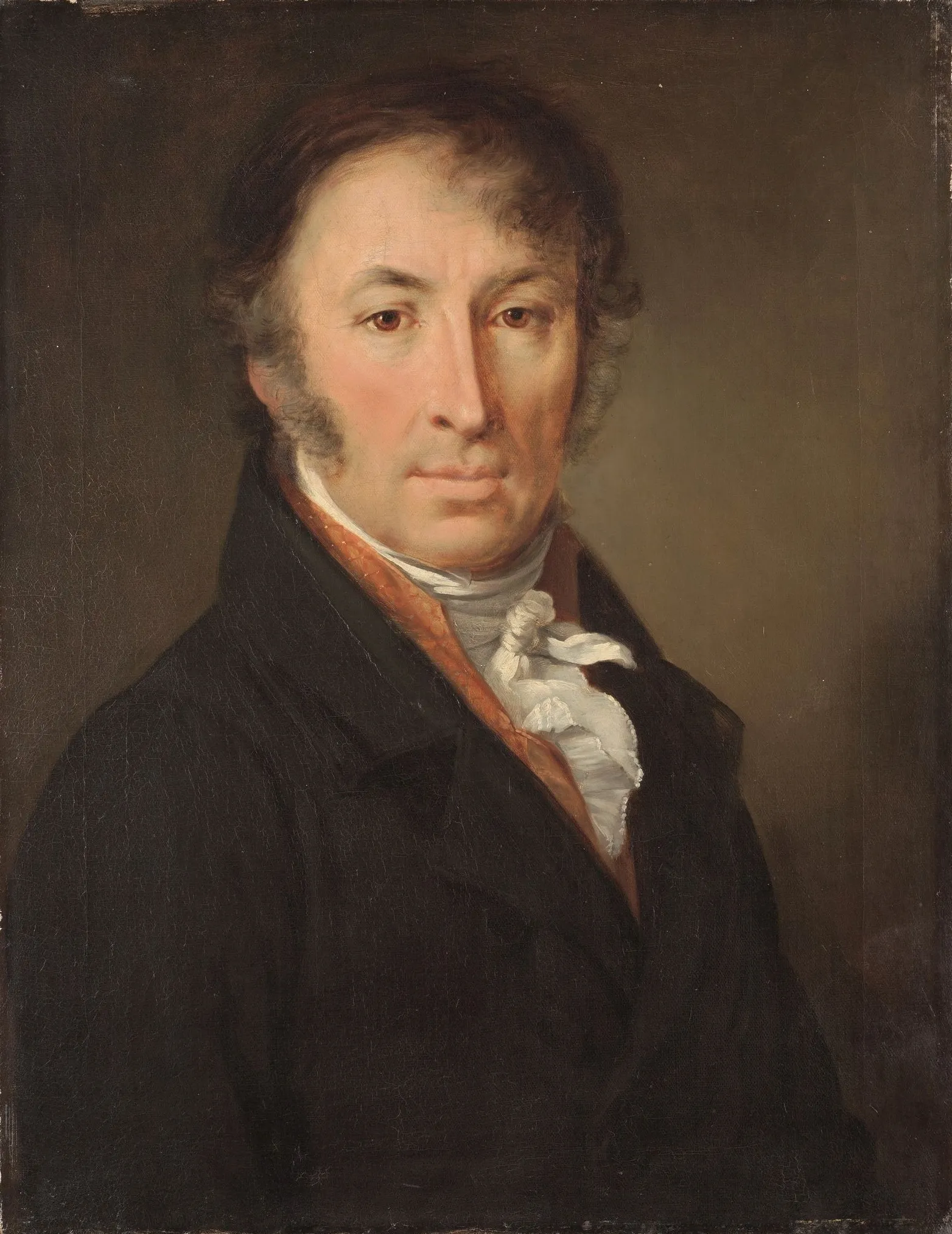
Science and education. Russian science was born as a branch of European science — Euler and Bernoulli worked at the Academy of Sciences — and has never existed apart from it. The periodic table, non-Euclidean geometry, conditioned reflexes — the greatest Russian scientific achievements were made inside pan-European science, published for it and recognized by it. The university, graduate study, the dissertation, the scientific journal, peer review — the entire infrastructure of knowledge in Russia is European in origin and design. “Sovereign science” does not exist, just as a sovereign multiplication table does not exist — and everyone who tried to create one, like Lysenko, left scorched earth behind.
Art. Russian literature, which official doctrine celebrates as a national treasure, is the European novel, European poetry, European theater, mastered and developed by Russian geniuses. Pushkin grew out of Byron and French poetry, Dostoevsky out of Balzac, Dickens and the Gothic novel, Tolstoy out of Sterne and Rousseau. This does not diminish them — this is simply how culture works: greatness is born at intersections, not in isolation. Russian ballet is the French and Italian school brought to perfection in Russia and then returned to Europe in the triumph of Diaghilev’s seasons. Tchaikovsky is a Russian composer inside the European musical system, from notation to symphonic form. The “Western” cannot be excised from Russian culture without destroying it: even the old Russian heritage — the icon, church architecture, znamenny chant — was rediscovered and reinterpreted in the nineteenth and twentieth centuries by people trained in the European school, and rightfully took its place in the world canon.
Law and statehood. The very idea of the modern Russian state — with a constitution, codes, courts, a prosecutor’s office, a parliament (however decorative they may be) — is European. Russian civil law grew out of the pandectist, that is, German, tradition. Even today’s anti-Western rhetoric is cast in legal forms — laws, decrees, regulations — borrowed from the West. A state that denies the West does so with the instruments of Western state-building.
Everyday life. And finally, the most underrated layer. The city apartment, the dacha plot, the school curriculum, the neighborhood clinic, the seaside holiday, coffee, movies in the evening, football on weekends — the whole way of life of today’s Russian city-dweller is a local version of the common European way of life. A Russian who has never given a thought to a “civilizational choice” lives inside that choice, made three hundred years ago — every day, from the alarm clock to the evening series.
That is why the metaphor of fabric is more accurate than the metaphor of a window. A window can be closed. But you cannot unpick a thread woven into every inch of the cloth — the cloth itself would come apart with it.
What follows: rupture as anomaly, return as the norm
The current rupture between Russia and the West, for all its depth, is not the “end of an era” and not a “civilizational divorce.” It is the fourth cycle of political closure in Russian history, laid on top of a cultural fabric it has no power to change. The state can ban WhatsApp and Netflix; it cannot repeal the fact that its own language, law, science, art and everyday life are European. An isolationist project in Russia always wars not with an external enemy but with the internal make-up of its own country — and therefore always loses.
Let us also state the limit of the thesis, so as not to promise more than we claim: the cultural fabric does not prevent conflicts — Germany and Russia were deeply interwoven in 1914 and in 1941 alike. What the fabric determines is something else: the reversibility of enmity and the speed of recovery afterward. After both world wars, relations were restored faster and deeper than could have been imagined at the moment of rupture — and precisely along the lines of the old interconnection.
From all this follow three propositions, which the series will unfold further.
First. A turn toward the West is possible — because it has already happened, at least three times, and each time faster than contemporaries expected. Alexander II began his reforms almost immediately after the lost war; the Thaw began months after Stalin’s death; perestroika reversed a forty-year confrontation in three years. The mechanics of these turns — who carried them out, how and why — is the subject of a separate article in the series.
Second. The resource for a return has not been destroyed. Millions of Russians inside the country continue to live within the European cultural way of life; the millions who left form the largest diaspora in a century, physically present in Europe; science, business and culture preserve — often semi-legally — thousands of working ties. This is “soft power” in its true sense: not a propaganda instrument but a living fabric of relations that outlives politics and becomes the infrastructure of a future rapprochement. Separate articles will be devoted to it.
Third. The question, then, is not “is a return possible?” but “under what conditions, in what form and at what price?” History suggests that turns in Russia were triggered by a combination of three factors: the evident failure of the isolationist course (the Crimean War), a change of figures at the top of power (1855, 1953, 1985), and the presence within the elite of people for whom opening was more profitable than closure. To what extent these conditions are ripening today is a matter of analysis, not faith — and the series will come to it in the final articles.
The next article will put under the magnifying glass the pendulum itself — the cycles of closure and opening in Russian history: their anatomy, their duration, their typical mistakes, and why every “forever” in Russian history has lasted, on average, less than thirty years.
The next article in the series: “The Pendulum: An Anatomy of Russia’s Cycles of Closure and Opening.”